
World
Kim Jong Un Proposes U.S. Engagement on Nuclear Terms

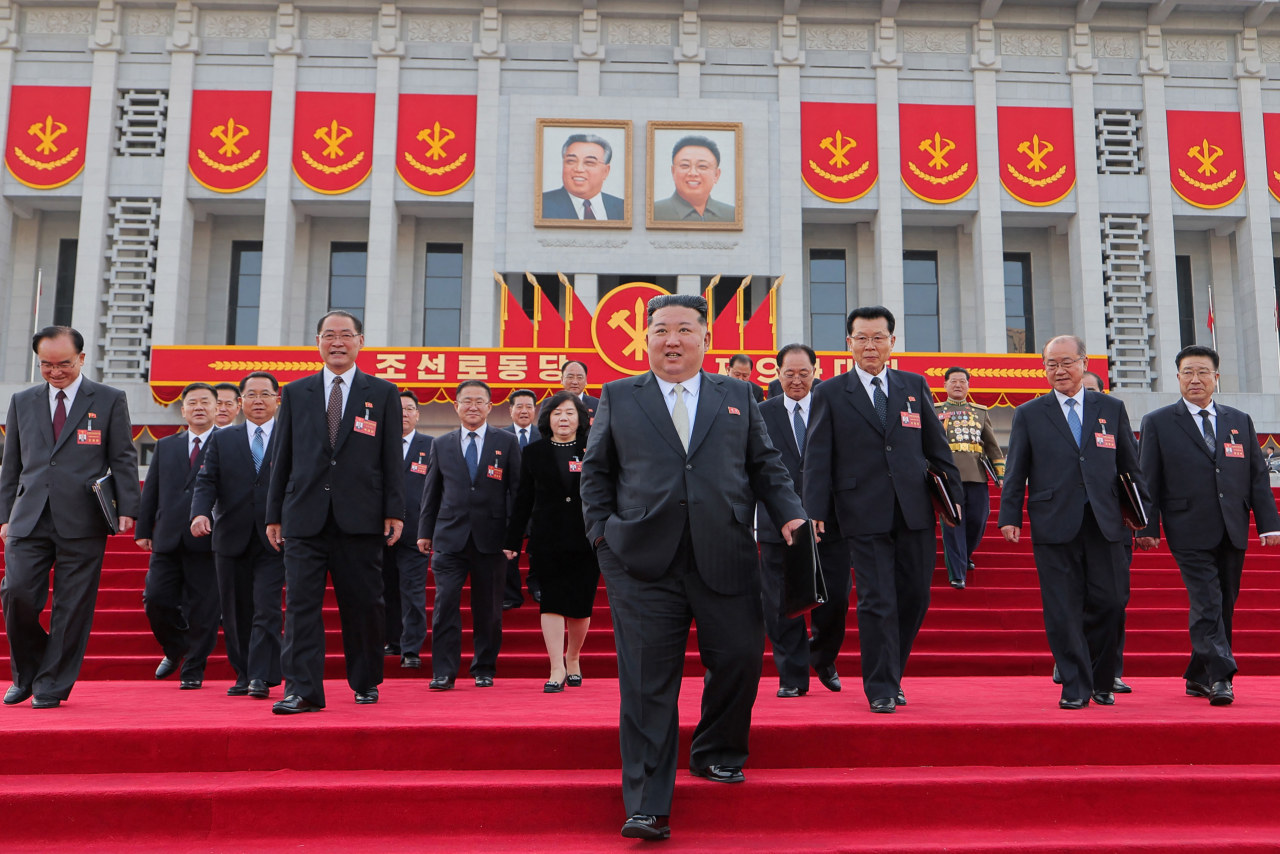
North Korean leader Kim Jong Un delivered a significant address during the January 2023 congress of the Workers’ Party of Korea, outlining his vision for future relations with the United States. His remarks indicate a willingness for engagement but emphasize that any potential cooperation hinges on the continuation of North Korea’s nuclear weapons program.
During the five-yearly gathering, which serves as a platform for setting national priorities, Kim Jong Un articulated a dual approach: North Korea can either coexist with the U.S. or confront it, depending on how the U.S. navigates its policy towards the Korean Peninsula. This statement marks a notable moment in the long-standing tensions between the two nations, which have fluctuated between hostility and tentative diplomacy.
The North Korean leader reiterated his commitment to maintaining the country’s nuclear arsenal, framing it as essential for national security. He expressed the belief that the U.S. must accept this reality if dialogue is to proceed. Kim stated, “The nuclear force of our country is a powerful deterrent against aggression and a guarantee of peace and stability.” His comments reflect a strategy aimed at reinforcing North Korea’s position while opening a door for discussions.
Implications for U.S. Foreign Policy
The implications of Kim Jong Un‘s statements extend beyond rhetoric, potentially reshaping U.S. foreign policy in the region. President Donald Trump, who previously engaged in historic summits with Kim, will need to assess whether to pursue diplomatic efforts or adopt a more confrontational stance. The North Korean leader’s insistence on nuclear armament as a prerequisite for engagement poses a complex challenge for U.S. officials.
Analysts suggest that the Biden administration may adopt a cautious approach, balancing sanctions and diplomatic overtures. The U.S. has historically maintained that disarmament is a non-negotiable aspect of any engagement with North Korea. The differing perspectives on nuclear weapons will likely be a central theme in any future negotiations.
Regional and Global Reactions
Responses from neighboring countries and international stakeholders are critical in interpreting Kim Jong Un‘s message. South Korea, which shares a tense relationship with its northern neighbor, has expressed concerns over the renewed emphasis on nuclear capability. The South Korean government has reiterated its commitment to deterring North Korean aggression while remaining open to dialogue.
Japan, another key player in regional security dynamics, is closely monitoring the developments. The Japanese Prime Minister has voiced the need for a united front among U.S. allies to address the nuclear threat posed by North Korea.
In the broader international context, the United Nations and various non-governmental organizations continue to advocate for denuclearization. The ongoing debate over North Korea’s nuclear capabilities raises significant questions about global security and the effectiveness of diplomatic engagement.
As the situation evolves, the international community remains watchful. Kim Jong Un‘s offer of coexistence or confrontation will test the resilience of diplomatic frameworks and the willingness of global powers to address the complexities of North Korea’s nuclear ambitions.
The next steps taken by the U.S. and its allies will be pivotal in determining the trajectory of peace and stability in the region.

Robinhood Stock Surges 2.5% Today Amid Tech Market Recovery

Philadelphia’s Earth Month Kicks Off with Free Events in Parks

GSK’s Inhaler Decision Sparks Health Concerns for Children

Bradford’s Fish Fry Fridays Offer Community Spirit and Flavor

Speculation Rises on Shutdowns During Trump’s Potential Presidency

Samsung Galaxy Watch 9 to Feature Larger Battery, Report Reveals

Inventors Find New Purpose Through Unconventional Paths

UConn Huskies Aim for Back-to-Back Titles in 2026 NCAA Tournament

U.S. Mine Countermeasure Ships Dock in Malaysia for Logistics Stop

University of Hawaiʻi at Mānoa Joins $25.6M AI Initiative for Disaster Monitoring

$2.2 Million Boost for Cancer Research and Training in Hawaiʻi

ALMA Discovers Companion Orbiting Red Giant Star π 1 Gruis

Sacituzumab Govitecan Shows Promise for HR+/HER2− Breast Cancer

币安人生 Sees $15.92 Million in Trading Volume Amid Market Fluctuations

New Gel Offers Hope for Regrowing Tooth Enamel in Dentistry

CAVA Group Shares Surge 5.1% Amid Mixed Analyst Ratings

Christian Bale in Talks to Join Leonardo DiCaprio in Heat 2

Supreme Court to Review Birthright Citizenship for Children of Immigrants
-
Science8 months ago
University of Hawaiʻi at Mānoa Joins $25.6M AI Initiative for Disaster Monitoring
-
 Health7 months ago
$2.2 Million Boost for Cancer Research and Training in Hawaiʻi
-
 Science8 months ago
ALMA Discovers Companion Orbiting Red Giant Star π 1 Gruis
-
 Health7 months ago
Sacituzumab Govitecan Shows Promise for HR+/HER2− Breast Cancer
-
Politics4 months ago
币安人生 Sees $15.92 Million in Trading Volume Amid Market Fluctuations
-
 Health8 months ago
New Gel Offers Hope for Regrowing Tooth Enamel in Dentistry
-
 Business7 months ago
CAVA Group Shares Surge 5.1% Amid Mixed Analyst Ratings
-
 Entertainment8 months ago
Christian Bale in Talks to Join Leonardo DiCaprio in Heat 2
-
 Politics7 months ago
Supreme Court to Review Birthright Citizenship for Children of Immigrants
-

 Lifestyle8 months ago
Art Deco and Traditional Designs Set to Transform Homes in 2026
-

 Lifestyle7 months ago
Fernando Mendoza Secures Maxwell and O’Brien Awards Ahead of Heisman
-

 World8 months ago
Swiss Residents Reject 50% Inheritance Tax on Wealthy