
World
Marine Pilot Jefferson DeBlanc Becomes Ace in Pacific Battles

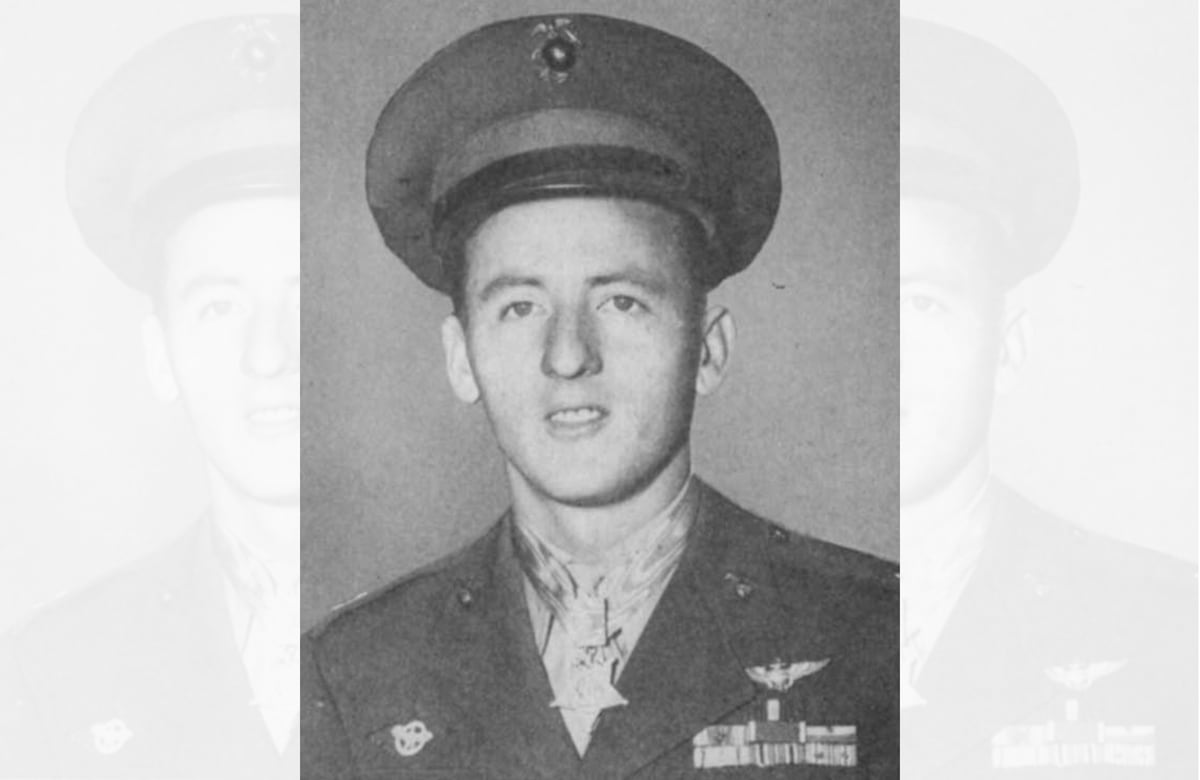
Jefferson Joseph DeBlanc, a remarkable Marine pilot, achieved ace status during World War II, showcasing exceptional skill in aerial combat in the Pacific theater. Born on February 15, 1921, in Lockport, Louisiana, DeBlanc’s journey began after he graduated high school in 1938. Instead of pursuing college, he opted for military aviation, enlisting in the U.S. Marines to avoid serving in what he referred to as “the Yankee army.”
After entering U.S. Navy flight training in July 1941, DeBlanc transferred to the Marine Corps upon completion. He was commissioned a second lieutenant on April 3, 1942, and quickly rated as a naval aviator by May 4. Just ten days later, he joined Marine fighter squadron VMF-112, gaining valuable flying hours in the Grumman F4F-4 Wildcat before shipping overseas.
Upon his arrival at Henderson Field on Guadalcanal, DeBlanc faced his first enemy engagement on November 12, 1942. Alongside VMF-112 and Captain Joseph J. Foss’s flight from VMF-121, he encountered Japanese Mitsubishi G4M1 bombers targeting American shipping. DeBlanc later described the experience as “a fighter pilot’s dream,” despite the significant antiaircraft fire from the ships. He managed to claim one bomber, with a possible second, amidst the chaos.
DeBlanc’s next significant engagement occurred on December 18, when he attacked a Douglas SBD-3 Dauntless dive bomber that was being pursued by a Mitsubishi F1M2 floatplane. His successful assault led to the explosion of the floatplane, marking another victory.
On January 29, 1943, DeBlanc faced a setback when his Wildcat suffered engine trouble, forcing him to parachute into the sea. He was quickly rescued by the destroyer Jenkins (DD-447). Just two days later, on January 31, DeBlanc led a squadron of eight Wildcats into battle against enemy fighters and bombers near Kolombangara. During this intense engagement, he shot down several enemy aircraft before suffering injuries himself, necessitating another parachute jump.
Both DeBlanc and Staff Sergeant James A. Feliton, who fought alongside him, managed to evade capture with the help of local coastwatchers. Unknown to them, they had been battling Nakajima Ki.43 fighters, which were newly assigned to Rabaul. DeBlanc’s actions that day earned him recognition for achieving the first quintuple aerial victory by a Marine. This accomplishment led to his nomination for a Navy Cross and an Air Medal by Major Paul J. Fontana, his squadron commander. The Navy Cross was later upgraded to a Medal of Honor, which DeBlanc received from President Harry Truman on December 6, 1946.
Following his wartime service, DeBlanc continued his military career, being promoted to captain on May 31, 1943. He returned to the United States in June as a tactics instructor and served with VMF-422 in the Marshall Islands in 1944. His ninth and final victory in combat occurred near Okinawa in April 1945.
Education remained a priority for DeBlanc throughout his life. He earned four degrees, including a Doctorate of Education from McNeese State University. His teaching career spanned various schools in both the United States and Europe. DeBlanc maintained his reserve commission until his retirement as a colonel from the New Orleans Marine Air Group in 1972.
DeBlanc passed away on November 7, 2007, in Saint Martinville, Louisiana. He left behind a legacy of military and civilian achievement, alongside his family history. His memoir, “The Guadalcanal Air War,” was published in 2008, further documenting his experiences during a pivotal time in history.

Robinhood Stock Surges 2.5% Today Amid Tech Market Recovery

Philadelphia’s Earth Month Kicks Off with Free Events in Parks

GSK’s Inhaler Decision Sparks Health Concerns for Children

Bradford’s Fish Fry Fridays Offer Community Spirit and Flavor

Speculation Rises on Shutdowns During Trump’s Potential Presidency

Samsung Galaxy Watch 9 to Feature Larger Battery, Report Reveals

Inventors Find New Purpose Through Unconventional Paths

UConn Huskies Aim for Back-to-Back Titles in 2026 NCAA Tournament

U.S. Mine Countermeasure Ships Dock in Malaysia for Logistics Stop

University of Hawaiʻi at Mānoa Joins $25.6M AI Initiative for Disaster Monitoring

$2.2 Million Boost for Cancer Research and Training in Hawaiʻi

ALMA Discovers Companion Orbiting Red Giant Star π 1 Gruis

Sacituzumab Govitecan Shows Promise for HR+/HER2− Breast Cancer

币安人生 Sees $15.92 Million in Trading Volume Amid Market Fluctuations

New Gel Offers Hope for Regrowing Tooth Enamel in Dentistry

CAVA Group Shares Surge 5.1% Amid Mixed Analyst Ratings

Christian Bale in Talks to Join Leonardo DiCaprio in Heat 2

Supreme Court to Review Birthright Citizenship for Children of Immigrants
-
Science9 months ago
University of Hawaiʻi at Mānoa Joins $25.6M AI Initiative for Disaster Monitoring
-
 Health7 months ago
$2.2 Million Boost for Cancer Research and Training in Hawaiʻi
-
 Science9 months ago
ALMA Discovers Companion Orbiting Red Giant Star π 1 Gruis
-
 Health7 months ago
Sacituzumab Govitecan Shows Promise for HR+/HER2− Breast Cancer
-
Politics5 months ago
币安人生 Sees $15.92 Million in Trading Volume Amid Market Fluctuations
-
 Health9 months ago
New Gel Offers Hope for Regrowing Tooth Enamel in Dentistry
-
 Business8 months ago
CAVA Group Shares Surge 5.1% Amid Mixed Analyst Ratings
-
 Entertainment9 months ago
Christian Bale in Talks to Join Leonardo DiCaprio in Heat 2
-
 Politics8 months ago
Supreme Court to Review Birthright Citizenship for Children of Immigrants
-

 Lifestyle8 months ago
Art Deco and Traditional Designs Set to Transform Homes in 2026
-

 Lifestyle8 months ago
Fernando Mendoza Secures Maxwell and O’Brien Awards Ahead of Heisman
-

 World8 months ago
Swiss Residents Reject 50% Inheritance Tax on Wealthy