
World
Navy Tackles Training Delays as Sailors Await A-School Assignments

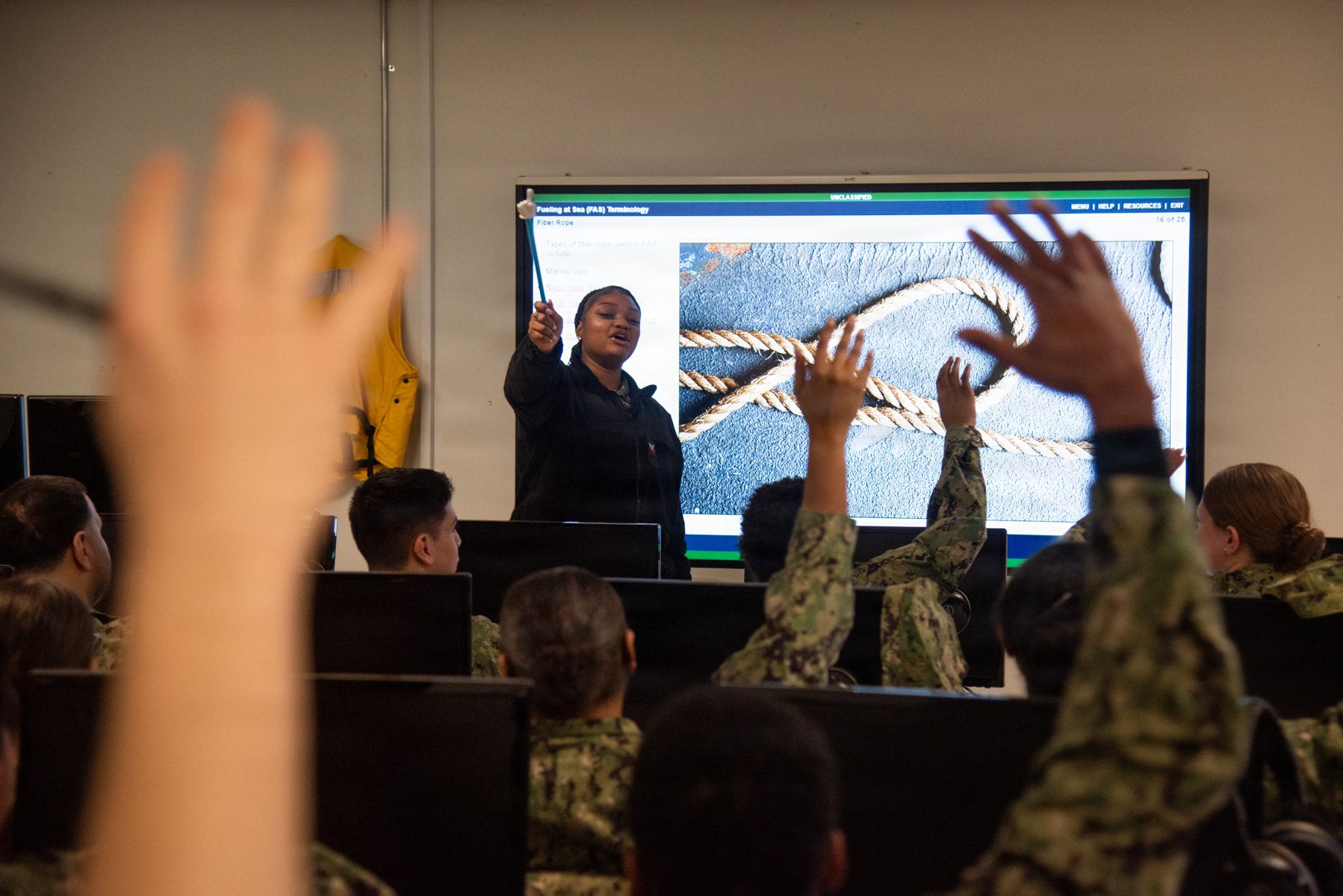
The U.S. Navy is addressing challenges in its training pipeline, as some sailors face waits of up to four weeks to attend their A-Schools. These delays hinder timely deployment to fleet units, according to Rear Adm. Greg Huffman, commander of the Navy Education and Training Command (NETC). The service has effectively met recruitment goals in recent years, but the increased number of recruits has led to significant bottlenecks in training.
In Fiscal Year 2024, the Navy welcomed 40,978 new active-duty enlisted recruits, followed by 44,096 in Fiscal Year 2025. While this influx is positive, it has also introduced complexities in the transition from boot camp to specialized training. Currently, sailors in certain ratings, particularly information warfare, experience longer wait times compared to those in surface warfare, who progress more swiftly.
Huffman elaborated on the situation, stating, “Even a three-week slowdown means three weeks we could use to get that sailor on to their fleet unit and ready to go.” The Navy’s operations team is diligently working to align training schedules with fleet requirements, attempting to streamline the process.
Identifying the Gaps
Delays in the training pipeline can lead to gaps in personnel at sea, as noted by Master Chief Petty Officer of the Navy John Perryman. The surface warfare community currently faces approximately 6,500 gaps, averaging 42 per ship. These shortages stem from past recruitment challenges and ongoing training delays.
The NETC is exploring various strategies to minimize these delays. One initiative includes a pilot program for Aegis fire controlmen, which allows training to commence at Dahlgren Naval Base in Virginia. This new approach enables sailors to complete their training more efficiently, as they previously had to transition from Naval Station Great Lakes to Virginia, elongating the overall training time.
Additionally, NETC is assessing A-School curricula to eliminate redundancies, which can shorten training periods by a week or more. Currently, A-School staffing is at approximately 78 percent, prompting NETC to consider reactivating 100 to 130 reservists to bolster instructor numbers.
Moving Forward
While sailors await A-School assignments, the Navy is ensuring they continue to meet basic military requirements and engage in other preparatory tasks. Despite these efforts, delays result in lost time for sailors who are eager to begin their naval careers.
Huffman remarked on the implications of these wait times, saying, “For the sailor, a delay equals weeks that they are not getting to do the job in the service that they are expecting.” He emphasized the importance of addressing these issues to help sailors focus on their primary responsibilities.
As the Navy works to improve its training pipeline, the commitment to enhancing efficiency remains a priority. By implementing new strategies and optimizing training processes, the Navy aims to reduce delays and ensure that sailors can swiftly transition into their roles within the fleet.

Robinhood Stock Surges 2.5% Today Amid Tech Market Recovery

Philadelphia’s Earth Month Kicks Off with Free Events in Parks

GSK’s Inhaler Decision Sparks Health Concerns for Children

Bradford’s Fish Fry Fridays Offer Community Spirit and Flavor

Speculation Rises on Shutdowns During Trump’s Potential Presidency

Samsung Galaxy Watch 9 to Feature Larger Battery, Report Reveals

Inventors Find New Purpose Through Unconventional Paths

UConn Huskies Aim for Back-to-Back Titles in 2026 NCAA Tournament

U.S. Mine Countermeasure Ships Dock in Malaysia for Logistics Stop

University of Hawaiʻi at Mānoa Joins $25.6M AI Initiative for Disaster Monitoring

$2.2 Million Boost for Cancer Research and Training in Hawaiʻi

ALMA Discovers Companion Orbiting Red Giant Star π 1 Gruis

Sacituzumab Govitecan Shows Promise for HR+/HER2− Breast Cancer

币安人生 Sees $15.92 Million in Trading Volume Amid Market Fluctuations

New Gel Offers Hope for Regrowing Tooth Enamel in Dentistry

CAVA Group Shares Surge 5.1% Amid Mixed Analyst Ratings

Christian Bale in Talks to Join Leonardo DiCaprio in Heat 2

Supreme Court to Review Birthright Citizenship for Children of Immigrants
-
Science8 months ago
University of Hawaiʻi at Mānoa Joins $25.6M AI Initiative for Disaster Monitoring
-
 Health7 months ago
$2.2 Million Boost for Cancer Research and Training in Hawaiʻi
-
 Science8 months ago
ALMA Discovers Companion Orbiting Red Giant Star π 1 Gruis
-
 Health7 months ago
Sacituzumab Govitecan Shows Promise for HR+/HER2− Breast Cancer
-
Politics4 months ago
币安人生 Sees $15.92 Million in Trading Volume Amid Market Fluctuations
-
 Health8 months ago
New Gel Offers Hope for Regrowing Tooth Enamel in Dentistry
-
 Business7 months ago
CAVA Group Shares Surge 5.1% Amid Mixed Analyst Ratings
-
 Entertainment8 months ago
Christian Bale in Talks to Join Leonardo DiCaprio in Heat 2
-
 Politics7 months ago
Supreme Court to Review Birthright Citizenship for Children of Immigrants
-

 Lifestyle7 months ago
Fernando Mendoza Secures Maxwell and O’Brien Awards Ahead of Heisman
-

 Lifestyle8 months ago
Art Deco and Traditional Designs Set to Transform Homes in 2026
-

 World7 months ago
Swiss Residents Reject 50% Inheritance Tax on Wealthy