
World
Over 420 Arrested as New Year’s Eve Violence Erupts in Berlin

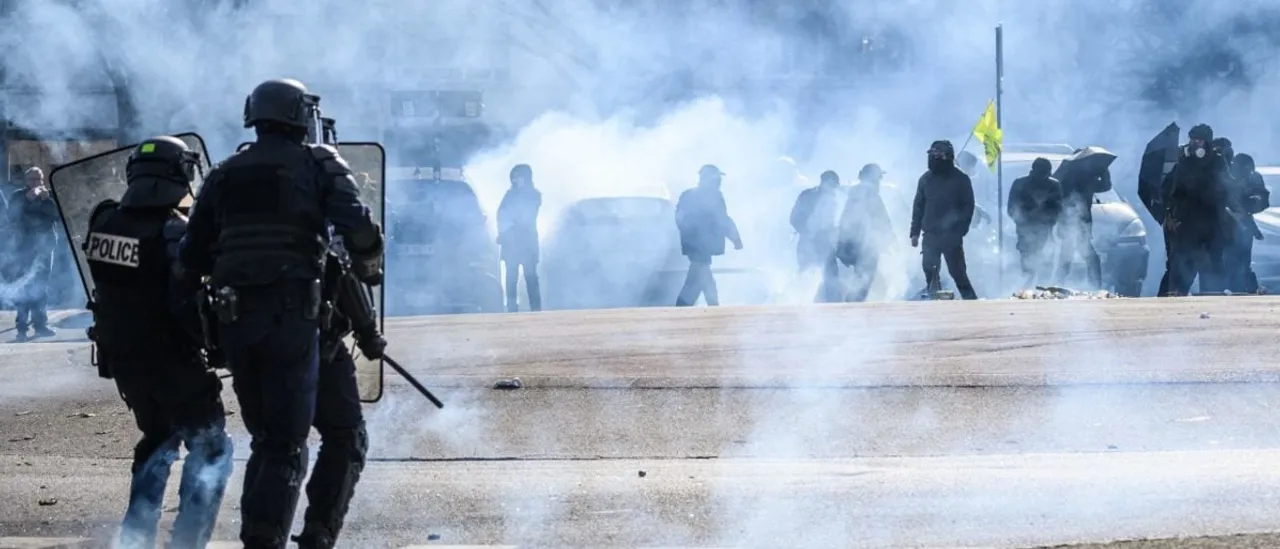
On New Year’s Eve, Berlin witnessed significant unrest, resulting in over 420 arrests as violence erupted across the city. The chaos unfolded despite the deployment of 3,200 police officers for the celebrations, with authorities recording 2,340 incidents throughout the night, according to the State Administration for the Interior and Sport. Emergency responders, including the fire brigade, fielded approximately 1,830 calls as they faced attacks during their operations.
The disorder in Berlin reflected a broader trend seen in various European cities, where attacks on emergency personnel and public property have raised concerns about public safety. To mitigate potential violence, city officials expanded “firework-free zones” ahead of the celebrations. Authorities credited these measures with helping to “prevent crimes and injuries,” although the level of unrest was comparable to the previous year’s incidents.
Escalating Violence Across Europe
Reports indicate that the violence was not isolated to Berlin. In Antwerp, police described the situation as “extremely turbulent and dangerous,” with emergency vehicles being targeted by stones, eggs, and fireworks. Local authorities arrested around 100 individuals, primarily those under the age of 20. Similarly, in the Netherlands, law enforcement made 250 arrests nationwide, with reports of attacks involving Molotov cocktails and paving stones in Breda.
In France, rioters set fire to 1,173 vehicles on New Year’s Eve, surpassing the 984 vehicles torched the previous year. This increase in violence has led commentators to suggest that New Year’s Eve has become a focal point for migrant gangs, who utilize fireworks to launch attacks on both emergency personnel and civilians across major Western European cities.
Responses from Authorities and Unions
Berlin’s Interior Senator, Iris Spranger, expressed confidence that most residents celebrated peacefully. However, the German Police Union strongly disputed this claim, stating that many targeted attacks on emergency services went unreported. The union characterized the deliberate firing of rockets at emergency vehicles as an assault on the state itself rather than mere acts of vandalism.
Union representatives noted that many of the suspects appeared to be of Arab and Turkish descent, with some areas requiring police protection for firefighters to carry out their duties. A leaked list indicated that of the 670 suspects arrested last year, 264 were foreign nationals, raising questions about the impact of migration on public order.
Political commentators have begun linking these violent outbreaks to broader migration issues. Balázs Orbán, political director to Hungarian Prime Minister Viktor Orbán, referred to the disturbances in Berlin as a “migration-based public order breakdown,” attributing the unrest to years of unchecked migration and insufficient enforcement of laws. He criticized the European Union for pushing relocation quotas and fostering weaker border controls.
As European cities grapple with these challenges, the events of New Year’s Eve serve as a stark reminder of the complexities surrounding immigration, public safety, and community relations. With many cities facing similar patterns of unrest, the implications for public policy and community cohesion are increasingly pressing.

Robinhood Stock Surges 2.5% Today Amid Tech Market Recovery

Philadelphia’s Earth Month Kicks Off with Free Events in Parks

GSK’s Inhaler Decision Sparks Health Concerns for Children

Bradford’s Fish Fry Fridays Offer Community Spirit and Flavor

Speculation Rises on Shutdowns During Trump’s Potential Presidency

Samsung Galaxy Watch 9 to Feature Larger Battery, Report Reveals

Inventors Find New Purpose Through Unconventional Paths

UConn Huskies Aim for Back-to-Back Titles in 2026 NCAA Tournament

U.S. Mine Countermeasure Ships Dock in Malaysia for Logistics Stop

University of Hawaiʻi at Mānoa Joins $25.6M AI Initiative for Disaster Monitoring

$2.2 Million Boost for Cancer Research and Training in Hawaiʻi

ALMA Discovers Companion Orbiting Red Giant Star π 1 Gruis

Sacituzumab Govitecan Shows Promise for HR+/HER2− Breast Cancer

币安人生 Sees $15.92 Million in Trading Volume Amid Market Fluctuations

New Gel Offers Hope for Regrowing Tooth Enamel in Dentistry

CAVA Group Shares Surge 5.1% Amid Mixed Analyst Ratings

Christian Bale in Talks to Join Leonardo DiCaprio in Heat 2

Supreme Court to Review Birthright Citizenship for Children of Immigrants
-
Science9 months ago
University of Hawaiʻi at Mānoa Joins $25.6M AI Initiative for Disaster Monitoring
-
 Health7 months ago
$2.2 Million Boost for Cancer Research and Training in Hawaiʻi
-
 Science9 months ago
ALMA Discovers Companion Orbiting Red Giant Star π 1 Gruis
-
 Health7 months ago
Sacituzumab Govitecan Shows Promise for HR+/HER2− Breast Cancer
-
Politics5 months ago
币安人生 Sees $15.92 Million in Trading Volume Amid Market Fluctuations
-
 Health9 months ago
New Gel Offers Hope for Regrowing Tooth Enamel in Dentistry
-
 Business8 months ago
CAVA Group Shares Surge 5.1% Amid Mixed Analyst Ratings
-
 Entertainment9 months ago
Christian Bale in Talks to Join Leonardo DiCaprio in Heat 2
-
 Politics8 months ago
Supreme Court to Review Birthright Citizenship for Children of Immigrants
-

 Lifestyle8 months ago
Art Deco and Traditional Designs Set to Transform Homes in 2026
-

 Lifestyle8 months ago
Fernando Mendoza Secures Maxwell and O’Brien Awards Ahead of Heisman
-

 World8 months ago
Swiss Residents Reject 50% Inheritance Tax on Wealthy