
World
Thomas Paine’s “Common Sense”: A Revolutionary Impact at 250

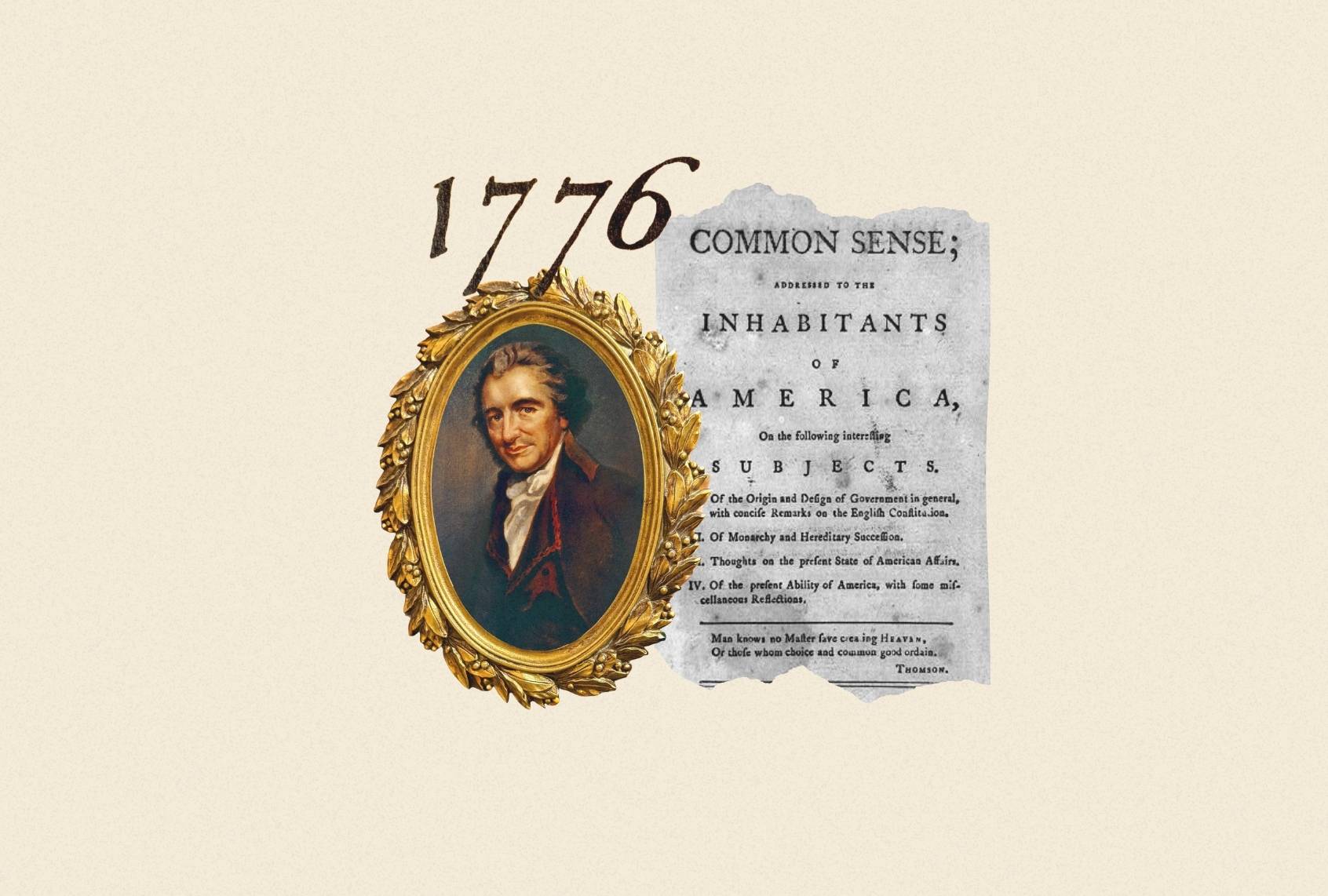
On January 10, 1776, Thomas Paine published his influential pamphlet, “Common Sense,” which played a pivotal role in the American Revolution. In its pages, Paine asserted, “We have it in our power to begin the world over again,” a statement that underscored the need for independence from British rule. This work shifted the colonial narrative from seeking rights under a monarchy to advocating for a government based on popular sovereignty and liberty.
Paine’s timing was crucial. Prior to the release of “Common Sense,” American colonists had primarily sought relief from the king rather than independence. Following the Stamp Act Crisis of 1765, which imposed taxes without representation, tensions escalated. By 1775, even after establishing a Continental Army to confront British forces, Congress maintained its loyalty to King George III, stating its intent was not to separate but to defend their birthright as subjects. However, the king’s dismissal of the colonists’ Olive Branch Petition, which reaffirmed their allegiance to the crown, marked a turning point.
The king labeled the colonies as “in open and avowed rebellion” and prepared to suppress them with overwhelming military force. News of his proclamation, coupled with British bombardments of Norfolk, Virginia, reached the colonies at the start of 1776. It was during this turbulent time that Paine, encouraged by leaders like Benjamin Rush and advised by Benjamin Franklin and Samuel Adams, completed “Common Sense.”
Transforming Perspectives on Governance
In “Common Sense,” Paine challenged the traditional notions of monarchy and governance. Drawing on ideas from John Locke, he argued that people are inherently free and equal and that governments should exist to protect their liberties. He claimed that monarchy disrupted this natural order, leading to injustices like taxation without representation. Paine famously stated, “The palaces of Kings are built on the ruins of the bowers of Paradise,” emphasizing the corrupting influence of power on rulers.
The pamphlet resonated with a populace increasingly disillusioned with British authority. Paine’s call for representative government, where elected officials were accountable to the people, struck a chord during a time when many absolutist regimes dominated the globe. He noted, “Of more worth is one honest man to society and in the sight of God than all the crowned ruffians that ever lived.” This shift in perspective positioned the king as the primary target of colonial grievances and ignited the desire for independence.
Within weeks of its publication, “Common Sense” became a bestseller. At a time when most American newspapers had circulations under 2,000, over 100,000 copies were in circulation by mid-April, reaching approximately 500,000 by 1778. It became a topic of discussion in clubs and schools, and even George Washington had it read to the troops besieging Boston, acknowledging its powerful influence.
A Lasting Legacy
Paine’s words articulated a burgeoning sentiment that elevated resistance against British tax policies into a broader struggle for global liberty. He proclaimed, “The cause of America is in a great measure the cause of all mankind,” framing the American Revolution as a fight for universal rights. In about 80 pages, he laid out a vision of government aimed at promoting “the greatest sum of individual happiness with the least national expense,” instilling confidence that Americans could triumph over British might.
The ideals of life, liberty, and happiness articulated in “Common Sense” would later echo in the Declaration of Independence. Paine emphasized the rule of law, stating, “In America the law is king,” contrasting the capriciousness of monarchy with the principles of a free society. His vision of popular rule became the defining spirit of 1776 and continues to resonate today.
As the United States approaches its 250th anniversary, revisiting “Common Sense” offers invaluable insights. This foundational document not only condemned authoritarianism but also championed a radically representative government and individual liberties. Grounded in the Enlightenment’s principles, Paine’s ideas flourished in the fertile political landscape of a young nation striving for equality and independence.
In celebrating Paine’s legacy, it is essential to recognize the enduring relevance of “Common Sense” in the ongoing discourse about governance and individual rights.

Robinhood Stock Surges 2.5% Today Amid Tech Market Recovery

Philadelphia’s Earth Month Kicks Off with Free Events in Parks

GSK’s Inhaler Decision Sparks Health Concerns for Children

Bradford’s Fish Fry Fridays Offer Community Spirit and Flavor

Speculation Rises on Shutdowns During Trump’s Potential Presidency

Samsung Galaxy Watch 9 to Feature Larger Battery, Report Reveals

Inventors Find New Purpose Through Unconventional Paths

UConn Huskies Aim for Back-to-Back Titles in 2026 NCAA Tournament

U.S. Mine Countermeasure Ships Dock in Malaysia for Logistics Stop

University of Hawaiʻi at Mānoa Joins $25.6M AI Initiative for Disaster Monitoring

$2.2 Million Boost for Cancer Research and Training in Hawaiʻi

ALMA Discovers Companion Orbiting Red Giant Star π 1 Gruis

Sacituzumab Govitecan Shows Promise for HR+/HER2− Breast Cancer

币安人生 Sees $15.92 Million in Trading Volume Amid Market Fluctuations

New Gel Offers Hope for Regrowing Tooth Enamel in Dentistry

CAVA Group Shares Surge 5.1% Amid Mixed Analyst Ratings

Christian Bale in Talks to Join Leonardo DiCaprio in Heat 2

Supreme Court to Review Birthright Citizenship for Children of Immigrants
-
Science9 months ago
University of Hawaiʻi at Mānoa Joins $25.6M AI Initiative for Disaster Monitoring
-
 Health7 months ago
$2.2 Million Boost for Cancer Research and Training in Hawaiʻi
-
 Science9 months ago
ALMA Discovers Companion Orbiting Red Giant Star π 1 Gruis
-
 Health7 months ago
Sacituzumab Govitecan Shows Promise for HR+/HER2− Breast Cancer
-
Politics5 months ago
币安人生 Sees $15.92 Million in Trading Volume Amid Market Fluctuations
-
 Health9 months ago
New Gel Offers Hope for Regrowing Tooth Enamel in Dentistry
-
 Business8 months ago
CAVA Group Shares Surge 5.1% Amid Mixed Analyst Ratings
-
 Entertainment8 months ago
Christian Bale in Talks to Join Leonardo DiCaprio in Heat 2
-
 Politics8 months ago
Supreme Court to Review Birthright Citizenship for Children of Immigrants
-

 Lifestyle8 months ago
Art Deco and Traditional Designs Set to Transform Homes in 2026
-

 Lifestyle8 months ago
Fernando Mendoza Secures Maxwell and O’Brien Awards Ahead of Heisman
-

 World8 months ago
Swiss Residents Reject 50% Inheritance Tax on Wealthy