
World
Troops Honor Reptiles with Call Signs and Symbols

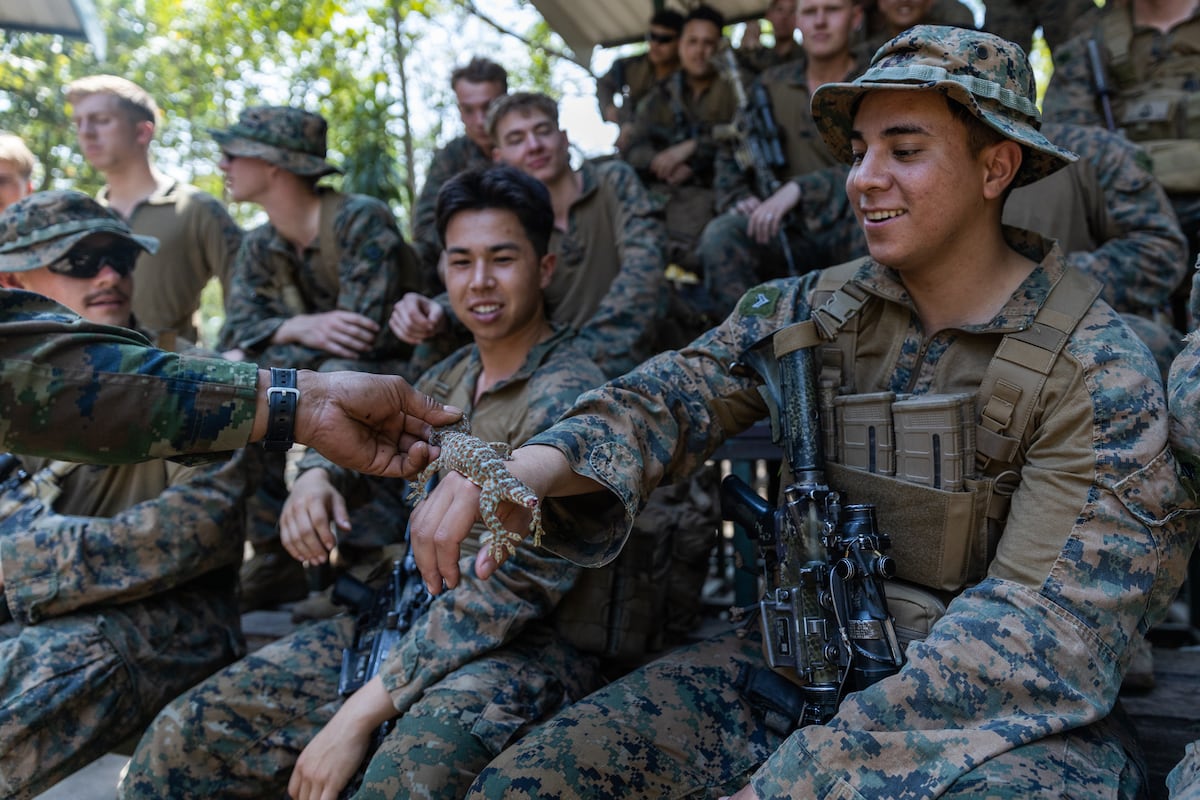
On National Reptile Awareness Day, observed on October 17, military personnel reflect on the significance of reptiles in their ranks. The U.S. military employs a range of reptilian mascots and call signs, from cobras to alligators, as symbols embodying the qualities of patience, precision, and power. This tradition is deeply ingrained in military culture, influencing unit identities and operational strategies across various branches.
Reptilian Symbolism in Military Culture
Reptiles resonate with service members due to their primal toughness. A cobra strikes without warning, while an alligator remains still until the opportune moment. This instinct mirrors the training of military personnel, who often must exercise similar control and discipline. For example, a sniper can hold their breath for hours, just as an alligator may wait underwater to ambush its prey. Both rely on timing rather than chaos, a principle that is essential in military operations.
The historical significance of reptiles in military contexts is highlighted by the U.S. 158th Infantry Regiment, which earned the nickname “Bushmasters” during World War II after encounters with the venomous snake in Panama and the Pacific. The name was not merely for flair; it represented survival and resilience. Today, the Bushmaster remains an integral part of the regiment’s heritage, depicted on its insignia.
Reptiles thrive in the environments where American forces have fought for over a century—deserts, swamps, and jungles. This shared toughness has made them fitting emblems. In Iraq and Afghanistan, Marines in amphibious assault units embraced the nickname “Gators,” reflecting both their vehicles and their versatility, akin to the adaptability of the animal they represent.
Practical Applications of Reptilian Nicknames
The 75th Field Artillery Regiment officially adopted reptilian imagery within its insignia in 1923, featuring a gold lizard on a red shield. This design pays homage to the regiment’s roots in Alabama, previously known as the “Lizard State.” The lizard symbolizes quickness and survival, characteristics that define the artillerymen who serve under this banner.
Reptilian call signs serve practical purposes as well. Short names like “Cobra One” or “Viper Six” are easily recognizable on radio channels, cutting through static and confusion. Their sharp, aggressive sounds convey decisiveness, and over time, these names become woven into the fabric of a unit’s history, spoken with pride by soldiers who may never have met.
During the Vietnam War, the connection between reptiles and aviation solidified with the introduction of the Bell AH-1 “Cobra” helicopter in 1967. The aircraft’s sleek design and lethal capabilities matched the symbolism of the snake, reinforcing its status as a representation of American air dominance. Today, the AH-1Z “Viper,” a modern upgrade, continues this tradition, embodying the same qualities in combat.
Reptilian imagery extends to military heraldry as well. The 3rd Armored Cavalry Regiment historically used the motto, “Brave Rifles, Scales of the Dragon,” merging reptilian symbolism with mythology to convey unity and strength. The Marine Corps’ Amphibious Assault Schools in California are informally known as “the Gator School,” a nod to their amphibious heritage and their involvement in World War II landings.
The military’s use of reptilian symbols dates back thousands of years, with ancient Egyptians invoking crocodiles for power and protection. This historical connection to strength and military success mirrors modern American patches and mottos, where the underlying message remains consistent: be patient, strike hard, and survive.
Enduring Legacy of Reptilian Symbolism
The term “cold-blooded” has evolved within military vernacular to describe operating without emotion, signifying the ability to carry out missions despite fear, fatigue, or doubt. This reflects the focused discipline exemplified by a gator before it snaps its jaws.
When soldiers don patches adorned with reptilian motifs or bear call signs like “Cobra One,” they embody a legacy of storytelling and tradition that spans decades. Reptiles, having survived longer than nearly any other species, symbolize adaptability, endurance, and dominance—qualities that resonate with service members trained to exemplify the same traits.
From the jungles of the Pacific to the deserts of Iraq, the alligator and cobra remain among the military’s most enduring symbols. They represent readiness, resilience, and survival. For a young soldier earning a patch marked by a gator’s jaw or a coiled snake, it signifies joining a lineage steeped in decades of service and tradition.

Robinhood Stock Surges 2.5% Today Amid Tech Market Recovery

Philadelphia’s Earth Month Kicks Off with Free Events in Parks

GSK’s Inhaler Decision Sparks Health Concerns for Children

Bradford’s Fish Fry Fridays Offer Community Spirit and Flavor

Speculation Rises on Shutdowns During Trump’s Potential Presidency

Samsung Galaxy Watch 9 to Feature Larger Battery, Report Reveals

Inventors Find New Purpose Through Unconventional Paths

UConn Huskies Aim for Back-to-Back Titles in 2026 NCAA Tournament

U.S. Mine Countermeasure Ships Dock in Malaysia for Logistics Stop

University of Hawaiʻi at Mānoa Joins $25.6M AI Initiative for Disaster Monitoring

$2.2 Million Boost for Cancer Research and Training in Hawaiʻi

ALMA Discovers Companion Orbiting Red Giant Star π 1 Gruis

Sacituzumab Govitecan Shows Promise for HR+/HER2− Breast Cancer

币安人生 Sees $15.92 Million in Trading Volume Amid Market Fluctuations

New Gel Offers Hope for Regrowing Tooth Enamel in Dentistry

CAVA Group Shares Surge 5.1% Amid Mixed Analyst Ratings

Christian Bale in Talks to Join Leonardo DiCaprio in Heat 2

Supreme Court to Review Birthright Citizenship for Children of Immigrants
-
Science9 months ago
University of Hawaiʻi at Mānoa Joins $25.6M AI Initiative for Disaster Monitoring
-
 Health7 months ago
$2.2 Million Boost for Cancer Research and Training in Hawaiʻi
-
 Science9 months ago
ALMA Discovers Companion Orbiting Red Giant Star π 1 Gruis
-
 Health7 months ago
Sacituzumab Govitecan Shows Promise for HR+/HER2− Breast Cancer
-
Politics5 months ago
币安人生 Sees $15.92 Million in Trading Volume Amid Market Fluctuations
-
 Health9 months ago
New Gel Offers Hope for Regrowing Tooth Enamel in Dentistry
-
 Business8 months ago
CAVA Group Shares Surge 5.1% Amid Mixed Analyst Ratings
-
 Entertainment9 months ago
Christian Bale in Talks to Join Leonardo DiCaprio in Heat 2
-
 Politics8 months ago
Supreme Court to Review Birthright Citizenship for Children of Immigrants
-

 Lifestyle8 months ago
Art Deco and Traditional Designs Set to Transform Homes in 2026
-

 Lifestyle8 months ago
Fernando Mendoza Secures Maxwell and O’Brien Awards Ahead of Heisman
-

 World8 months ago
Swiss Residents Reject 50% Inheritance Tax on Wealthy