
World
Trump Launches New “Board of Peace” Amid European Skepticism

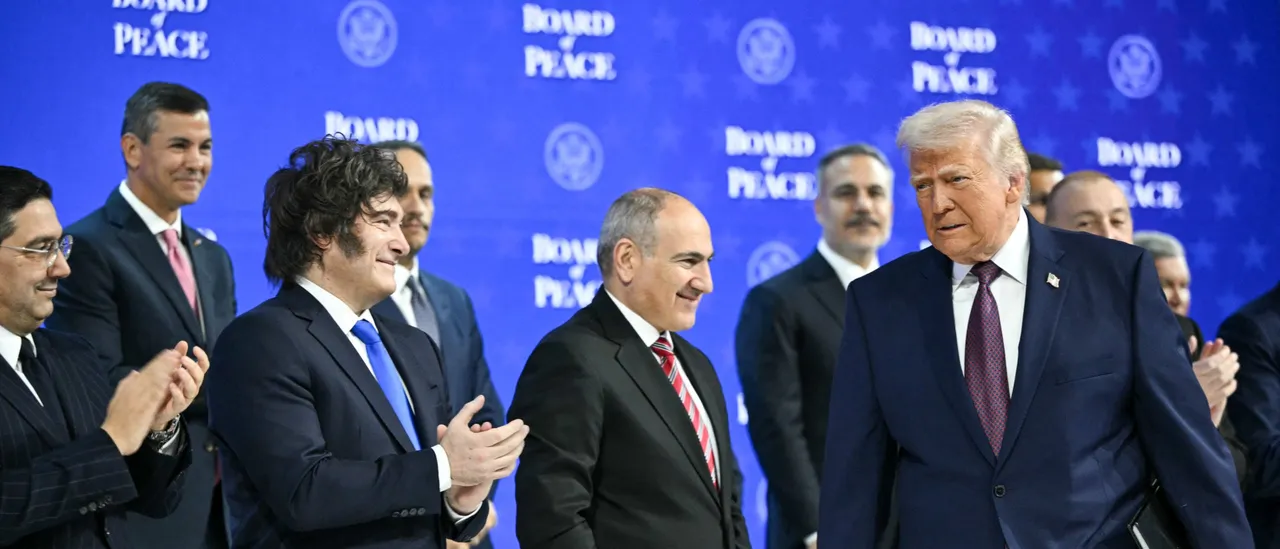
President Donald Trump introduced his newly formed “Board of Peace” at the World Economic Forum in Davos on January 22, 2026. The launch, however, was overshadowed by the notable absence of several key European allies, raising questions about the initiative’s viability. While a number of regional powers joined the board, many traditional U.S. partners, particularly in Europe, opted not to participate at this stage.
France was among the first to reject the proposal outright. French officials stated that the board’s charter “goes beyond the framework of Gaza and raises serious questions” regarding the principles and structure of the United Nations. This sentiment was echoed by other nations, which expressed a need for further evaluation before committing to the initiative.
Originally proposed as part of Trump’s 20-point peace plan for Gaza, the Board of Peace has since been positioned as a broader global entity. This shift has sparked skepticism among Western powers concerned about creating an alternative to the UN. Notably, the peace framework that includes the board was approved by the UN Security Council in November 2025.
At the signing ceremony, Trump asserted, “Once this board is completely formed, we can do pretty much whatever we want to do. And we’ll do it in conjunction with the United Nations.” He emphasized the UN’s potential, claiming it has not fully utilized its capabilities.
Trump’s remarks were made alongside political allies, including Argentine President Javier Milei and Hungarian Prime Minister Viktor Orbán, as well as representatives from several nations such as Saudi Arabia, Turkey, Egypt, and others. Although Israeli Prime Minister Benjamin Netanyahu expressed his intention to be part of the initiative, he was absent from the ceremony.
The proposed terms for permanent members suggest a contribution of $1 billion each, with Trump assuming the role of inaugural chairman. Notably, none of the other permanent members of the UN Security Council—namely the United Kingdom, France, China, or Russia—have committed to joining the board. The UK, through Foreign Secretary Yvette Cooper, indicated it would not participate “at present,” citing concerns over the legal implications and the potential inclusion of Vladimir Putin as part of a peace initiative, particularly given the ongoing conflict in Ukraine.
Germany, Canada, Spain, and the Netherlands also refrained from joining, while nations such as Sweden, Slovenia, and Norway declined invitations. Italian Prime Minister Giorgia Meloni, typically viewed as supportive of Trump, indicated that Italy requires more time to consider the proposal.
As the Board of Peace moves forward, the reactions from European leaders highlight a significant divide in international relations and the complexities of establishing a new framework for global governance. With the initiative still in its early stages, the future of the board remains uncertain, particularly in light of the hesitance from major European powers.

Robinhood Stock Surges 2.5% Today Amid Tech Market Recovery

Philadelphia’s Earth Month Kicks Off with Free Events in Parks

GSK’s Inhaler Decision Sparks Health Concerns for Children

Bradford’s Fish Fry Fridays Offer Community Spirit and Flavor

Speculation Rises on Shutdowns During Trump’s Potential Presidency

Samsung Galaxy Watch 9 to Feature Larger Battery, Report Reveals

Inventors Find New Purpose Through Unconventional Paths

UConn Huskies Aim for Back-to-Back Titles in 2026 NCAA Tournament

U.S. Mine Countermeasure Ships Dock in Malaysia for Logistics Stop

University of Hawaiʻi at Mānoa Joins $25.6M AI Initiative for Disaster Monitoring

$2.2 Million Boost for Cancer Research and Training in Hawaiʻi

ALMA Discovers Companion Orbiting Red Giant Star π 1 Gruis

Sacituzumab Govitecan Shows Promise for HR+/HER2− Breast Cancer

币安人生 Sees $15.92 Million in Trading Volume Amid Market Fluctuations

New Gel Offers Hope for Regrowing Tooth Enamel in Dentistry

CAVA Group Shares Surge 5.1% Amid Mixed Analyst Ratings

Christian Bale in Talks to Join Leonardo DiCaprio in Heat 2

Supreme Court to Review Birthright Citizenship for Children of Immigrants
-
Science9 months ago
University of Hawaiʻi at Mānoa Joins $25.6M AI Initiative for Disaster Monitoring
-
 Health7 months ago
$2.2 Million Boost for Cancer Research and Training in Hawaiʻi
-
 Science8 months ago
ALMA Discovers Companion Orbiting Red Giant Star π 1 Gruis
-
 Health7 months ago
Sacituzumab Govitecan Shows Promise for HR+/HER2− Breast Cancer
-
Politics5 months ago
币安人生 Sees $15.92 Million in Trading Volume Amid Market Fluctuations
-
 Health9 months ago
New Gel Offers Hope for Regrowing Tooth Enamel in Dentistry
-
 Business7 months ago
CAVA Group Shares Surge 5.1% Amid Mixed Analyst Ratings
-
 Entertainment8 months ago
Christian Bale in Talks to Join Leonardo DiCaprio in Heat 2
-
 Politics7 months ago
Supreme Court to Review Birthright Citizenship for Children of Immigrants
-

 Lifestyle8 months ago
Art Deco and Traditional Designs Set to Transform Homes in 2026
-

 Lifestyle7 months ago
Fernando Mendoza Secures Maxwell and O’Brien Awards Ahead of Heisman
-

 World8 months ago
Swiss Residents Reject 50% Inheritance Tax on Wealthy