
World
US and Israel Intensify Strikes on Iranian Military Targets

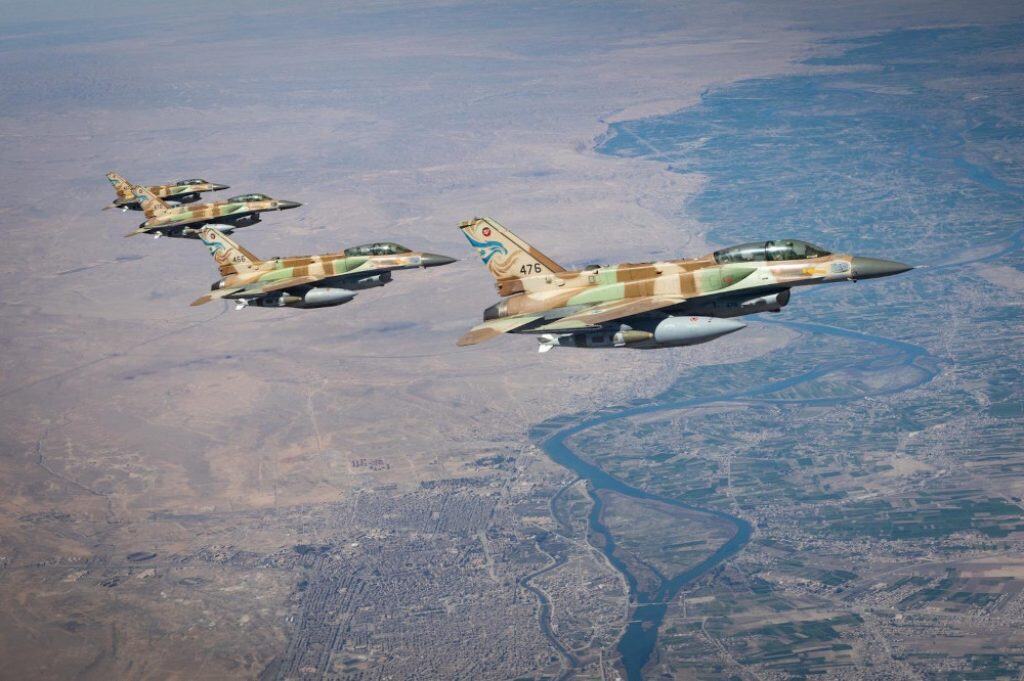
The joint military campaign between the United States and Israel against Iran reached a critical milestone on March 5, 2023, as operations extended into their 100th hour. The focus of this intensified effort has been on degrading Iran’s military capabilities, particularly its ballistic missile and naval assets. Both nations have reported significant advancements, with the United States targeting over 2,000 military sites and Israel striking more than 2,500 locations.
On March 4, General Dan Caine, Chairman of the Joint Chiefs of Staff, announced that the U.S. had established “localized air superiority across the southern flank of the Iranian coast.” This strategic advantage is expected to facilitate a new phase of the campaign. The following day, Chief of the General Staff of the Israeli Defense Forces (IDF), Eyal Zamir, stated that Israeli pilots had achieved a clear path to Tehran within the operation’s first 24 hours. He confirmed the completion of an initial surprise phase, which successfully suppressed much of Iran’s ballistic missile firing capabilities.
Reports indicate that U.S. and Israeli aircraft have been actively monitoring Iran’s underground missile silos. They are poised to strike when launchers emerge to fire, leading to a marked decline in Iranian ballistic missile launches, which General Caine reported had decreased by 86 percent since February 28. Additionally, drone launches were down 73 percent as of March 4.
U.S. Secretary of War Pete Hegseth described the Iranian Navy as “combat ineffective” on March 5, following U.S. Central Command’s report of over 20 Iranian vessels sunk, including the IRIS Dena, an Iranian frigate, which was destroyed in international waters with over 80 crew members aboard.
Targets and Impact of Military Strikes
The IDF has conducted extensive operations within Tehran, claiming to have struck over 750 targets within the city. This includes the dismantling of approximately 300 missile launchers and the targeting of key figures within the Iranian regime, including the death of over 40 senior operatives linked to the repressive apparatus. The IDF’s Persian social media account reported that it targeted critical elements of Iran’s command and control systems, including air defense and ballistic missile facilities.
On March 5, the IDF announced it had used more than 6,000 munitions in its airstrikes, destroying around 80 percent of Iran’s air defense systems and over 60 percent of its ballistic missile launchers. The ongoing operations have included a focus on the Basij, a paramilitary organization known for internal repression, as well as various police and law enforcement facilities.
In response to the growing tensions, Italy, France, Spain, and the Netherlands announced on March 5 that they would deploy military assets to defend Cyprus, following an Iranian drone strike against a British base on the island.
Iran’s Retaliation and International Reactions
On the same day, Iran escalated its military activity beyond its borders by conducting drone strikes against Azerbaijan, injuring four civilians in Nakhchivan. Azerbaijani President Ilham Aliyev condemned the attack, demanding accountability from Tehran. In contrast, Iranian officials denied involvement in the incident.
Tensions also heightened in Turkey, where NATO defenses intercepted an Iranian missile headed towards its airspace on March 4. Iranian military sources refuted claims of targeting Turkey, further complicating regional dynamics.
As the military operations continue, the IDF has focused not only on military targets but also on key components of Iran’s internal security apparatus. Reports indicate that Iranian forces have utilized civilian infrastructure for military purposes, including schools and sports complexes, which complicates the operational landscape for U.S. and Israeli forces.
Videos from various locations in Iran, including Tehran and other cities, have surfaced showing damage to IRGC facilities and police stations following airstrikes. The Iranian regime has reportedly increased security measures within the country, including establishing checkpoints and deploying loyalist forces to prevent public unrest, reminiscent of the protests seen in early 2023.
The current situation remains fluid as both the U.S. and Israel continue their operations against Iran. The ramifications of these military actions extend beyond immediate tactical gains, potentially reshaping the geopolitical landscape in the region.

Robinhood Stock Surges 2.5% Today Amid Tech Market Recovery

Philadelphia’s Earth Month Kicks Off with Free Events in Parks

GSK’s Inhaler Decision Sparks Health Concerns for Children

Bradford’s Fish Fry Fridays Offer Community Spirit and Flavor

Speculation Rises on Shutdowns During Trump’s Potential Presidency

Samsung Galaxy Watch 9 to Feature Larger Battery, Report Reveals

Inventors Find New Purpose Through Unconventional Paths

UConn Huskies Aim for Back-to-Back Titles in 2026 NCAA Tournament

U.S. Mine Countermeasure Ships Dock in Malaysia for Logistics Stop

University of Hawaiʻi at Mānoa Joins $25.6M AI Initiative for Disaster Monitoring

$2.2 Million Boost for Cancer Research and Training in Hawaiʻi

ALMA Discovers Companion Orbiting Red Giant Star π 1 Gruis

Sacituzumab Govitecan Shows Promise for HR+/HER2− Breast Cancer

币安人生 Sees $15.92 Million in Trading Volume Amid Market Fluctuations

New Gel Offers Hope for Regrowing Tooth Enamel in Dentistry

CAVA Group Shares Surge 5.1% Amid Mixed Analyst Ratings

Christian Bale in Talks to Join Leonardo DiCaprio in Heat 2

Supreme Court to Review Birthright Citizenship for Children of Immigrants
-
Science8 months ago
University of Hawaiʻi at Mānoa Joins $25.6M AI Initiative for Disaster Monitoring
-
 Health7 months ago
$2.2 Million Boost for Cancer Research and Training in Hawaiʻi
-
 Science8 months ago
ALMA Discovers Companion Orbiting Red Giant Star π 1 Gruis
-
 Health7 months ago
Sacituzumab Govitecan Shows Promise for HR+/HER2− Breast Cancer
-
Politics4 months ago
币安人生 Sees $15.92 Million in Trading Volume Amid Market Fluctuations
-
 Health8 months ago
New Gel Offers Hope for Regrowing Tooth Enamel in Dentistry
-
 Business7 months ago
CAVA Group Shares Surge 5.1% Amid Mixed Analyst Ratings
-
 Entertainment8 months ago
Christian Bale in Talks to Join Leonardo DiCaprio in Heat 2
-
 Politics7 months ago
Supreme Court to Review Birthright Citizenship for Children of Immigrants
-

 Lifestyle8 months ago
Art Deco and Traditional Designs Set to Transform Homes in 2026
-

 Lifestyle7 months ago
Fernando Mendoza Secures Maxwell and O’Brien Awards Ahead of Heisman
-

 World7 months ago
Swiss Residents Reject 50% Inheritance Tax on Wealthy