
World
USS Olympia’s Heroic Voyage with the Unknown Soldier

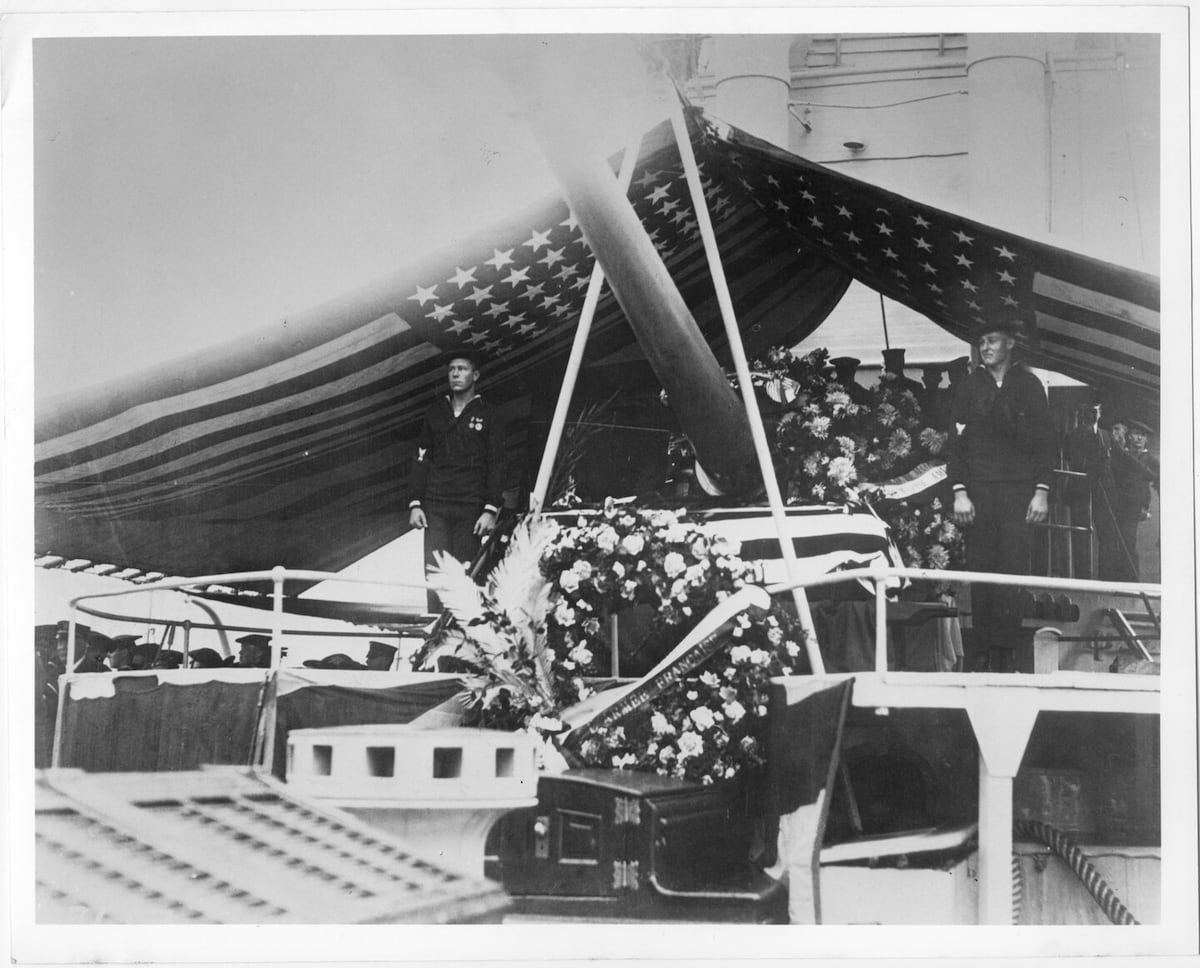
In a poignant chapter of American history, the USS Olympia undertook a hazardous voyage in November 1921 to transport the Unknown Soldier from France to the United States. This mission symbolized the nation’s respect for the countless soldiers who perished during the Great War, many of whom remained unidentified.
The journey began after the United States joined England and France in honoring their unknown soldiers, with ceremonies held at Westminster Abbey and the Arc de Triomphe in 1920. The task of selecting a representative body was daunting, as the U.S. had yet to identify 1,237 fallen soldiers. According to the U.S. Naval Institute, extraordinary care was taken to ensure that the chosen body would remain unidentified.
On October 23, 1921, four bodies were exhumed from American cemeteries in Aisne-Marne, Meuse-Argonne, Somme, and St. Mihiel. At Chalons-sur-Marne, French and American soldiers rearranged the caskets to further obscure their origins. The following day, Army Sergeant Edward Younger was given the solemn responsibility of selecting the Unknown Soldier. Younger later reflected on the moment, stating that he viewed himself and his comrades as “good, average soldiers” and believed that none had performed exceptional feats.
Holding white roses gifted by a grieving mother, Younger approached the four caskets, awed by the honor bestowed upon him. He circled the caskets three times, grappling with the weight of his decision. In his recollection, he described the scene: “Each casket was draped with a beautiful American flag.” When asked how he made his choice, he simply stated, “I don’t really know, but something drew me to it.”
With the Unknown Soldier selected, the body was transported aboard a specially prepared funeral train to Paris before continuing to Le Havre. There, Marine Captain Graves Erskine and his team prepared the steel gray casket for its sea journey. It was encased in a rough wooden box wrapped in waterproof canvas. Due to its size, the casket had to be lashed to the bow of the USS Olympia, the Navy’s most famous ship at the time, known for its role in the Spanish-American War.
Perilous Conditions at Sea
As the Olympia prepared for its journey, two storms threatened the ship. The first was a tropical storm that intensified into a hurricane, while the second storm swept through Florida and into the Gulf of Mexico, impacting the Olympia’s route. According to the Independence Seaport Museum, the ship was notorious for rolling, and during the voyage with the Unknown Soldier, it risked capsizing.
On Halloween, six days after departure, the Olympia found itself in gale-force winds and twenty-foot seas. Despite the perilous conditions, one Marine, secured to the ship’s stanchions, maintained a vigil over the casket. Two others stood by, ready to act if the casket began to shift dangerously.
At the height of the storm, the ship rolled 39 degrees, prompting fears of capsizing among the crew. Captain Henry Lake Wyman even sought divine intervention, asking Navy Chaplain Lt. Edward Duff to pray for the ship’s safety. The crew clung to anything affixed to the ship, anxiously watching as the casket was battered by waves.
The thought of the Unknown Soldier being lost at sea weighed heavily on Erskine, who later recounted, “I knew that if such a thing happened, I might as well jump over with him.” After battling the treacherous conditions, the Olympia persevered and arrived safely at its destination on November 11, 1921.
A Hero’s Welcome and Lasting Legacy
Upon arrival, the Olympia was met with a grand reception as it traveled up the Potomac River. The Unknown Soldier was laid to rest in Arlington National Cemetery during a ceremony attended by President Warren Harding, Vice President Calvin Coolidge, and numerous dignitaries and military representatives. Since 1925, the Unknown Soldier has been guarded by the U.S. Army’s 3rd Infantry Regiment, ensuring that this symbol of sacrifice is never forgotten.
In a touching moment, Sergeant Younger visited the tomb during Memorial Day in 1930. He remarked that he might have “eaten, slept, and fought next to him,” reflecting on the profound connection he felt to the soldier he had chosen. The story of the USS Olympia and its mission serves as a reminder of the sacrifices made by countless individuals and the enduring respect paid to those who served in the Great War.

Robinhood Stock Surges 2.5% Today Amid Tech Market Recovery

Philadelphia’s Earth Month Kicks Off with Free Events in Parks

GSK’s Inhaler Decision Sparks Health Concerns for Children

Bradford’s Fish Fry Fridays Offer Community Spirit and Flavor

Speculation Rises on Shutdowns During Trump’s Potential Presidency

Samsung Galaxy Watch 9 to Feature Larger Battery, Report Reveals

Inventors Find New Purpose Through Unconventional Paths

UConn Huskies Aim for Back-to-Back Titles in 2026 NCAA Tournament

U.S. Mine Countermeasure Ships Dock in Malaysia for Logistics Stop

University of Hawaiʻi at Mānoa Joins $25.6M AI Initiative for Disaster Monitoring

$2.2 Million Boost for Cancer Research and Training in Hawaiʻi

ALMA Discovers Companion Orbiting Red Giant Star π 1 Gruis

Sacituzumab Govitecan Shows Promise for HR+/HER2− Breast Cancer

币安人生 Sees $15.92 Million in Trading Volume Amid Market Fluctuations

New Gel Offers Hope for Regrowing Tooth Enamel in Dentistry

CAVA Group Shares Surge 5.1% Amid Mixed Analyst Ratings

Christian Bale in Talks to Join Leonardo DiCaprio in Heat 2

Supreme Court to Review Birthright Citizenship for Children of Immigrants
-
Science9 months ago
University of Hawaiʻi at Mānoa Joins $25.6M AI Initiative for Disaster Monitoring
-
 Health7 months ago
$2.2 Million Boost for Cancer Research and Training in Hawaiʻi
-
 Science9 months ago
ALMA Discovers Companion Orbiting Red Giant Star π 1 Gruis
-
 Health7 months ago
Sacituzumab Govitecan Shows Promise for HR+/HER2− Breast Cancer
-
Politics5 months ago
币安人生 Sees $15.92 Million in Trading Volume Amid Market Fluctuations
-
 Health9 months ago
New Gel Offers Hope for Regrowing Tooth Enamel in Dentistry
-
 Business8 months ago
CAVA Group Shares Surge 5.1% Amid Mixed Analyst Ratings
-
 Entertainment8 months ago
Christian Bale in Talks to Join Leonardo DiCaprio in Heat 2
-
 Politics8 months ago
Supreme Court to Review Birthright Citizenship for Children of Immigrants
-

 Lifestyle8 months ago
Art Deco and Traditional Designs Set to Transform Homes in 2026
-

 Lifestyle8 months ago
Fernando Mendoza Secures Maxwell and O’Brien Awards Ahead of Heisman
-

 World8 months ago
Swiss Residents Reject 50% Inheritance Tax on Wealthy