
World
Veterans Challenge Trump on Military Orders Amid Legal Concerns

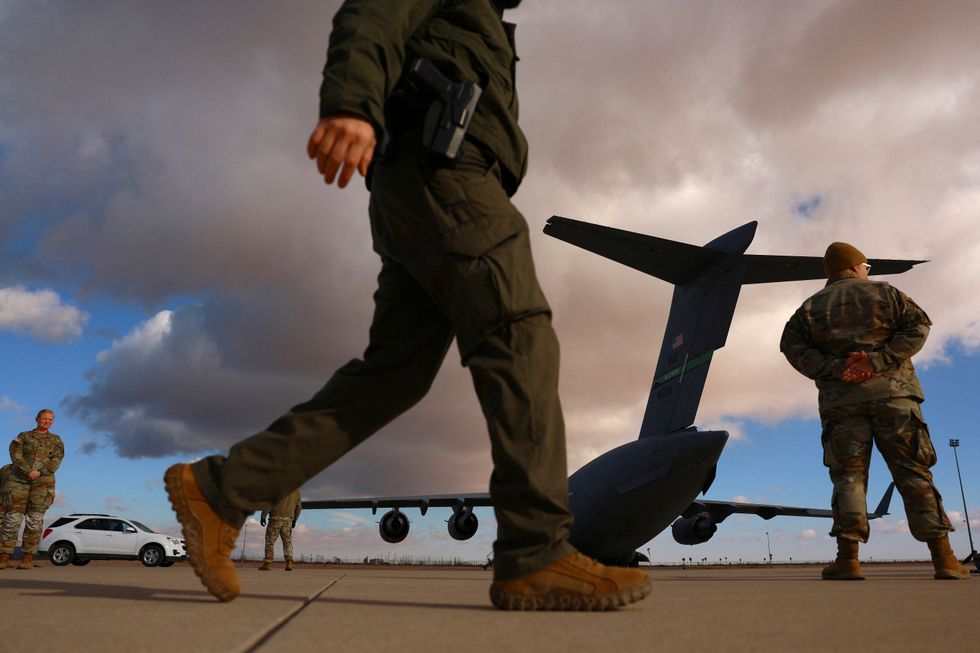
U.S. Representative Jason Crow (D-CO) has taken a firm stand against what he describes as illegal orders from former President Donald Trump, urging U.S. military members to refuse any commands that violate the law or the Constitution. In a video released last week, Crow, a decorated combat veteran, along with five fellow members of Congress who are also veterans, emphasized that service members are not obliged to execute unlawful orders.
Crow’s remarks followed a heated response from Trump, who labeled the legislators as traitors and shared a post on social media stating, “HANG THEM GEORGE WASHINGTON WOULD !!” Although Trump later clarified that he did not intend to incite violence, his remarks have raised significant concerns regarding the safety of those who oppose him. Several lawmakers, including Crow, reported receiving death threats as a result of their comments.
The legal implications of such orders are complex. Joseph Jordan, a former U.S. Army officer and lawyer specializing in military law, pointed to the Uniform Code of Military Justice, which mandates that service members must follow orders unless they are “patently illegal.” He explained that orders leading to the commission of a crime clearly fall into this category. However, disobeying orders can also lead to severe consequences, including a court martial.
Legal experts have weighed in on the matter. David French, an attorney who served in Iraq, highlighted the challenges faced by military leaders under Trump’s commands. For example, while executing a prisoner is unequivocally illegal, targeting homes believed to harbor insurgents complicates the issue of legality. French asserted that Trump has placed military leaders in a precarious position, making them complicit in potentially unlawful actions while burdening the conscience of serving soldiers.
The Historical Context of Defying Orders
The situation evokes historical parallels, particularly with the Sand Creek Massacre, which occurred on November 29, 1864. During this tragic event, Captain Silas Soule and Lieutenant Joseph Cramer refused to lead their men in the massacre of approximately 200 Cheyenne and Arapahoe natives, predominantly women and children. The massacre unfolded against a backdrop of escalating tensions between settlers and Native American tribes in Colorado.
Despite the American flag being displayed by the camp where the natives were gathered, Colonel John Chivington led his troops to attack, returning to Denver with scalps as trophies. Soule and Cramer expressed their horror in letters to their commanding officer, Major Edward Wynkoop, but the Army’s investigation did not vindicate Soule before his assassination in 1865.
In the years following the massacre, both Soule and Colorado Territorial Governor John Evans faced scrutiny for their roles. Reports commissioned in 2014 by Northwestern University and the University of Denver concluded that Evans significantly contributed to the conditions leading to the massacre, with the DU report stating he “created the conditions in which the massacre was highly likely.”
The graves of Soule and Evans tell a story of contrasting legacies. Soule’s grave, marked by a modest tombstone, has been visited by many, while Evans’ larger grave remained unadorned, reflecting his historical silence during crucial moments of leadership.
The current discourse surrounding military orders and legal compliance not only invokes historical precedents but also raises critical questions about the moral responsibilities of military personnel today. As Crow and his colleagues advocate for lawful conduct, the ongoing dialogue about the balance between obedience and legality continues to resonate deeply within the fabric of American governance and military ethics.

Robinhood Stock Surges 2.5% Today Amid Tech Market Recovery

Philadelphia’s Earth Month Kicks Off with Free Events in Parks

GSK’s Inhaler Decision Sparks Health Concerns for Children

Bradford’s Fish Fry Fridays Offer Community Spirit and Flavor

Speculation Rises on Shutdowns During Trump’s Potential Presidency

Samsung Galaxy Watch 9 to Feature Larger Battery, Report Reveals

Inventors Find New Purpose Through Unconventional Paths

UConn Huskies Aim for Back-to-Back Titles in 2026 NCAA Tournament

U.S. Mine Countermeasure Ships Dock in Malaysia for Logistics Stop

University of Hawaiʻi at Mānoa Joins $25.6M AI Initiative for Disaster Monitoring

$2.2 Million Boost for Cancer Research and Training in Hawaiʻi

ALMA Discovers Companion Orbiting Red Giant Star π 1 Gruis

Sacituzumab Govitecan Shows Promise for HR+/HER2− Breast Cancer

币安人生 Sees $15.92 Million in Trading Volume Amid Market Fluctuations

New Gel Offers Hope for Regrowing Tooth Enamel in Dentistry

CAVA Group Shares Surge 5.1% Amid Mixed Analyst Ratings

Christian Bale in Talks to Join Leonardo DiCaprio in Heat 2

Supreme Court to Review Birthright Citizenship for Children of Immigrants
-
Science8 months ago
University of Hawaiʻi at Mānoa Joins $25.6M AI Initiative for Disaster Monitoring
-
 Health7 months ago
$2.2 Million Boost for Cancer Research and Training in Hawaiʻi
-
 Science8 months ago
ALMA Discovers Companion Orbiting Red Giant Star π 1 Gruis
-
 Health7 months ago
Sacituzumab Govitecan Shows Promise for HR+/HER2− Breast Cancer
-
Politics4 months ago
币安人生 Sees $15.92 Million in Trading Volume Amid Market Fluctuations
-
 Health8 months ago
New Gel Offers Hope for Regrowing Tooth Enamel in Dentistry
-
 Business7 months ago
CAVA Group Shares Surge 5.1% Amid Mixed Analyst Ratings
-
 Entertainment8 months ago
Christian Bale in Talks to Join Leonardo DiCaprio in Heat 2
-
 Politics7 months ago
Supreme Court to Review Birthright Citizenship for Children of Immigrants
-

 Lifestyle7 months ago
Fernando Mendoza Secures Maxwell and O’Brien Awards Ahead of Heisman
-

 Lifestyle8 months ago
Art Deco and Traditional Designs Set to Transform Homes in 2026
-

 World7 months ago
Swiss Residents Reject 50% Inheritance Tax on Wealthy