
Entertainment
John Travolta’s ‘Urban Cowboy’: A Unique 1980 Western Drama

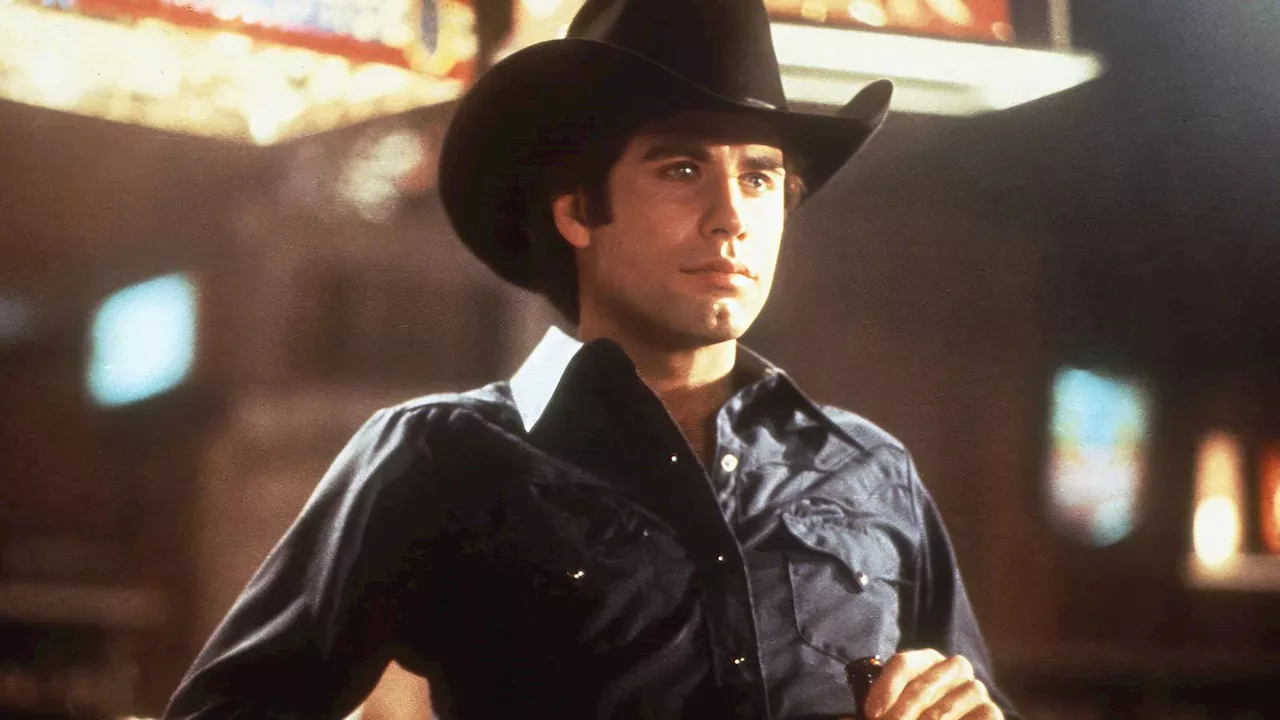
In June 1980, John Travolta surprised audiences with his role in the film Urban Cowboy, a departure from his established persona as a dance icon. Following the success of Saturday Night Fever and Grease, Travolta transitioned to a more rugged character in this Texas-set romantic drama directed by James Bridges. Despite the initial commercial performance, which grossed approximately $53 million at the box office, the film has since gained a cult following and remains significant in Travolta’s career.
Plot Overview and Themes
The narrative centers on Buford “Bud” Davis, played by Travolta, a young laborer who arrives in Pasadena, Texas, to work at an oil refinery and pursue his dreams. Bud becomes enamored with Sissy, a character portrayed by Debra Winger. Their whirlwind romance leads to a quick marriage, but the couple soon faces challenges, primarily stemming from the competitive atmosphere at Gilley’s, a local nightclub famous for its mechanical bull.
As Bud’s relationship with Sissy becomes strained, he turns his attention to Pam, an oil heiress. The conflict escalates as Bud finds himself torn between loyalty and desire. The film explores themes of fragile masculinity and the evolving roles of women in the workplace, reflecting broader cultural shifts in America during the early 1980s.
Soundtrack and Cultural Impact
The impact of Urban Cowboy extends beyond its plot, with a soundtrack that plays a crucial role in shaping the film’s narrative. The songs resonate with the characters’ experiences, enhancing the emotional depth of the story. Johnny Lee’s “Looking for Love” sets the tone for the tumultuous relationships, while Boz Scaggs’ “Look What You’ve Done to Me” mirrors Bud’s heartbreak during pivotal moments.
One standout track, “The Devil Went Down to Georgia,” performed by The Charlie Daniels Band, plays an essential role as Bud prepares for a rodeo contest, symbolizing his internal conflicts and aspirations. The film’s music not only captures the essence of the honky-tonk culture but also reflects the emotional landscape of its characters.
Although Urban Cowboy did not achieve the same level of acclaim as Travolta’s previous films, it marked a significant point in his career. At the age of 26, Travolta showcased his range as an actor, moving away from the polished image associated with his earlier roles. His portrayal of Bud, a flawed but relatable character, demonstrated a willingness to explore more complex narratives.
While the film received a 71% fresh score on Rotten Tomatoes, indicating a mixed critical reception, its authentic depiction of the honky-tonk scene and the cultural nuances of the time contributed to its enduring legacy.
In the context of the film industry, Urban Cowboy appeared during a transitional period for Westerns. The release coincided with the decline in popularity of the genre, as evidenced by the reception of films like Heaven’s Gate. Nevertheless, Travolta’s performance and the film’s modern take on traditional Western themes offered a fresh perspective, emphasizing sensitivity alongside masculinity.
As Travolta navigated this pivotal moment in his career, Urban Cowboy became a stepping stone for his eventual resurgence in the 1990s, particularly with Pulp Fiction. The film remains a noteworthy entry in his filmography, illustrating his versatility and willingness to evolve as an actor.
In conclusion, Urban Cowboy represents a unique chapter in cinematic history and John Travolta’s career. Its blend of romance, competition, and a vibrant soundtrack captures the essence of a changing America, making it a significant film of its era.

Robinhood Stock Surges 2.5% Today Amid Tech Market Recovery

Philadelphia’s Earth Month Kicks Off with Free Events in Parks

GSK’s Inhaler Decision Sparks Health Concerns for Children

Bradford’s Fish Fry Fridays Offer Community Spirit and Flavor

Speculation Rises on Shutdowns During Trump’s Potential Presidency

Samsung Galaxy Watch 9 to Feature Larger Battery, Report Reveals

Inventors Find New Purpose Through Unconventional Paths

UConn Huskies Aim for Back-to-Back Titles in 2026 NCAA Tournament

U.S. Mine Countermeasure Ships Dock in Malaysia for Logistics Stop

University of Hawaiʻi at Mānoa Joins $25.6M AI Initiative for Disaster Monitoring

$2.2 Million Boost for Cancer Research and Training in Hawaiʻi

ALMA Discovers Companion Orbiting Red Giant Star π 1 Gruis

Sacituzumab Govitecan Shows Promise for HR+/HER2− Breast Cancer

币安人生 Sees $15.92 Million in Trading Volume Amid Market Fluctuations

New Gel Offers Hope for Regrowing Tooth Enamel in Dentistry

CAVA Group Shares Surge 5.1% Amid Mixed Analyst Ratings

Christian Bale in Talks to Join Leonardo DiCaprio in Heat 2

Supreme Court to Review Birthright Citizenship for Children of Immigrants
-
Science9 months ago
University of Hawaiʻi at Mānoa Joins $25.6M AI Initiative for Disaster Monitoring
-
 Health7 months ago
$2.2 Million Boost for Cancer Research and Training in Hawaiʻi
-
 Science9 months ago
ALMA Discovers Companion Orbiting Red Giant Star π 1 Gruis
-
 Health7 months ago
Sacituzumab Govitecan Shows Promise for HR+/HER2− Breast Cancer
-
Politics5 months ago
币安人生 Sees $15.92 Million in Trading Volume Amid Market Fluctuations
-
 Health9 months ago
New Gel Offers Hope for Regrowing Tooth Enamel in Dentistry
-
 Business8 months ago
CAVA Group Shares Surge 5.1% Amid Mixed Analyst Ratings
-
 Entertainment8 months ago
Christian Bale in Talks to Join Leonardo DiCaprio in Heat 2
-
 Politics8 months ago
Supreme Court to Review Birthright Citizenship for Children of Immigrants
-

 Lifestyle8 months ago
Art Deco and Traditional Designs Set to Transform Homes in 2026
-

 Lifestyle8 months ago
Fernando Mendoza Secures Maxwell and O’Brien Awards Ahead of Heisman
-

 World8 months ago
Swiss Residents Reject 50% Inheritance Tax on Wealthy