
World
Venezuelan Opposition Leader Juan Pablo Guanipa Released from Prison

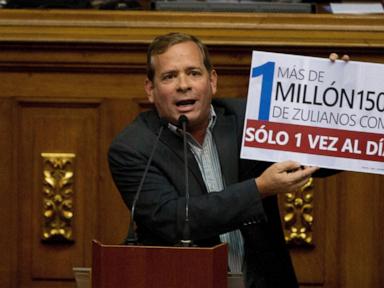
Venezuelan opposition leader Juan Pablo Guanipa was released from prison on February 4, 2024, after being detained for over eight months. His release comes amid growing pressure on the government to address the political climate in the country. Guanipa, a prominent figure within the opposition and a close ally of María Corina Machado, announced his freedom through a video shared on social media platform X.
“Today, we are being released,” Guanipa stated, emphasizing the need for dialogue about Venezuela’s present and future. His detention began in late May 2023, when he was accused by Interior Minister Diosdado Cabello of involvement with a purported “terrorist group” that aimed to disrupt legislative elections. Guanipa’s brother, Tomás Guanipa, condemned these allegations, asserting that the arrest was part of a broader crackdown on dissent.
“Thinking differently cannot be criminalized in Venezuela,” Tomás Guanipa said. “Today, Juan Pablo Guanipa is a prisoner of conscience of this regime.”
His release coincides with an evolving political landscape in Venezuela, particularly following the recent capture of former President Nicolás Maduro by U.S. military forces. Consequently, Delcy Rodríguez has taken on the role of acting president. The current government has faced intensified scrutiny from families and non-governmental organizations regarding the detention of individuals linked to their political beliefs.
Calls for Broader Political Reforms
Guanipa’s freedom highlights ongoing demands from the Venezuelan opposition and international human rights groups for the release of all political prisoners. Following the announcement of his release, pressure mounted on Rodríguez’s government, which had previously committed to freeing a substantial number of detainees as part of a deal with opposition forces and international stakeholders.
Despite the government’s pledges, many families and rights organizations have criticized the pace of these releases, arguing that they are insufficient and slow. The human rights situation in Venezuela remains precarious, with numerous individuals still held under conditions that many rights advocates deem unjust.
As the political situation continues to evolve, Guanipa’s release may serve as a catalyst for increased dialogue and potential reforms within the country. The Venezuelan opposition, emboldened by this development, is likely to push harder for comprehensive changes that align with democratic principles.
In the wake of Guanipa’s release, it remains to be seen how the government will respond to the growing demands for political accountability and reform. The coming weeks may prove crucial in determining the future trajectory of Venezuela’s political landscape as both the opposition and the government navigate this complex and challenging environment.

Robinhood Stock Surges 2.5% Today Amid Tech Market Recovery

Philadelphia’s Earth Month Kicks Off with Free Events in Parks

GSK’s Inhaler Decision Sparks Health Concerns for Children

Bradford’s Fish Fry Fridays Offer Community Spirit and Flavor

Speculation Rises on Shutdowns During Trump’s Potential Presidency

Samsung Galaxy Watch 9 to Feature Larger Battery, Report Reveals

Inventors Find New Purpose Through Unconventional Paths

UConn Huskies Aim for Back-to-Back Titles in 2026 NCAA Tournament

U.S. Mine Countermeasure Ships Dock in Malaysia for Logistics Stop

University of Hawaiʻi at Mānoa Joins $25.6M AI Initiative for Disaster Monitoring

$2.2 Million Boost for Cancer Research and Training in Hawaiʻi

ALMA Discovers Companion Orbiting Red Giant Star π 1 Gruis

Sacituzumab Govitecan Shows Promise for HR+/HER2− Breast Cancer

币安人生 Sees $15.92 Million in Trading Volume Amid Market Fluctuations

New Gel Offers Hope for Regrowing Tooth Enamel in Dentistry

CAVA Group Shares Surge 5.1% Amid Mixed Analyst Ratings

Supreme Court to Review Birthright Citizenship for Children of Immigrants

Christian Bale in Talks to Join Leonardo DiCaprio in Heat 2
-
Science9 months ago
University of Hawaiʻi at Mānoa Joins $25.6M AI Initiative for Disaster Monitoring
-
 Health7 months ago
$2.2 Million Boost for Cancer Research and Training in Hawaiʻi
-
 Science8 months ago
ALMA Discovers Companion Orbiting Red Giant Star π 1 Gruis
-
 Health7 months ago
Sacituzumab Govitecan Shows Promise for HR+/HER2− Breast Cancer
-
Politics5 months ago
币安人生 Sees $15.92 Million in Trading Volume Amid Market Fluctuations
-
 Health8 months ago
New Gel Offers Hope for Regrowing Tooth Enamel in Dentistry
-
 Business7 months ago
CAVA Group Shares Surge 5.1% Amid Mixed Analyst Ratings
-
 Politics7 months ago
Supreme Court to Review Birthright Citizenship for Children of Immigrants
-
 Entertainment8 months ago
Christian Bale in Talks to Join Leonardo DiCaprio in Heat 2
-

 Lifestyle8 months ago
Art Deco and Traditional Designs Set to Transform Homes in 2026
-

 Lifestyle7 months ago
Fernando Mendoza Secures Maxwell and O’Brien Awards Ahead of Heisman
-

 World8 months ago
Swiss Residents Reject 50% Inheritance Tax on Wealthy