
Science
Sciencenter Celebrates 30 Years of Inspiring Curiosity Through Hands-On Learning

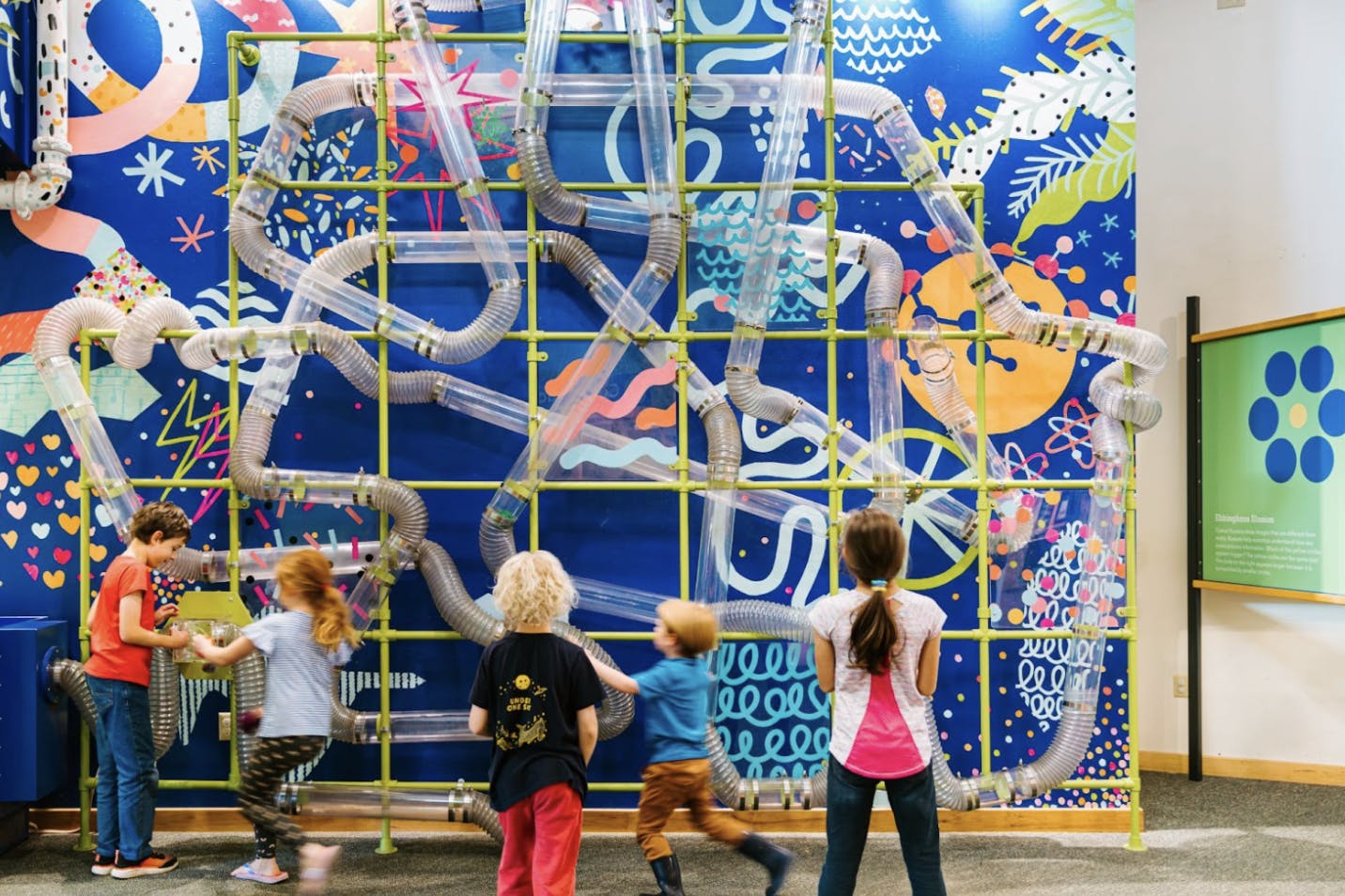
The Sciencenter in Ithaca, New York, is marking a significant milestone in its mission to foster curiosity and engagement among visitors. Over the past 30 years, this interactive science museum has developed innovative hands-on exhibits that encourage exploration and learning. Unlike typical modern venues filled with screens and passive observers, the Sciencenter buzzes with laughter, surprise, and the clatter of interactive displays.
Inside the facility, visitors can engage with a two-story kinetic ball machine, explore vivariums housing diverse species, and even handle live animals such as a rainbow boa. “I overheard a child tell their parents, ‘See, I told you it was real!’” shared Sierra Coathup, the Sciencenter’s volunteer program manager. She recalled observing a child’s excitement as they rushed to an axolotl tank, exemplifying the museum’s focus on experiential learning.
The Sciencenter aims to cultivate a community of “curious, collaborative, critical thinkers,” as stated on its website. This approach is particularly vital as traditional education often shifts from inquiry-based learning to rote memorization. Prof. Chris Schaffer, from the biomedical engineering department, notes that science is generally a favorite subject for students until middle school, where the emphasis on memorization can dampen curiosity.
Research supports the Sciencenter’s methods. A notable 33-year study indicated that early hands-on experiences in science significantly impact lifelong interest and engagement. The Sciencenter’s exhibitions are meticulously crafted through extensive audience research, prototyping, and testing, ensuring that each display effectively engages visitors.
The development of the Bridges to Bioengineering exhibition showcases this rigorous process. This project, a collaboration with faculty and students from Cornell’s Meinig School of Biomedical Engineering, aims to simplify complex biomedical concepts for public understanding. Currently in its third year, the 1,500-square-foot bilingual exhibition incorporates both Spanish and English to reach diverse audiences.
The creation of this exhibition began with “front-end evaluations,” explained Adrienne Testa, director of exhibitions. The team conducted interviews with professionals, students, and parents in Tompkins County and Groton, New York, to ascertain public knowledge of biomedical engineering and identify prevalent misconceptions.
By the second year, the team moved into “proof of concept” prototyping. They tested the initial ideas to determine whether the exhibit could capture attention, communicate scientific concepts clearly, and remain feasible within budget constraints. Currently, the team is fine-tuning the exhibition based on feedback from public prototyping sessions.
“We monitor how children interact, whether they seem to have fun, and what knowledge they take away,” Schaffer explained. This iterative design process is crucial for refining the exhibition before its final construction phase.
The Sciencenter’s reach extends beyond its physical location. In 2025, the museum’s traveling exhibitions are set to visit 14 states and two Canadian provinces, engaging hundreds of thousands of individuals. Future plans include an exhibition at a children’s science museum in Chengdu, China, expanding the Sciencenter’s model of inquiry-based learning across cultural borders.
The Sciencenter stands out as a beacon of curiosity, ensuring that the joy of discovery does not diminish as individuals grow older. Through the dedicated efforts of staff, researchers, and numerous volunteers, this institution continues to foster an environment where learning is tangible, hands-on, and, most importantly, fun. Moments like a child confidently asserting, “See? I told you it was real!” are the heart of the Sciencenter’s mission, proving that curiosity is worth nurturing at every age.

Robinhood Stock Surges 2.5% Today Amid Tech Market Recovery

Philadelphia’s Earth Month Kicks Off with Free Events in Parks

GSK’s Inhaler Decision Sparks Health Concerns for Children

Bradford’s Fish Fry Fridays Offer Community Spirit and Flavor

Speculation Rises on Shutdowns During Trump’s Potential Presidency

Samsung Galaxy Watch 9 to Feature Larger Battery, Report Reveals

Inventors Find New Purpose Through Unconventional Paths

UConn Huskies Aim for Back-to-Back Titles in 2026 NCAA Tournament

U.S. Mine Countermeasure Ships Dock in Malaysia for Logistics Stop

University of Hawaiʻi at Mānoa Joins $25.6M AI Initiative for Disaster Monitoring

$2.2 Million Boost for Cancer Research and Training in Hawaiʻi

ALMA Discovers Companion Orbiting Red Giant Star π 1 Gruis

Sacituzumab Govitecan Shows Promise for HR+/HER2− Breast Cancer

币安人生 Sees $15.92 Million in Trading Volume Amid Market Fluctuations

New Gel Offers Hope for Regrowing Tooth Enamel in Dentistry

CAVA Group Shares Surge 5.1% Amid Mixed Analyst Ratings

Christian Bale in Talks to Join Leonardo DiCaprio in Heat 2

Supreme Court to Review Birthright Citizenship for Children of Immigrants
-
Science8 months ago
University of Hawaiʻi at Mānoa Joins $25.6M AI Initiative for Disaster Monitoring
-
 Health7 months ago
$2.2 Million Boost for Cancer Research and Training in Hawaiʻi
-
 Science8 months ago
ALMA Discovers Companion Orbiting Red Giant Star π 1 Gruis
-
 Health7 months ago
Sacituzumab Govitecan Shows Promise for HR+/HER2− Breast Cancer
-
Politics4 months ago
币安人生 Sees $15.92 Million in Trading Volume Amid Market Fluctuations
-
 Health8 months ago
New Gel Offers Hope for Regrowing Tooth Enamel in Dentistry
-
 Business7 months ago
CAVA Group Shares Surge 5.1% Amid Mixed Analyst Ratings
-
 Entertainment8 months ago
Christian Bale in Talks to Join Leonardo DiCaprio in Heat 2
-
 Politics7 months ago
Supreme Court to Review Birthright Citizenship for Children of Immigrants
-

 Lifestyle8 months ago
Art Deco and Traditional Designs Set to Transform Homes in 2026
-

 Lifestyle7 months ago
Fernando Mendoza Secures Maxwell and O’Brien Awards Ahead of Heisman
-

 World8 months ago
Swiss Residents Reject 50% Inheritance Tax on Wealthy