
Science
Researchers Explore 3D Printing with Lunar Soil for Future Colonies

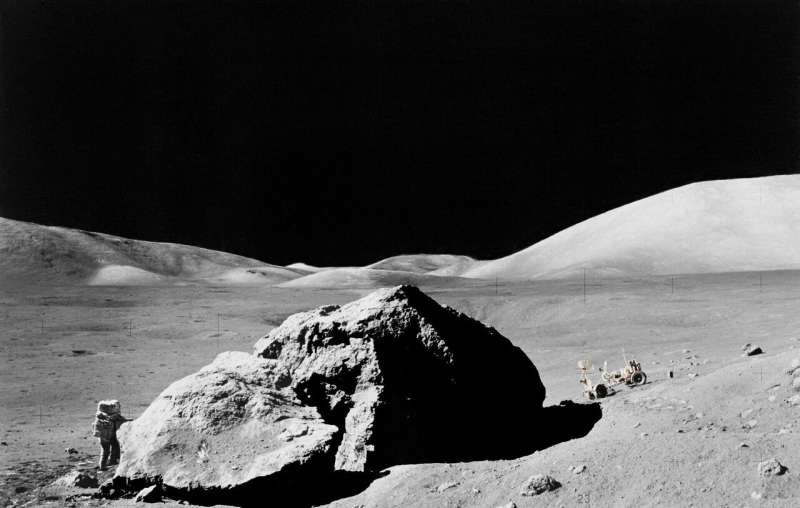
A recent study conducted by researchers at The Ohio State University has demonstrated the potential of using lunar regolith simulant in 3D printing, aiming to create durable structures for future lunar colonies. This innovative approach could significantly reduce the costs and resource requirements for space missions, particularly as NASA’s Artemis program seeks to establish a sustainable human presence on the moon by the end of the decade.
Utilizing a specialized laser 3D printing technique, the team melted a synthetic version of lunar soil, known as regolith simulant, to fabricate small, heat-resistant objects. The process involved layering the simulant onto a base surface, which could be vital for constructing habitats and tools for astronauts on the lunar surface. The findings were published in the journal Acta Astronautica on February 27, 2026.
Testing Conditions and Material Performance
The researchers discovered that the quality of the printed materials is highly influenced by the surface onto which the simulant is applied. Sizhe Xu, the lead author of the study, explained, “By combining different feedstocks, like metal and ceramics, we found that the final material is really sensitive to the environment. Different environments lead to different properties, which directly affect the mechanical strength and the thermal shock resistance of certain components.”
The specific type of lunar regolith simulant used in this study, LHS-1, is designed to mimic soil from the lunar highlands, characterized by its heavy cratering and dark basaltic rock. The team noted that while printing LHS-1 on stainless steel and glass proved challenging, it adhered effectively to alumina-silicate ceramic. This adhesion likely stems from the crystallization of the two compounds, which enhances both thermal stability and mechanical strength.
Challenges in Off-Earth Construction
The research team also identified various environmental factors that could impact the stability of printed structures. These include the amount of oxygen in the atmosphere, the strength of the laser, and the printing speed. Senior author Sarah Wolff, an assistant professor in mechanical and aerospace engineering, emphasized the difficulties of replicating space conditions in a laboratory setting. “There are conditions that happen in space that are really hard to emulate in a simulant,” she stated. “In a resource-scarce environment, you have to try everything to maximize the flexibility of a machine for different scenarios.”
As space exploration continues to evolve, developing systems capable of functioning effectively off-Earth remains a significant challenge. Technologies for In-Situ Resource Utilization—the process of using local resources at mission destinations—must be resilient against extreme conditions, such as vacuum, dust, and temperature fluctuations.
The Future of In-Space Manufacturing
The advancements in additive manufacturing systems hold promise for reducing reliance on transporting heavy materials from Earth. Such technologies would enable astronauts to fabricate a variety of structures, tools, and habitats directly on the moon, thereby saving time and enhancing mission sustainability. The study suggests future printing systems might leverage solar or hybrid power sources instead of relying solely on electricity as is customary on Earth.
Looking beyond space applications, the research may have implications for addressing material shortages on Earth. “If we can successfully manufacture things in space using very few resources, that means we can also achieve better sustainability on Earth,” Wolff noted. The team continues to work towards enhancing the flexibility of their machines for various potential scenarios.
The collaborative effort includes co-authors from The Ohio State University, such as Marwan Haddad, Aslan Bafahm Alamdari, Annabel Shim, and Alan Luo. The potential of 3D printing with lunar soil could pave the way for a new era of construction in space, marking a significant step towards humanity’s future among the stars.

Robinhood Stock Surges 2.5% Today Amid Tech Market Recovery

Philadelphia’s Earth Month Kicks Off with Free Events in Parks

GSK’s Inhaler Decision Sparks Health Concerns for Children

Bradford’s Fish Fry Fridays Offer Community Spirit and Flavor

Speculation Rises on Shutdowns During Trump’s Potential Presidency

Samsung Galaxy Watch 9 to Feature Larger Battery, Report Reveals

Inventors Find New Purpose Through Unconventional Paths

UConn Huskies Aim for Back-to-Back Titles in 2026 NCAA Tournament

U.S. Mine Countermeasure Ships Dock in Malaysia for Logistics Stop

University of Hawaiʻi at Mānoa Joins $25.6M AI Initiative for Disaster Monitoring

$2.2 Million Boost for Cancer Research and Training in Hawaiʻi

ALMA Discovers Companion Orbiting Red Giant Star π 1 Gruis

Sacituzumab Govitecan Shows Promise for HR+/HER2− Breast Cancer

币安人生 Sees $15.92 Million in Trading Volume Amid Market Fluctuations

New Gel Offers Hope for Regrowing Tooth Enamel in Dentistry

CAVA Group Shares Surge 5.1% Amid Mixed Analyst Ratings

Christian Bale in Talks to Join Leonardo DiCaprio in Heat 2

Supreme Court to Review Birthright Citizenship for Children of Immigrants
-
Science8 months ago
University of Hawaiʻi at Mānoa Joins $25.6M AI Initiative for Disaster Monitoring
-
 Health7 months ago
$2.2 Million Boost for Cancer Research and Training in Hawaiʻi
-
 Science8 months ago
ALMA Discovers Companion Orbiting Red Giant Star π 1 Gruis
-
 Health7 months ago
Sacituzumab Govitecan Shows Promise for HR+/HER2− Breast Cancer
-
Politics5 months ago
币安人生 Sees $15.92 Million in Trading Volume Amid Market Fluctuations
-
 Health8 months ago
New Gel Offers Hope for Regrowing Tooth Enamel in Dentistry
-
 Business7 months ago
CAVA Group Shares Surge 5.1% Amid Mixed Analyst Ratings
-
 Entertainment8 months ago
Christian Bale in Talks to Join Leonardo DiCaprio in Heat 2
-
 Politics7 months ago
Supreme Court to Review Birthright Citizenship for Children of Immigrants
-

 Lifestyle8 months ago
Art Deco and Traditional Designs Set to Transform Homes in 2026
-

 Lifestyle7 months ago
Fernando Mendoza Secures Maxwell and O’Brien Awards Ahead of Heisman
-

 World8 months ago
Swiss Residents Reject 50% Inheritance Tax on Wealthy