
World
Congress Avoids War Vote Amid Rising Tensions with Iran

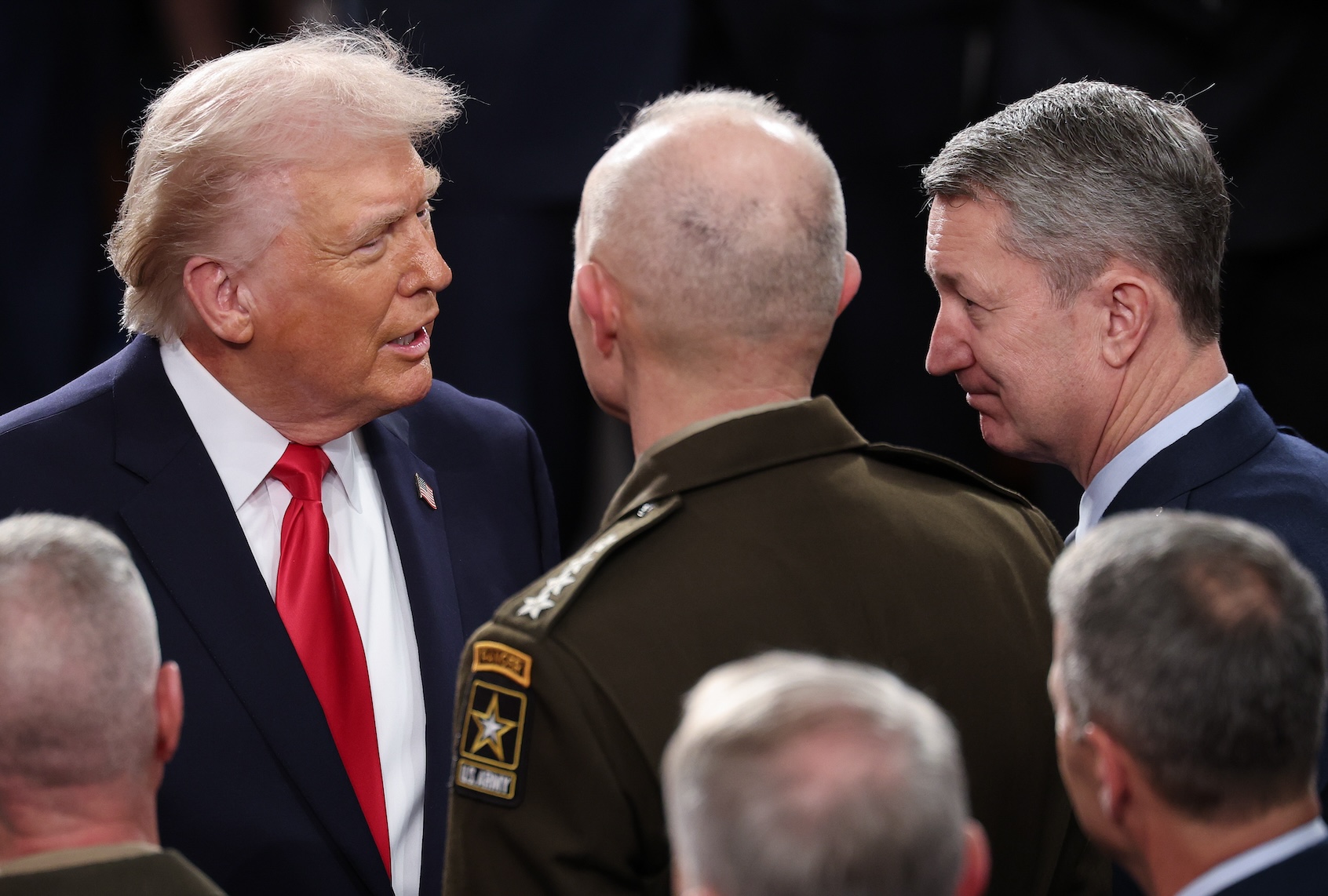
As tensions escalate between the United States and Iran, Congress has opted to sidestep a vote on a war powers resolution that would authorize military action. This decision comes as the Trump administration has positioned warships in the region, reminiscent of the military buildup prior to the Iraq invasion. Both Democrats and Republicans appear hesitant to publicly support a conflict, fearing political repercussions.
Representatives Ro Khanna, a Democrat from California, and Thomas Massie, a Republican from Kentucky, introduced the resolution aimed at reaffirming Congress’s constitutional role in declaring war. Despite the intent to assert legislative authority, a bipartisan group of lawmakers quickly opposed a vote. They argued that such a vote would undermine the flexibility needed to respond to threats and might be perceived as a sign of weakness.
In a joint statement, Mike Lawler, a Republican from New York, and Josh Gottheimer, a Democrat from New Jersey, emphasized the importance of oversight while warning that the resolution could limit the ability to act decisively in a volatile situation. They stated, “We respect and defend Congress’s constitutional role in matters of war… However, this resolution would restrict the flexibility needed to respond to real and evolving threats.”
Political analysts note that the reluctance to vote reflects a long-standing alignment between certain Democrats and the military-industrial complex. Corbin Trent, a Democratic strategist, described the current Democratic Party in Congress as closely aligned with pro-war interests. He remarked, “Congress runs on fear… They’d rather make no choices than risk making the wrong one.”
Additionally, some Democratic leaders are reportedly working to delay or sideline the resolution, citing procedural concerns rather than outright opposition. A senior Democratic staffer indicated that leadership avoids publicly opposing such votes due to their popularity among the party’s base. Instead, process-related issues are raised to maintain caucus unity.
The reluctance to take a stand on military intervention is also influenced by past experiences, particularly the Iraq war. Saikat Chakrabarti, a political strategist and congressional candidate, noted that many lawmakers prefer to avoid going on record in support of a war due to the negative consequences faced by politicians who did so in the past. He pointed out that support for the Iraq war significantly impacted the political fortunes of figures like Hillary Clinton and Jeb Bush.
On the other hand, the political landscape surrounding military decisions has not only implications for Congress but also raises questions about the motivations of the administration. Chakrabarti highlighted a pattern where military actions coincide with distractions from domestic issues. He remarked, “Every single time the Epstein file starts to have a risk of getting any attention… Trump decides to run to war with some other country.”
While some congressional leaders have voiced a need for justification regarding military actions in Iran, their responses have been cautious. Senator Chuck Schumer stated that the administration must make its case to the American people, asking for clarity about the necessity of military engagement. Similarly, House Minority Leader Hakeem Jeffries expressed skepticism over the urgency for conflict, pointing out that the administration previously claimed to have neutralized Iran’s nuclear capabilities.
The current situation underscores a complex interplay of political accountability and the pressing issues facing national security. As Congress grapples with its constitutional responsibilities, the question remains whether lawmakers will prioritize their political futures or act decisively in alignment with the Constitution and their constituents.

Robinhood Stock Surges 2.5% Today Amid Tech Market Recovery

Philadelphia’s Earth Month Kicks Off with Free Events in Parks

GSK’s Inhaler Decision Sparks Health Concerns for Children

Bradford’s Fish Fry Fridays Offer Community Spirit and Flavor

Speculation Rises on Shutdowns During Trump’s Potential Presidency

Samsung Galaxy Watch 9 to Feature Larger Battery, Report Reveals

Inventors Find New Purpose Through Unconventional Paths

UConn Huskies Aim for Back-to-Back Titles in 2026 NCAA Tournament

U.S. Mine Countermeasure Ships Dock in Malaysia for Logistics Stop

University of Hawaiʻi at Mānoa Joins $25.6M AI Initiative for Disaster Monitoring

$2.2 Million Boost for Cancer Research and Training in Hawaiʻi

ALMA Discovers Companion Orbiting Red Giant Star π 1 Gruis

Sacituzumab Govitecan Shows Promise for HR+/HER2− Breast Cancer

币安人生 Sees $15.92 Million in Trading Volume Amid Market Fluctuations

New Gel Offers Hope for Regrowing Tooth Enamel in Dentistry

CAVA Group Shares Surge 5.1% Amid Mixed Analyst Ratings

Christian Bale in Talks to Join Leonardo DiCaprio in Heat 2

Supreme Court to Review Birthright Citizenship for Children of Immigrants
-
Science8 months ago
University of Hawaiʻi at Mānoa Joins $25.6M AI Initiative for Disaster Monitoring
-
 Health7 months ago
$2.2 Million Boost for Cancer Research and Training in Hawaiʻi
-
 Science8 months ago
ALMA Discovers Companion Orbiting Red Giant Star π 1 Gruis
-
 Health7 months ago
Sacituzumab Govitecan Shows Promise for HR+/HER2− Breast Cancer
-
Politics4 months ago
币安人生 Sees $15.92 Million in Trading Volume Amid Market Fluctuations
-
 Health8 months ago
New Gel Offers Hope for Regrowing Tooth Enamel in Dentistry
-
 Business7 months ago
CAVA Group Shares Surge 5.1% Amid Mixed Analyst Ratings
-
 Entertainment8 months ago
Christian Bale in Talks to Join Leonardo DiCaprio in Heat 2
-
 Politics7 months ago
Supreme Court to Review Birthright Citizenship for Children of Immigrants
-

 Lifestyle8 months ago
Art Deco and Traditional Designs Set to Transform Homes in 2026
-

 Lifestyle7 months ago
Fernando Mendoza Secures Maxwell and O’Brien Awards Ahead of Heisman
-

 World8 months ago
Swiss Residents Reject 50% Inheritance Tax on Wealthy