
Science
Unique Cape Leopards Evolve into Distinct Genetic Group

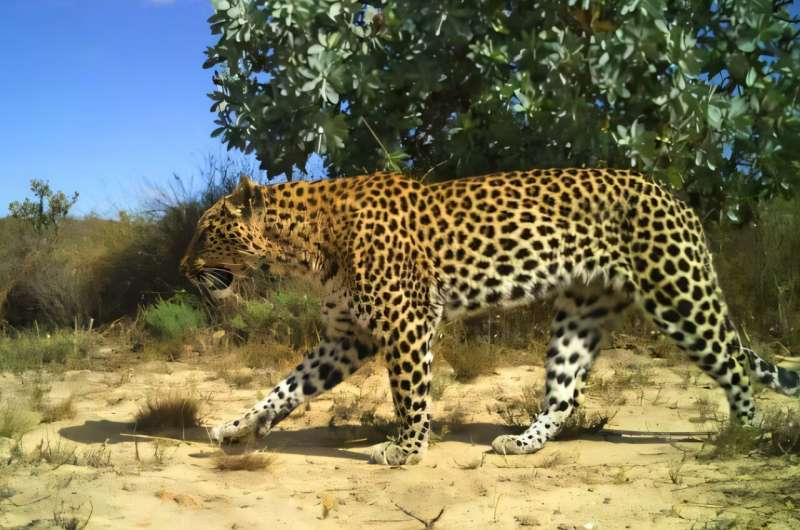
Research has revealed that leopards in South Africa’s Cape Floristic Region have adapted so successfully to their environment that they are now genetically distinct from other leopards across Africa. This population, which numbers fewer than 1,000 individuals, is significantly smaller than leopards found elsewhere on the continent, with some weighing only half as much. The study, published in the journal Heredity, sheds light on how isolation and adaptation over thousands of years have shaped these remarkable animals.
Understanding why animals of the same species can exhibit such variation is a complex challenge for researchers. Factors such as local environments, natural selection, and genetic drift all contribute to these differences. A team of conservationists and researchers, including Laura Tensen from the Cape Leopard Trust, set out to investigate the genetic uniqueness of these Cape leopards, which have long been a subject of debate among scientists.
Previous studies relied on a limited number of genetic markers, which provided only a partial picture of the genetic differences among leopard populations. To gain deeper insights, the team employed whole-genome analysis, examining the complete DNA sequence of the Cape leopards—approximately 2.57 billion base pairs encompassing around 19,000 genes. By comparing these genomes with those of leopards from other regions, they discovered that Cape leopards have been isolated for an extended period, leading to significant genetic divergence.
Geographic and Historical Context
The Cape leopards inhabit a unique ecosystem that is rich in biodiversity but presents challenges due to limited prey and habitat fragmentation. Their smaller size is not merely a result of genetic drift; the team identified around 90 genes associated with physical size and metabolism that are more prevalent in this isolated population. These adaptations have arisen in response to their environment, where they primarily hunt smaller prey such as rock hyrax and Cape grysbok.
The divergence of the Cape leopard population is believed to have begun about 20,000 to 24,000 years ago during the Last Glacial Maximum. This period marked significant climatic changes, resulting in cooler and drier conditions in southern Africa. The changing landscape hindered animal movement and contributed to the isolation of the Cape leopards from other populations.
Historically, the leopards faced severe threats during the 1800s and 1900s due to human activities such as hunting and habitat destruction. A leopard bounty system encouraged farmers to kill these animals, leading to a drastic decline in their numbers. The bounty ended in 1968, allowing for a gradual recovery in leopard populations thanks to conservation efforts.
Conservation Implications
The findings of this study have profound implications for leopard conservation. The Cape leopards, being genetically distinct, represent an evolutionarily significant unit that requires targeted protection. Their unique adaptations to the Cape Floristic Region mean that they face distinct challenges, including habitat fragmentation and human-wildlife conflict.
To ensure the survival of the Cape leopards, it is crucial to maintain and enhance connectivity across their habitats. Large fenced reserves are scarce, and these leopards often traverse agricultural and urban landscapes, where they are vulnerable to poaching and vehicle collisions. Addressing these threats and fostering collaboration with local landowners and communities is essential for the future of this unique population.
By protecting the Cape leopards, conservationists are not only safeguarding a key predator in the ecosystem but also preserving an important part of the evolutionary legacy that has developed over millennia in one of the world’s most distinctive environments.

Robinhood Stock Surges 2.5% Today Amid Tech Market Recovery

Philadelphia’s Earth Month Kicks Off with Free Events in Parks

GSK’s Inhaler Decision Sparks Health Concerns for Children

Bradford’s Fish Fry Fridays Offer Community Spirit and Flavor

Speculation Rises on Shutdowns During Trump’s Potential Presidency

Samsung Galaxy Watch 9 to Feature Larger Battery, Report Reveals

Inventors Find New Purpose Through Unconventional Paths

UConn Huskies Aim for Back-to-Back Titles in 2026 NCAA Tournament

U.S. Mine Countermeasure Ships Dock in Malaysia for Logistics Stop

University of Hawaiʻi at Mānoa Joins $25.6M AI Initiative for Disaster Monitoring

$2.2 Million Boost for Cancer Research and Training in Hawaiʻi

ALMA Discovers Companion Orbiting Red Giant Star π 1 Gruis

Sacituzumab Govitecan Shows Promise for HR+/HER2− Breast Cancer

币安人生 Sees $15.92 Million in Trading Volume Amid Market Fluctuations

New Gel Offers Hope for Regrowing Tooth Enamel in Dentistry

CAVA Group Shares Surge 5.1% Amid Mixed Analyst Ratings

Christian Bale in Talks to Join Leonardo DiCaprio in Heat 2

Supreme Court to Review Birthright Citizenship for Children of Immigrants
-
Science8 months ago
University of Hawaiʻi at Mānoa Joins $25.6M AI Initiative for Disaster Monitoring
-
 Health7 months ago
$2.2 Million Boost for Cancer Research and Training in Hawaiʻi
-
 Science8 months ago
ALMA Discovers Companion Orbiting Red Giant Star π 1 Gruis
-
 Health7 months ago
Sacituzumab Govitecan Shows Promise for HR+/HER2− Breast Cancer
-
Politics4 months ago
币安人生 Sees $15.92 Million in Trading Volume Amid Market Fluctuations
-
 Health8 months ago
New Gel Offers Hope for Regrowing Tooth Enamel in Dentistry
-
 Business7 months ago
CAVA Group Shares Surge 5.1% Amid Mixed Analyst Ratings
-
 Entertainment8 months ago
Christian Bale in Talks to Join Leonardo DiCaprio in Heat 2
-
 Politics7 months ago
Supreme Court to Review Birthright Citizenship for Children of Immigrants
-

 Lifestyle8 months ago
Art Deco and Traditional Designs Set to Transform Homes in 2026
-

 Lifestyle7 months ago
Fernando Mendoza Secures Maxwell and O’Brien Awards Ahead of Heisman
-

 World7 months ago
Swiss Residents Reject 50% Inheritance Tax on Wealthy