
Science
New Research Reveals Limits on Lifespan of Civilizations

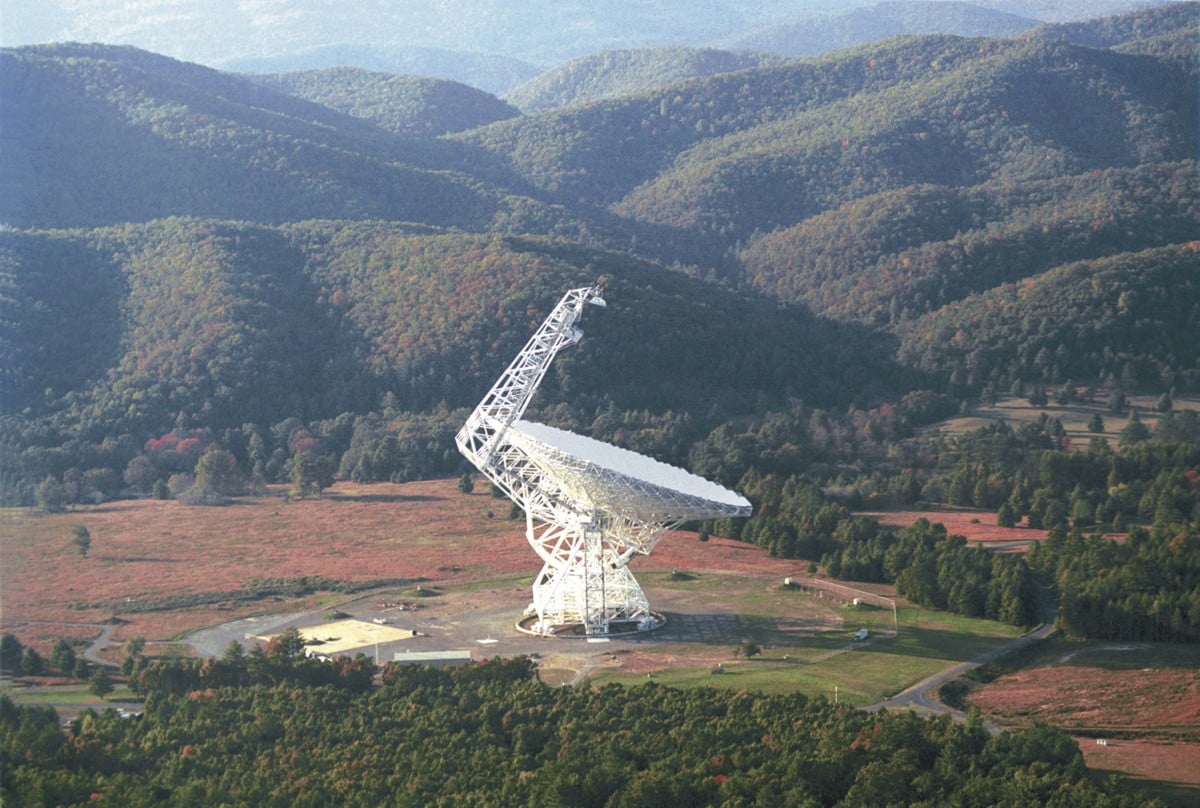
The question of why humanity has yet to detect evidence of extraterrestrial civilizations has puzzled scientists for decades. Known as the Fermi paradox, this inquiry gained renewed focus through recent research by physicists from Sharif University of Technology in Tehran. Sohrab Rahvar and Shahin Rouhani have approached the issue from a new perspective, suggesting that the silence surrounding extraterrestrial life may indicate a finite lifespan for technologically advanced civilizations.
The researchers propose that if intelligent life is indeed common in the universe, then the absence of contact with other civilizations implies that those civilizations are likely no longer in existence. The Milky Way Galaxy is approximately 13 billion years old, and contains hundreds of billions of stars, many of which host planets in the habitable zone where liquid water could exist. Given these conditions, one would expect to encounter signs of life. Yet, no signals or visits have occurred, raising significant questions about the longevity of such civilizations.
To explore this concept, Rahvar and Rouhani utilized the Drake Equation, a formula designed to estimate the number of active, communicative civilizations in the galaxy. They incorporated a crucial constraint derived from electromagnetic communication. Their analysis revealed that our radio telescopes have been operational long enough to cover a “light cone” that encompasses the entire history of the galaxy over the past 100,000 years. Any civilization capable of broadcasting detectable signals during this time should have been heard by now.
The researchers argue that the silence is not a reflection of our technological limitations but rather a genuine absence of other civilizations. Their calculations suggest that, if intelligent life emerges frequently, then advanced civilizations are unlikely to survive for more than approximately 5,000 years. This time frame is alarmingly short when considering that human civilization has only been technologically advanced for about 200 years, placing us within a vulnerable period of existence.
Rahvar and Rouhani’s paper outlines multiple existential threats that could contribute to the rapid decline of civilizations, including asteroid impacts, supervolcano eruptions, climate change, pandemics, nuclear conflict, artificial intelligence, and rogue biotechnology. They point to historical examples of collapsed societies, such as the Romans and the Maya, which failed to recover from catastrophic events. In our interconnected world, a civilization-ending catastrophe could rapidly escalate into a global crisis.
The implications of their findings are profound. The mathematical framework does not assert that civilizations must inevitably perish after 5,000 years; rather, it indicates that they cannot, on average, exist significantly longer if we are to rationalize the lack of contact with others. Alternative explanations remain viable, such as civilizations choosing not to communicate or the possibility that we are among the first intelligent species to emerge in the universe.
While the study does not dismiss these alternatives, the notion that the galaxy may have been home to numerous civilizations that thrived and subsequently vanished is striking. Whether due to warfare, environmental collapse, or the misuse of technology, the research suggests a stringent limit on the persistence of intelligence in the universe.
As humanity continues to navigate its technological advancements, the question remains: which category will we ultimately fit into? Will we become a fleeting civilization, or will we find a way to transcend the challenges that threaten our survival?

Robinhood Stock Surges 2.5% Today Amid Tech Market Recovery

Philadelphia’s Earth Month Kicks Off with Free Events in Parks

GSK’s Inhaler Decision Sparks Health Concerns for Children

Bradford’s Fish Fry Fridays Offer Community Spirit and Flavor

Speculation Rises on Shutdowns During Trump’s Potential Presidency

Samsung Galaxy Watch 9 to Feature Larger Battery, Report Reveals

Inventors Find New Purpose Through Unconventional Paths

UConn Huskies Aim for Back-to-Back Titles in 2026 NCAA Tournament

U.S. Mine Countermeasure Ships Dock in Malaysia for Logistics Stop

University of Hawaiʻi at Mānoa Joins $25.6M AI Initiative for Disaster Monitoring

$2.2 Million Boost for Cancer Research and Training in Hawaiʻi

ALMA Discovers Companion Orbiting Red Giant Star π 1 Gruis

Sacituzumab Govitecan Shows Promise for HR+/HER2− Breast Cancer

币安人生 Sees $15.92 Million in Trading Volume Amid Market Fluctuations

New Gel Offers Hope for Regrowing Tooth Enamel in Dentistry

CAVA Group Shares Surge 5.1% Amid Mixed Analyst Ratings

Christian Bale in Talks to Join Leonardo DiCaprio in Heat 2

Supreme Court to Review Birthright Citizenship for Children of Immigrants
-
Science8 months ago
University of Hawaiʻi at Mānoa Joins $25.6M AI Initiative for Disaster Monitoring
-
 Health7 months ago
$2.2 Million Boost for Cancer Research and Training in Hawaiʻi
-
 Science8 months ago
ALMA Discovers Companion Orbiting Red Giant Star π 1 Gruis
-
 Health7 months ago
Sacituzumab Govitecan Shows Promise for HR+/HER2− Breast Cancer
-
Politics4 months ago
币安人生 Sees $15.92 Million in Trading Volume Amid Market Fluctuations
-
 Health8 months ago
New Gel Offers Hope for Regrowing Tooth Enamel in Dentistry
-
 Business7 months ago
CAVA Group Shares Surge 5.1% Amid Mixed Analyst Ratings
-
 Entertainment8 months ago
Christian Bale in Talks to Join Leonardo DiCaprio in Heat 2
-
 Politics7 months ago
Supreme Court to Review Birthright Citizenship for Children of Immigrants
-

 Lifestyle7 months ago
Fernando Mendoza Secures Maxwell and O’Brien Awards Ahead of Heisman
-

 Lifestyle8 months ago
Art Deco and Traditional Designs Set to Transform Homes in 2026
-

 World7 months ago
Swiss Residents Reject 50% Inheritance Tax on Wealthy