
World
Iraqi Shiite Militias Intensify Drone Strikes on US Bases

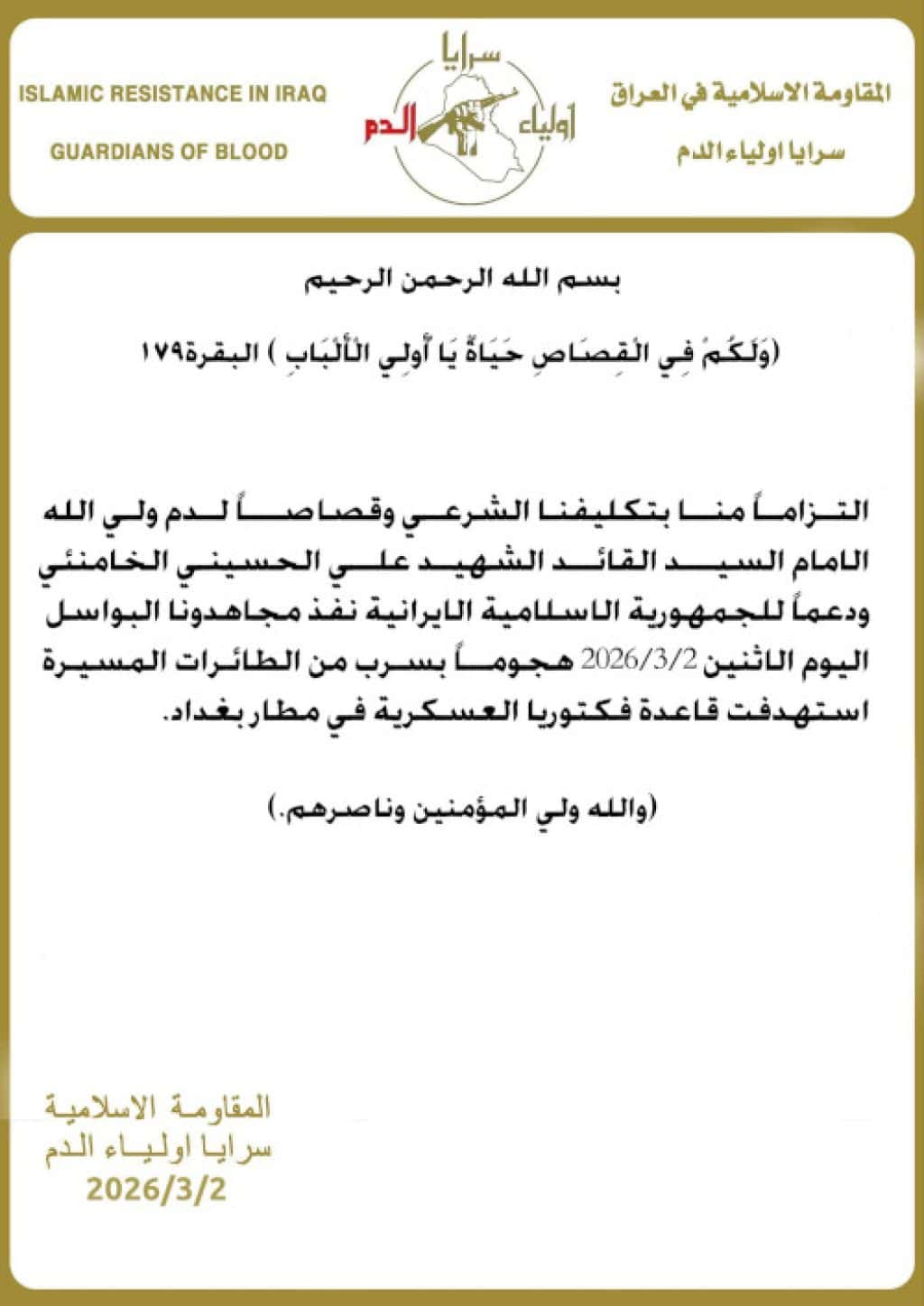
Iran-backed Shiite militias in Iraq, collectively known as the Islamic Resistance in Iraq (IRI), have claimed responsibility for a series of attacks targeting American military bases in the region. These actions are described as retaliation against US and Israeli military operations against Iran.
On March 1, 2024, Saraya Awliya al Dam (SAD), a faction within the IRI, announced that its fighters had launched drone and missile strikes against US facilities in Erbil, located in Iraq’s semi-autonomous Kurdistan Region. Reports from that day confirmed explosions at Erbil International Airport, which is utilized by US troops.
The following day, SAD reported another attack targeting Camp Victoria, situated near Baghdad International Airport. The group claimed to have deployed a “squadron of drones” against the base. Media sources acknowledged explosions in the vicinity, noting that air defenses were activated in response to two incoming drones.
On March 3, 2024, SAD asserted that it had targeted a hotel in Erbil that allegedly housed US soldiers, although this claim remains unverified. After the attacks, SAD released video footage purportedly showing its fighters launching drones and missiles.
The IRI as a whole made its presence known on March 1, declaring the execution of 21 operations using numerous drones against various enemy bases in Iraq and the broader region. A day later, the IRI claimed to have conducted an additional 28 operations involving both drones and missiles. By March 3, the group reported 27 more attacks, though specific details regarding the targets were not disclosed.
According to the US Central Command (CENTCOM), six American service members have lost their lives since the escalation of combat operations against Iran, with an additional 18 soldiers injured. An Iranian missile is believed to have struck a base in Kuwait where the deceased servicemen were stationed, but further details on the injured personnel have not been made public.
The rise of Iraqi militias, particularly those aligned with Iran, can be traced back to the aftermath of the 2003 US invasion of Iraq. These groups exploited the resulting power vacuum and sectarian conflict to challenge US forces and assert their influence within Iraq’s security framework. Over time, many of these militias were consolidated into the Popular Mobilization Forces (PMF), which has since been recognized as an official security institution under the Iraqi government, primarily formed to combat the Islamic State.
Despite the formal establishment of the PMF, several powerful factions, including Kataib Hezbollah and Asaib Ahl al Haq, continue to operate with considerable autonomy. Many of these groups are designated as terrorist organizations by the US and have maintained strong ties to Iran. They periodically conduct independent operations against US and coalition forces while also playing significant roles in shaping Iraqi domestic politics and resisting full state control.
Joe Truzman, an editor and senior research analyst at the Foundation for Defense of Democracies’ Long War Journal, focuses his research on Palestinian armed groups and non-state actors in the Middle East. The ongoing activities of these militias and their implications for regional stability remain a critical area of concern for both Iraqi and international stakeholders.

Robinhood Stock Surges 2.5% Today Amid Tech Market Recovery

Philadelphia’s Earth Month Kicks Off with Free Events in Parks

GSK’s Inhaler Decision Sparks Health Concerns for Children

Bradford’s Fish Fry Fridays Offer Community Spirit and Flavor

Speculation Rises on Shutdowns During Trump’s Potential Presidency

Samsung Galaxy Watch 9 to Feature Larger Battery, Report Reveals

Inventors Find New Purpose Through Unconventional Paths

UConn Huskies Aim for Back-to-Back Titles in 2026 NCAA Tournament

U.S. Mine Countermeasure Ships Dock in Malaysia for Logistics Stop

University of Hawaiʻi at Mānoa Joins $25.6M AI Initiative for Disaster Monitoring

$2.2 Million Boost for Cancer Research and Training in Hawaiʻi

ALMA Discovers Companion Orbiting Red Giant Star π 1 Gruis

Sacituzumab Govitecan Shows Promise for HR+/HER2− Breast Cancer

币安人生 Sees $15.92 Million in Trading Volume Amid Market Fluctuations

New Gel Offers Hope for Regrowing Tooth Enamel in Dentistry

CAVA Group Shares Surge 5.1% Amid Mixed Analyst Ratings

Christian Bale in Talks to Join Leonardo DiCaprio in Heat 2

Supreme Court to Review Birthright Citizenship for Children of Immigrants
-
Science8 months ago
University of Hawaiʻi at Mānoa Joins $25.6M AI Initiative for Disaster Monitoring
-
 Health7 months ago
$2.2 Million Boost for Cancer Research and Training in Hawaiʻi
-
 Science8 months ago
ALMA Discovers Companion Orbiting Red Giant Star π 1 Gruis
-
 Health7 months ago
Sacituzumab Govitecan Shows Promise for HR+/HER2− Breast Cancer
-
Politics4 months ago
币安人生 Sees $15.92 Million in Trading Volume Amid Market Fluctuations
-
 Health8 months ago
New Gel Offers Hope for Regrowing Tooth Enamel in Dentistry
-
 Business7 months ago
CAVA Group Shares Surge 5.1% Amid Mixed Analyst Ratings
-
 Entertainment8 months ago
Christian Bale in Talks to Join Leonardo DiCaprio in Heat 2
-
 Politics7 months ago
Supreme Court to Review Birthright Citizenship for Children of Immigrants
-

 Lifestyle7 months ago
Fernando Mendoza Secures Maxwell and O’Brien Awards Ahead of Heisman
-

 Lifestyle8 months ago
Art Deco and Traditional Designs Set to Transform Homes in 2026
-

 World7 months ago
Swiss Residents Reject 50% Inheritance Tax on Wealthy