
Science
Remote Surgery Breakthrough: Cancer Procedure Conducted 1,500 Miles Away

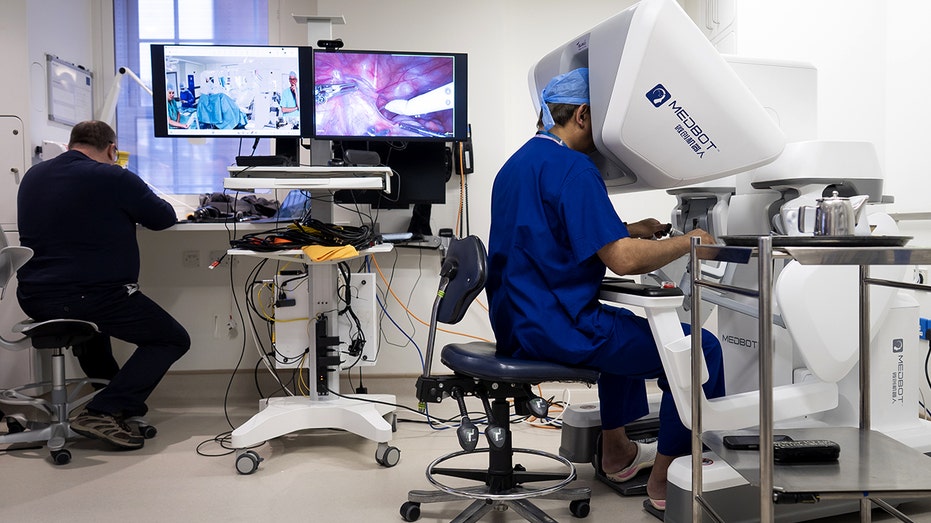
A groundbreaking medical procedure recently took place when doctors at The London Clinic successfully performed remote robot-assisted surgery, removing prostate cancer from a patient located 1,500 miles away in Gibraltar. This operation, conducted on March 4, 2026, marks a significant milestone as the first instance of such a surgical intervention by a U.K. hospital.
The procedure utilized the advanced Toumai Robotic System, developed by MicroPort MedBot, which is designed for high-precision, minimally invasive surgeries. Professor Prokar Dasgupta, who headed the operation, controlled the robotic system from a console at The London Clinic’s robotic center on Harley Street. Meanwhile, the patient, Paul Buxton, received treatment at St Bernard’s Hospital in Gibraltar.
How the Remote Procedure Worked
The surgery connected two hospitals through a sophisticated network, allowing for real-time communication between the surgeon and the robotic system. The delay between the surgeon’s commands and the robot’s movements was approximately 48 milliseconds, making it nearly instantaneous. This rapid response time is crucial for delicate operations like prostate cancer removal.
During the procedure, Professor Dasgupta operated four robotic arms and a high-definition 3D camera, while local urological surgeons, James Allen and Paul Hughes, stood by in Gibraltar in case of any complications or connectivity issues. The operation proceeded without incident, showcasing the potential of remote surgical technologies.
The Impact on Patients
Paul Buxton, the 62-year-old patient at the center of this historic surgery, has lived in Gibraltar for approximately four decades. Typically, patients requiring specialized prostate cancer surgeries must travel to larger medical centers, often leading to long waiting times and significant travel expenses. By participating in this telesurgery trial, Buxton was able to undergo the procedure locally without the usual disruptions.
Reports indicate that Buxton felt significantly better within days after the surgery, highlighting the advantages of remote robotic surgery in providing timely and efficient care close to home.
The Future of Remote Robotic Surgery
The successful operation is a testament to the advancements in remote robotic surgery, a field that has evolved over decades. The Lindbergh Operation, one of the earliest examples of remote surgery, involved a surgeon in New York performing gallbladder removal on a patient in France. Since then, technology has progressed, enabling cross-continental surgeries, including recent procedures conducted between Rome and Beijing.
The London Clinic’s achievement signals a shift from experimental demonstrations to practical medical applications. Furthermore, the hospitals plan to showcase their technology by live-streaming a telesurgery procedure to thousands of surgeons at the upcoming European Association of Urology Congress.
Technological Innovations Enabling Telesurgery
Several critical technologies collaborate to make remote surgery feasible. These include:
– **Ultra-low latency networks:** Essential for ensuring that surgeons can react instantly during operations, minimizing delays that could impact precision.
– **High precision surgical robots:** These systems translate a surgeon’s hand movements into smaller, more stable actions within the patient’s body, often enhancing outcomes in sensitive procedures.
– **Advanced imaging systems:** High-definition 3D cameras provide surgeons with exceptional clarity of the surgical area, improving visibility compared to traditional open surgery techniques.
Challenges Ahead for Remote Surgery
Despite the promising advancements, remote robotic surgery faces significant challenges. Reliable infrastructure is paramount, as hospitals must maintain networks with minimal downtime. The high costs of robotic systems and specialized networks, often amounting to millions of dollars, also pose financial hurdles. Additionally, regulatory questions arise when surgeons operate across international borders, complicating legal and licensing issues.
Safety remains a top priority, and while hospitals are treating telesurgery as an emerging capability, it is not yet a routine practice. Backup plans are necessary, with local surgical teams on standby to intervene if technological failures occur.
The Implications for Patients
The long-term implications of this technology for patients are profound. In the future, individuals may no longer need to travel long distances for complex medical procedures. Instead, specialists could perform surgeries remotely while patients remain in their local hospitals. This shift could greatly benefit those in rural areas and regions lacking immediate access to medical experts, potentially reducing waiting times for surgeries.
As hospitals continue to validate the safety and reliability of remote procedures, the landscape of surgical care is set for transformation. The successful telesurgery between London and Gibraltar illustrates an important step towards making world-class medical care accessible regardless of geographical barriers.

Robinhood Stock Surges 2.5% Today Amid Tech Market Recovery

Philadelphia’s Earth Month Kicks Off with Free Events in Parks

GSK’s Inhaler Decision Sparks Health Concerns for Children

Bradford’s Fish Fry Fridays Offer Community Spirit and Flavor

Speculation Rises on Shutdowns During Trump’s Potential Presidency

Samsung Galaxy Watch 9 to Feature Larger Battery, Report Reveals

Inventors Find New Purpose Through Unconventional Paths

UConn Huskies Aim for Back-to-Back Titles in 2026 NCAA Tournament

U.S. Mine Countermeasure Ships Dock in Malaysia for Logistics Stop

University of Hawaiʻi at Mānoa Joins $25.6M AI Initiative for Disaster Monitoring

$2.2 Million Boost for Cancer Research and Training in Hawaiʻi

ALMA Discovers Companion Orbiting Red Giant Star π 1 Gruis

Sacituzumab Govitecan Shows Promise for HR+/HER2− Breast Cancer

币安人生 Sees $15.92 Million in Trading Volume Amid Market Fluctuations

New Gel Offers Hope for Regrowing Tooth Enamel in Dentistry

CAVA Group Shares Surge 5.1% Amid Mixed Analyst Ratings

Christian Bale in Talks to Join Leonardo DiCaprio in Heat 2

Supreme Court to Review Birthright Citizenship for Children of Immigrants
-
Science8 months ago
University of Hawaiʻi at Mānoa Joins $25.6M AI Initiative for Disaster Monitoring
-
 Health7 months ago
$2.2 Million Boost for Cancer Research and Training in Hawaiʻi
-
 Science8 months ago
ALMA Discovers Companion Orbiting Red Giant Star π 1 Gruis
-
 Health7 months ago
Sacituzumab Govitecan Shows Promise for HR+/HER2− Breast Cancer
-
Politics4 months ago
币安人生 Sees $15.92 Million in Trading Volume Amid Market Fluctuations
-
 Health8 months ago
New Gel Offers Hope for Regrowing Tooth Enamel in Dentistry
-
 Business7 months ago
CAVA Group Shares Surge 5.1% Amid Mixed Analyst Ratings
-
 Entertainment8 months ago
Christian Bale in Talks to Join Leonardo DiCaprio in Heat 2
-
 Politics7 months ago
Supreme Court to Review Birthright Citizenship for Children of Immigrants
-

 Lifestyle8 months ago
Art Deco and Traditional Designs Set to Transform Homes in 2026
-

 Lifestyle7 months ago
Fernando Mendoza Secures Maxwell and O’Brien Awards Ahead of Heisman
-

 World7 months ago
Swiss Residents Reject 50% Inheritance Tax on Wealthy