
Science
Researchers Uncover Magnetic Forces That May Solve Hubble Tension

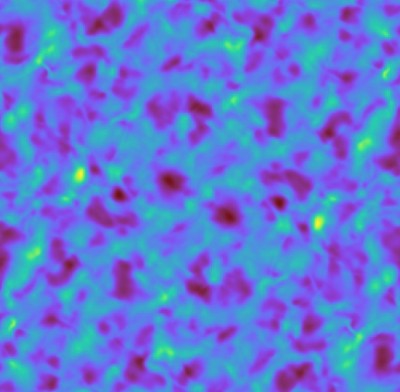
An international team of researchers has made significant strides in understanding the universe’s expansion by simulating magnetic forces present in the early universe. Their findings suggest that these primordial magnetic fields could help reconcile the discrepancies known as the Hubble tension, where observed and calculated expansion rates of the universe do not align.
The research, led by scientists from the University of California, Riverside, utilized advanced simulations to model the effects of magnetic fields during the universe’s infancy, approximately 380,000 years after the Big Bang. The team discovered that these magnetic forces could influence the distribution of matter and energy, potentially bridging the gap between different measurements of cosmic expansion.
Bridging the Hubble Tension
The Hubble tension refers to the ongoing debate among astronomers regarding the rate of the universe’s expansion. Observations made by the Hubble Space Telescope suggest a higher expansion rate compared to measurements derived from the cosmic microwave background radiation, as analyzed by the European Space Agency’s Planck satellite. This discrepancy has puzzled scientists for years, prompting numerous theories and investigations.
According to the researchers, the simulation results indicate that the presence of primordial magnetic fields could alter the way cosmic structures evolve. These magnetic forces can affect the motion of galaxies and the distribution of dark matter, leading to a more consistent understanding of the expansion rate. The study’s lead author emphasized the importance of these findings, stating, “Our work provides a new avenue for resolving one of the most critical issues in cosmology today.”
The implications of this research extend beyond the Hubble tension. Understanding primordial magnetic fields could also shed light on other cosmic mysteries, including the formation of large-scale structures in the universe and the nature of dark energy. The team plans to conduct further investigations to explore these connections.
Future Directions and Implications
The findings are not only significant for theoretical physics but also have practical implications for future observational strategies. As telescopes become more advanced, understanding how magnetic forces interact with cosmic phenomena can refine the techniques used to measure distances in the universe.
The international team is collaborating with various institutions worldwide to validate their simulations through observational data. This collaboration could lead to a more comprehensive understanding of the universe’s evolution and its fundamental properties.
In conclusion, the research on primordial magnetic fields opens a promising pathway to resolving the Hubble tension and deepening our understanding of cosmic expansion. As scientists continue to explore the complexities of the universe, this work underscores the importance of interdisciplinary approaches in tackling fundamental questions in cosmology.

Robinhood Stock Surges 2.5% Today Amid Tech Market Recovery

Philadelphia’s Earth Month Kicks Off with Free Events in Parks

GSK’s Inhaler Decision Sparks Health Concerns for Children

Bradford’s Fish Fry Fridays Offer Community Spirit and Flavor

Speculation Rises on Shutdowns During Trump’s Potential Presidency

Samsung Galaxy Watch 9 to Feature Larger Battery, Report Reveals

Inventors Find New Purpose Through Unconventional Paths

UConn Huskies Aim for Back-to-Back Titles in 2026 NCAA Tournament

U.S. Mine Countermeasure Ships Dock in Malaysia for Logistics Stop

University of Hawaiʻi at Mānoa Joins $25.6M AI Initiative for Disaster Monitoring

$2.2 Million Boost for Cancer Research and Training in Hawaiʻi

ALMA Discovers Companion Orbiting Red Giant Star π 1 Gruis

Sacituzumab Govitecan Shows Promise for HR+/HER2− Breast Cancer

币安人生 Sees $15.92 Million in Trading Volume Amid Market Fluctuations

New Gel Offers Hope for Regrowing Tooth Enamel in Dentistry

CAVA Group Shares Surge 5.1% Amid Mixed Analyst Ratings

Christian Bale in Talks to Join Leonardo DiCaprio in Heat 2

Supreme Court to Review Birthright Citizenship for Children of Immigrants
-
Science8 months ago
University of Hawaiʻi at Mānoa Joins $25.6M AI Initiative for Disaster Monitoring
-
 Health7 months ago
$2.2 Million Boost for Cancer Research and Training in Hawaiʻi
-
 Science8 months ago
ALMA Discovers Companion Orbiting Red Giant Star π 1 Gruis
-
 Health7 months ago
Sacituzumab Govitecan Shows Promise for HR+/HER2− Breast Cancer
-
Politics4 months ago
币安人生 Sees $15.92 Million in Trading Volume Amid Market Fluctuations
-
 Health8 months ago
New Gel Offers Hope for Regrowing Tooth Enamel in Dentistry
-
 Business7 months ago
CAVA Group Shares Surge 5.1% Amid Mixed Analyst Ratings
-
 Entertainment8 months ago
Christian Bale in Talks to Join Leonardo DiCaprio in Heat 2
-
 Politics7 months ago
Supreme Court to Review Birthright Citizenship for Children of Immigrants
-

 Lifestyle7 months ago
Fernando Mendoza Secures Maxwell and O’Brien Awards Ahead of Heisman
-

 Lifestyle8 months ago
Art Deco and Traditional Designs Set to Transform Homes in 2026
-

 World7 months ago
Swiss Residents Reject 50% Inheritance Tax on Wealthy