
Health
Charges Dropped Against Doctor in Vaccine Fraud Case, Others Inspired

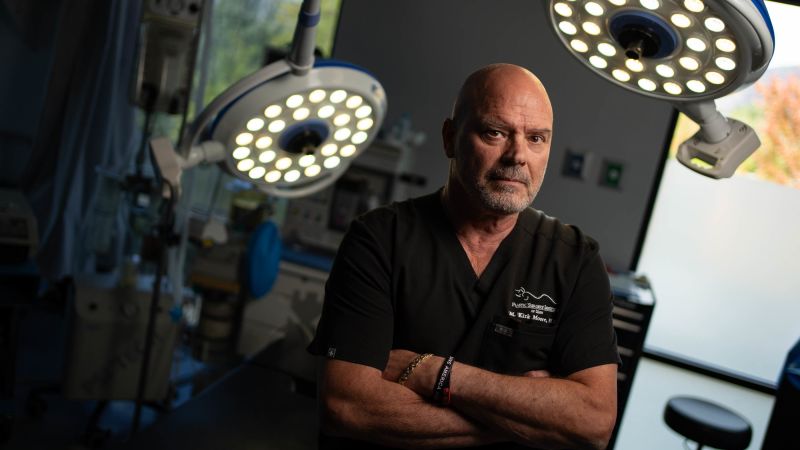
U.S. Attorney General Pam Bondi has ordered the dismissal of all charges against Dr. Kirk Moore, a Utah plastic surgeon accused of falsifying COVID-19 vaccination cards. This unexpected decision has not only ended a lengthy legal battle for Moore but also encouraged other medical professionals facing similar allegations to seek reexaminations of their cases.
Moore was on trial for five days, facing serious charges, including conspiracy to defraud the United States, which could have led to a prison sentence of up to 35 years. After two-and-a-half years of legal proceedings, Moore received the news from his attorney, prompting an emotional reaction. “I just literally collapsed to the floor, and tears rolling down my face,” he said in a recent interview.
Bondi’s intervention represents a significant shift in how the federal government is handling COVID-19-related fraud cases, especially under the Biden administration. The decision resonates with a growing movement among some healthcare workers who advocate for what they term “medical freedom,” a stance increasingly gaining traction among those skeptical of modern public health measures.
The dismissal of charges against Moore has drawn attention to a broader trend of distrust in governmental and medical institutions that emerged during and after the pandemic. This sentiment is amplified by figures such as Robert F. Kennedy Jr., who has been critical of vaccine policies and currently oversees health agencies, including the Centers for Disease Control and Prevention (CDC). Under his guidance, significant changes have occurred within federal vaccine advisory panels that have alarmed professional medical organizations.
Prior to Bondi’s ruling, a federal prosecutor had characterized Moore’s actions as an attempt to “sabotage” the federal vaccine distribution program. Moore had enrolled in the program in May 2021 to access over 2,000 vaccine doses, planning to issue vaccination cards without administering the actual vaccine. His rationale was to provide patients with options in response to mandates from businesses and institutions requiring proof of vaccination.
In a statement posted on social media, Bondi defended her decision, stating, “Dr. Moore gave his patients a choice when the federal government refused to do so. He did not deserve the years in prison he was facing. It ends today.” The Utah federal attorney’s office has not commented on the case following Bondi’s announcement.
Moore was among at least 12 healthcare professionals charged for issuing fraudulent COVID-19 vaccination cards since 2021. These included midwives, nurses, and pharmacists, with some facing state charges in various jurisdictions. To date, only one individual, a Chicago pharmacist, has gone to trial, while others have made plea deals resulting in probation, home confinement, and fines.
The implications of Bondi’s decision extend beyond Moore’s individual case, potentially encouraging others involved in similar fraudulent activities to reconsider their legal options. Following the dismissal, a group called Covicted Patriot emerged, representing individuals convicted of similar crimes. They expressed solidarity with Moore, asserting that they too deserve justice.
Healthcare experts have criticized the actions of those involved in falsifying vaccination records, deeming it detrimental to public health efforts. Brian Dean Abramson, an immunization law expert, described the situation as “absolutely horrifying,” emphasizing that such actions erode public trust and compromise disease surveillance.
Moore, who has been a licensed physician since 2005, acknowledged the accusations against him, admitting to providing falsified vaccination cards and even administering saline shots to children upon their parents’ requests. He maintains that vaccination is a personal choice that should be made between patients and their doctors.
The backdrop of this case highlights the growing divide within the healthcare community regarding vaccination policies. Moore’s practice, which previously focused on cosmetic surgeries, has since been rebranded as Freedom Surgical & Aesthetics, a name he believes reflects the current sentiment surrounding patient autonomy.
Supporters rallied outside the federal courthouse during Moore’s trial, including notable political figures like Marjorie Taylor Greene, who urged Bondi to dismiss the charges. Following this public outcry, Bondi thanked Greene and other advocates in her social media posts for bringing attention to Moore’s case.
In the wake of the charges being dropped, Moore expressed a desire to advocate for others similarly affected by the legal system. He has also experienced significant financial repercussions, estimating a loss of about two-thirds of his practice due to the legal battles.
The broader implications of Moore’s case prompt concerns about the potential normalization of fraudulent practices among healthcare providers. Critics argue that leniency in these cases can lead to a deterioration of trust in medical advice and public health initiatives, ultimately jeopardizing community health efforts.
As Moore contemplates his next steps, others like Julie DeVuono, a former nurse charged with similar offenses, express hope for restored justice through potential presidential pardons. DeVuono, who pleaded guilty to charges related to the distribution of fake vaccine cards, has also begun advocating for others facing convictions.
While the outcome of Moore’s case has sparked a dialogue about accountability and medical ethics, it also underscores the division within public health discourse, raising questions about the future of vaccination policies and the role of personal choice in healthcare.

Robinhood Stock Surges 2.5% Today Amid Tech Market Recovery

Philadelphia’s Earth Month Kicks Off with Free Events in Parks

GSK’s Inhaler Decision Sparks Health Concerns for Children

Bradford’s Fish Fry Fridays Offer Community Spirit and Flavor

Speculation Rises on Shutdowns During Trump’s Potential Presidency

Samsung Galaxy Watch 9 to Feature Larger Battery, Report Reveals

Inventors Find New Purpose Through Unconventional Paths

UConn Huskies Aim for Back-to-Back Titles in 2026 NCAA Tournament

U.S. Mine Countermeasure Ships Dock in Malaysia for Logistics Stop

University of Hawaiʻi at Mānoa Joins $25.6M AI Initiative for Disaster Monitoring

$2.2 Million Boost for Cancer Research and Training in Hawaiʻi

ALMA Discovers Companion Orbiting Red Giant Star π 1 Gruis

Sacituzumab Govitecan Shows Promise for HR+/HER2− Breast Cancer

币安人生 Sees $15.92 Million in Trading Volume Amid Market Fluctuations

New Gel Offers Hope for Regrowing Tooth Enamel in Dentistry

CAVA Group Shares Surge 5.1% Amid Mixed Analyst Ratings

Christian Bale in Talks to Join Leonardo DiCaprio in Heat 2

Supreme Court to Review Birthright Citizenship for Children of Immigrants
-
Science9 months ago
University of Hawaiʻi at Mānoa Joins $25.6M AI Initiative for Disaster Monitoring
-
 Health8 months ago
$2.2 Million Boost for Cancer Research and Training in Hawaiʻi
-
 Science9 months ago
ALMA Discovers Companion Orbiting Red Giant Star π 1 Gruis
-
 Health7 months ago
Sacituzumab Govitecan Shows Promise for HR+/HER2− Breast Cancer
-
Politics5 months ago
币安人生 Sees $15.92 Million in Trading Volume Amid Market Fluctuations
-
 Health9 months ago
New Gel Offers Hope for Regrowing Tooth Enamel in Dentistry
-
 Business8 months ago
CAVA Group Shares Surge 5.1% Amid Mixed Analyst Ratings
-
 Entertainment9 months ago
Christian Bale in Talks to Join Leonardo DiCaprio in Heat 2
-
 Politics8 months ago
Supreme Court to Review Birthright Citizenship for Children of Immigrants
-

 Lifestyle9 months ago
Art Deco and Traditional Designs Set to Transform Homes in 2026
-

 Lifestyle8 months ago
Fernando Mendoza Secures Maxwell and O’Brien Awards Ahead of Heisman
-

 World8 months ago
Swiss Residents Reject 50% Inheritance Tax on Wealthy