
Politics
Bank Regulators Advocate for Deregulation Under Trump Agenda

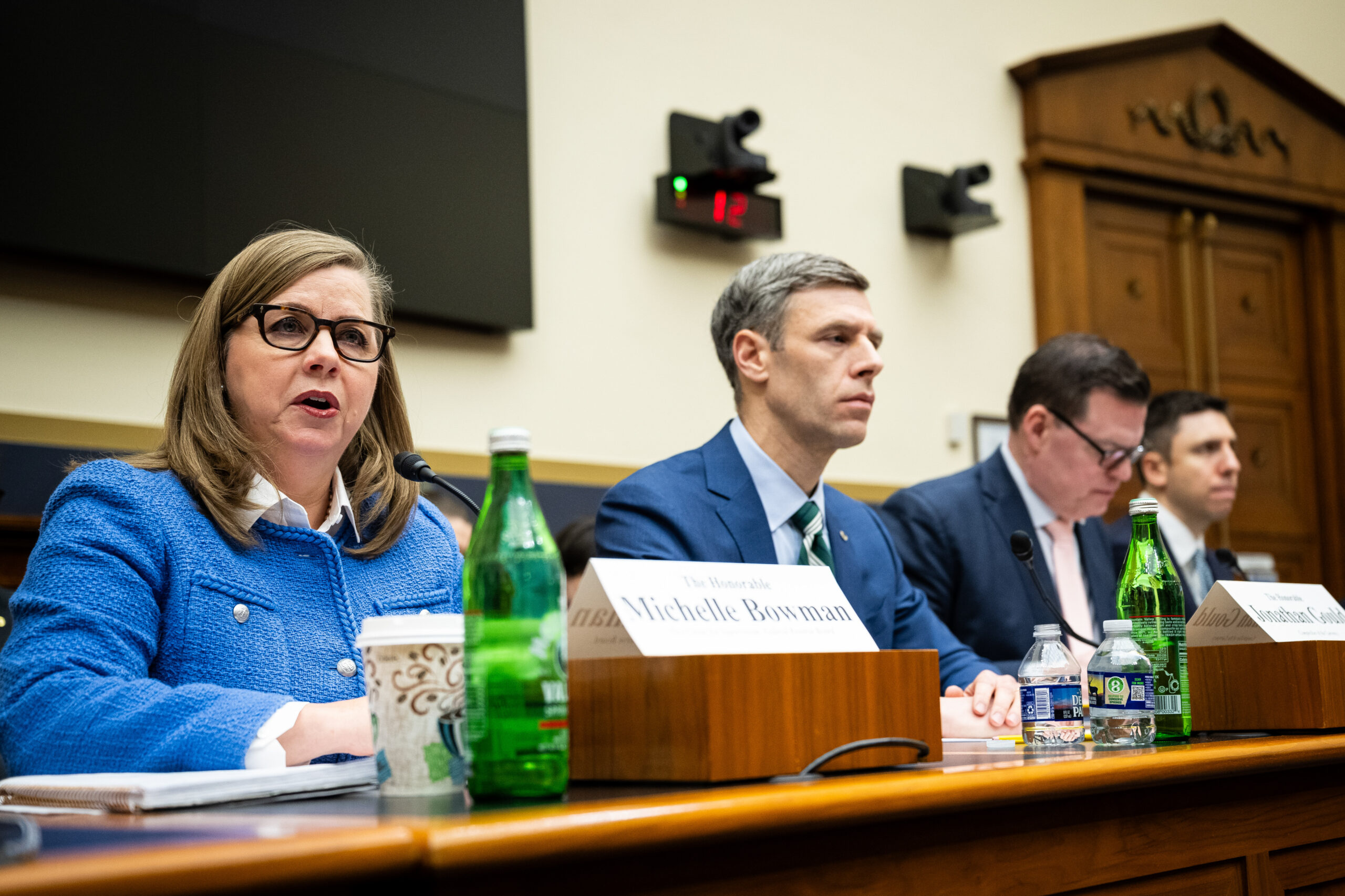
In a recent testimony before the House Financial Services Committee, top regulators from key banking agencies reaffirmed their commitment to a streamlined regulatory framework under the administration of former President Donald Trump. The hearing, which took place in March 2025, was the only instance this year where these regulators appeared collectively to address lawmakers on critical financial issues.
Federal Reserve Vice Chair for Supervision Michelle Bowman, Comptroller of the Currency Jonathan Gould, Chairman of the National Credit Union Administration Kyle Hauptman, and acting Federal Deposit Insurance Corporation Chairman Travis Hill discussed various topics, including regulatory tailoring, stablecoins, and the controversial issue of debanking.
The regulators emphasized their intention to continue easing certain regulations while enhancing enforcement in specific areas. This approach aligns with the broader deregulatory trend that has characterized the Trump administration. “We are exploring streamlining these processes and updating the Federal Reserve Board’s merger analysis to accurately consider competition among small banks,” Bowman stated, highlighting ongoing efforts to support community banks.
Regulatory Changes and Capital Requirements
Bowman also addressed potential changes to capital requirements, particularly in relation to home lending. She noted that current capital treatments for mortgages have led to a decline in banks’ participation in this vital lending sector. “We are considering approaches to more granularly differentiate the riskiness of mortgages,” she explained, aiming to benefit financial institutions of all sizes, not just the largest banks.
Despite these discussions, Bowman did not commit to ensuring that new capital requirements would be capital neutral, a long-standing goal for the banking sector. When questioned by Rep. Andy Barr of Kentucky about whether the agencies planned to issue a proposal that would guarantee a capital neutral outcome, Bowman clarified, “We’re not. We don’t have a preconceived notion about where we’ll land with our capital requirements.”
Debanking Concerns and Deposit Insurance Reform
The issue of debanking, particularly concerning the closure of accounts based on political or religious beliefs, has drawn significant attention. Gould confirmed that his agency is actively investigating claims related to this issue. “We are currently implementing the President’s Executive Order on Guaranteeing Fair Banking for All Americans by reviewing the activities of the largest national banks,” he stated.
Moreover, deposit insurance reform was a focal point during the hearing. Congress is deliberating a proposal to increase deposit insurance for non-interest bearing business accounts to $10 million, a significant rise from the current limit of $250,000. Critics argue that this increase could strain the Deposit Insurance Fund (DIF) and lead to higher assessment fees for banks that may not benefit from the reform directly. Hill acknowledged the financial implications, saying, “In order to achieve the same reserve ratio, revenue coming into the DIF would have to increase.”
As regulators prepare for oversight hearings in the Senate, the banking community is closely monitoring developments related to significant rules such as the Basel III endgame and the ongoing risks associated with debanking enforcement. With limited public oversight hearings so far in this Congress, the upcoming sessions will be crucial for transparency and accountability in the banking sector.
The outcomes of these discussions may shape the future landscape of banking regulations and their impact on financial institutions and consumers across the United States and beyond.

Robinhood Stock Surges 2.5% Today Amid Tech Market Recovery

Philadelphia’s Earth Month Kicks Off with Free Events in Parks

GSK’s Inhaler Decision Sparks Health Concerns for Children

Bradford’s Fish Fry Fridays Offer Community Spirit and Flavor

Speculation Rises on Shutdowns During Trump’s Potential Presidency

Samsung Galaxy Watch 9 to Feature Larger Battery, Report Reveals

Inventors Find New Purpose Through Unconventional Paths

UConn Huskies Aim for Back-to-Back Titles in 2026 NCAA Tournament

U.S. Mine Countermeasure Ships Dock in Malaysia for Logistics Stop

University of Hawaiʻi at Mānoa Joins $25.6M AI Initiative for Disaster Monitoring

$2.2 Million Boost for Cancer Research and Training in Hawaiʻi

ALMA Discovers Companion Orbiting Red Giant Star π 1 Gruis

Sacituzumab Govitecan Shows Promise for HR+/HER2− Breast Cancer

币安人生 Sees $15.92 Million in Trading Volume Amid Market Fluctuations

New Gel Offers Hope for Regrowing Tooth Enamel in Dentistry

CAVA Group Shares Surge 5.1% Amid Mixed Analyst Ratings

Christian Bale in Talks to Join Leonardo DiCaprio in Heat 2

Supreme Court to Review Birthright Citizenship for Children of Immigrants
-
Science9 months ago
University of Hawaiʻi at Mānoa Joins $25.6M AI Initiative for Disaster Monitoring
-
 Health8 months ago
$2.2 Million Boost for Cancer Research and Training in Hawaiʻi
-
 Science9 months ago
ALMA Discovers Companion Orbiting Red Giant Star π 1 Gruis
-
 Health7 months ago
Sacituzumab Govitecan Shows Promise for HR+/HER2− Breast Cancer
-
Politics5 months ago
币安人生 Sees $15.92 Million in Trading Volume Amid Market Fluctuations
-
 Health9 months ago
New Gel Offers Hope for Regrowing Tooth Enamel in Dentistry
-
 Business8 months ago
CAVA Group Shares Surge 5.1% Amid Mixed Analyst Ratings
-
 Entertainment9 months ago
Christian Bale in Talks to Join Leonardo DiCaprio in Heat 2
-
 Politics8 months ago
Supreme Court to Review Birthright Citizenship for Children of Immigrants
-

 Lifestyle9 months ago
Art Deco and Traditional Designs Set to Transform Homes in 2026
-

 Lifestyle8 months ago
Fernando Mendoza Secures Maxwell and O’Brien Awards Ahead of Heisman
-

 World8 months ago
Swiss Residents Reject 50% Inheritance Tax on Wealthy