
Politics
Jennifer Welch Critiques Newsom’s Strategy as ‘Political Suicide’

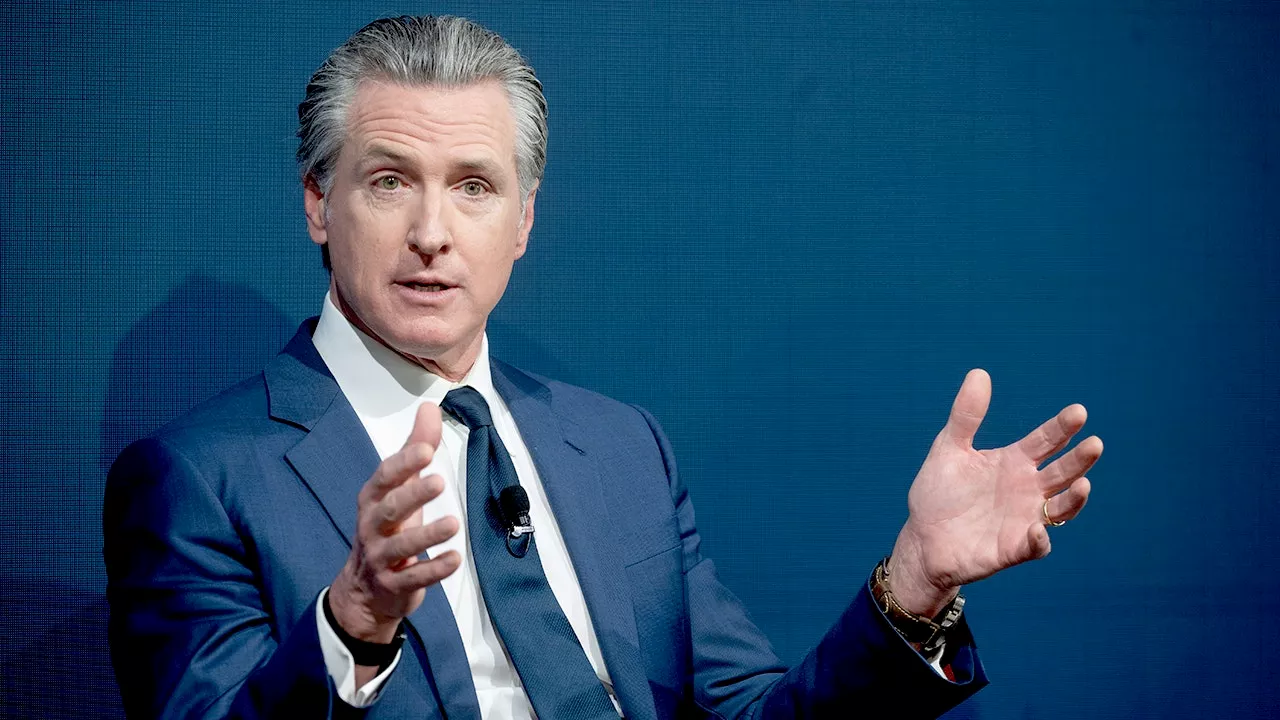
Podcast host Jennifer Welch has sharply criticized California Governor Gavin Newsom for his recent remarks regarding the Democratic Party’s electoral strategy. Welch condemned Newsom’s call for the party to adopt a more “culturally normal” stance, labeling his comments as “political suicide.” This backlash arose from Newsom’s interview on CNN, where he argued that Democrats should prioritize affordability over cultural issues to enhance their appeal to voters.
Welch expressed her dismay at what she perceives as Newsom’s dangerous pivot towards the political center. In her podcast, I’ve Had It, she stated that his comments reflect a troubling willingness to conform to Republican narratives, thereby undermining the party’s core values. “It’s breathtakingly dangerous,” she said, directly addressing Newsom’s shift. Welch emphasized that by adopting such a stance, he risks allowing Republicans to define American values.
The controversy highlights a significant rift within the Democratic Party. Welch criticized Newsom’s opposition to a proposed billionaire tax, which she considers a moderate and practical policy that has broad support among the electorate. She pointed to examples like New York City Mayor Zohran Mamdani, who has successfully maintained progressive principles while achieving electoral success, suggesting that Newsom is misreading the political landscape.
Internal Tensions Within the Democratic Party
Welch’s disapproval of Newsom extends beyond strategic positioning. She sees his attempts to appeal to a wider audience as a capitulation to conservative narratives, compromising the party’s foundational principles. Her remarks reflect concerns that such a shift could alienate progressive voters and dilute the Democratic Party’s identity.
The podcast episode illustrates the internal challenges facing Democratic leaders as they navigate differing perspectives within their base. Welch’s commentary underscores the ongoing debate about the best approach to secure electoral victories while remaining true to core progressive values. The tensions between the desire for broad appeal and adherence to ideological purity are evident among party members.
Welch’s critique also underscores a broader conversation regarding the future direction of the Democratic Party. The division between centrist and progressive factions raises questions about how to effectively engage with a diverse electorate. As the party grapples with these challenges, Welch’s perspective resonates with many who believe that staying true to progressive ideals is essential for long-term success.
The discussion around Newsom’s comments illustrates the delicate balance that Democratic leaders must strike. The party’s ability to unify its base while appealing to a broader audience remains a pressing concern. Welch’s arguments serve as a reminder of the complex dynamics at play within the party, as it seeks to navigate the intricate relationship between leadership and constituent expectations.
As the political landscape evolves, the implications of Newsom’s statements and Welch’s response will likely continue to shape discussions within the Democratic Party and influence future electoral strategies.

Robinhood Stock Surges 2.5% Today Amid Tech Market Recovery

Philadelphia’s Earth Month Kicks Off with Free Events in Parks

GSK’s Inhaler Decision Sparks Health Concerns for Children

Bradford’s Fish Fry Fridays Offer Community Spirit and Flavor

Speculation Rises on Shutdowns During Trump’s Potential Presidency

Samsung Galaxy Watch 9 to Feature Larger Battery, Report Reveals

Inventors Find New Purpose Through Unconventional Paths

UConn Huskies Aim for Back-to-Back Titles in 2026 NCAA Tournament

U.S. Mine Countermeasure Ships Dock in Malaysia for Logistics Stop

University of Hawaiʻi at Mānoa Joins $25.6M AI Initiative for Disaster Monitoring

$2.2 Million Boost for Cancer Research and Training in Hawaiʻi

ALMA Discovers Companion Orbiting Red Giant Star π 1 Gruis

Sacituzumab Govitecan Shows Promise for HR+/HER2− Breast Cancer

币安人生 Sees $15.92 Million in Trading Volume Amid Market Fluctuations

New Gel Offers Hope for Regrowing Tooth Enamel in Dentistry

CAVA Group Shares Surge 5.1% Amid Mixed Analyst Ratings

Christian Bale in Talks to Join Leonardo DiCaprio in Heat 2

Supreme Court to Review Birthright Citizenship for Children of Immigrants
-
Science8 months ago
University of Hawaiʻi at Mānoa Joins $25.6M AI Initiative for Disaster Monitoring
-
 Health7 months ago
$2.2 Million Boost for Cancer Research and Training in Hawaiʻi
-
 Science8 months ago
ALMA Discovers Companion Orbiting Red Giant Star π 1 Gruis
-
 Health7 months ago
Sacituzumab Govitecan Shows Promise for HR+/HER2− Breast Cancer
-
Politics4 months ago
币安人生 Sees $15.92 Million in Trading Volume Amid Market Fluctuations
-
 Health8 months ago
New Gel Offers Hope for Regrowing Tooth Enamel in Dentistry
-
 Business7 months ago
CAVA Group Shares Surge 5.1% Amid Mixed Analyst Ratings
-
 Entertainment8 months ago
Christian Bale in Talks to Join Leonardo DiCaprio in Heat 2
-
 Politics7 months ago
Supreme Court to Review Birthright Citizenship for Children of Immigrants
-

 Lifestyle8 months ago
Art Deco and Traditional Designs Set to Transform Homes in 2026
-

 Lifestyle7 months ago
Fernando Mendoza Secures Maxwell and O’Brien Awards Ahead of Heisman
-

 World7 months ago
Swiss Residents Reject 50% Inheritance Tax on Wealthy