
Science
Consumer Spending Drives 2025 GDP Growth, Not AI Boom

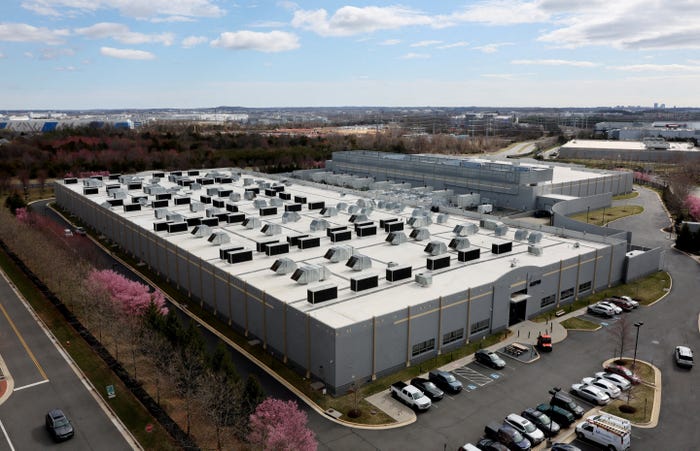
A recent report from MRB Partners has challenged the prevailing notion that artificial intelligence (AI) is the primary engine of economic growth in the United States. Instead, consumer spending has emerged as the largest contributor to the nation’s GDP in 2025. This finding raises questions about the sustainability of the AI boom and its impact on overall economic stability.
According to the report authored by economic strategist Prajakta Bhide, personal consumption remains fundamental to GDP growth, overshadowing the contributions from AI. Despite significant investments in AI infrastructure, the report indicates that much of the high-tech equipment is imported, which does not add to the GDP. Bhide noted, “Consumers continue to be the backbone of the economy,” emphasizing the critical role of everyday spending in driving economic performance.
The report, published in January 2025, highlights that while AI growth has been a substantial secondary driver of economic expansion, its actual impact has been overstated. Bhide asserts that although the AI sector contributed to GDP growth, this was largely due to software investments. In contrast, the contribution of data centers was described as “negligible.”
Understanding the Economic Landscape
The findings presented by MRB Partners suggest that even without the AI boom, GDP growth in 2025 would have remained relatively healthy. Bhide explained that while the absence of an AI surge would have led to lower GDP growth, it would not have resulted in a catastrophic drop, as imports would have decreased alongside domestic growth. The main components accounting for GDP include personal consumption, private domestic investment, government spending, and net exports.
Bhide’s analysis indicates a disconnect between consumer sentiment and actual spending behavior. Although aggregate income and job growth have declined, leading to a more cautious consumer outlook, spending remained robust. This divergence suggests that consumers may act contrary to their sentiments, maintaining spending habits even when concerns about the economy linger.
Potential Risks and Market Implications
Concerns related to the AI bubble extend beyond GDP figures to impact the stock market and individual retirement funds. The collective market value of America’s eight most valuable public companies, such as Nvidia, Alphabet, and Apple, is approximately $22 trillion, heavily reliant on AI-driven growth. A downturn in consumer spending has historically not triggered economic recessions; rather, spending typically weakens after job losses have occurred and when a recession is already established.
Bhide’s report brings a more measured perspective to the discourse surrounding AI’s role in the economy. She concluded, “Although a negative shock to the optimism around AI implies a risk to GDP growth, the more realistic estimate of AI’s growth impact after adjusting for imports dispels the popular notion that the US economy would falter without it.”
As the economic landscape evolves, it remains essential for both policymakers and investors to differentiate between genuine growth drivers and speculative trends, particularly in sectors as volatile as technology. The insights from MRB Partners serve as a reminder of the enduring significance of consumer behavior in shaping economic outcomes.

Robinhood Stock Surges 2.5% Today Amid Tech Market Recovery

Philadelphia’s Earth Month Kicks Off with Free Events in Parks

GSK’s Inhaler Decision Sparks Health Concerns for Children

Bradford’s Fish Fry Fridays Offer Community Spirit and Flavor

Speculation Rises on Shutdowns During Trump’s Potential Presidency

Samsung Galaxy Watch 9 to Feature Larger Battery, Report Reveals

Inventors Find New Purpose Through Unconventional Paths

UConn Huskies Aim for Back-to-Back Titles in 2026 NCAA Tournament

U.S. Mine Countermeasure Ships Dock in Malaysia for Logistics Stop

University of Hawaiʻi at Mānoa Joins $25.6M AI Initiative for Disaster Monitoring

$2.2 Million Boost for Cancer Research and Training in Hawaiʻi

ALMA Discovers Companion Orbiting Red Giant Star π 1 Gruis

Sacituzumab Govitecan Shows Promise for HR+/HER2− Breast Cancer

币安人生 Sees $15.92 Million in Trading Volume Amid Market Fluctuations

New Gel Offers Hope for Regrowing Tooth Enamel in Dentistry

CAVA Group Shares Surge 5.1% Amid Mixed Analyst Ratings

Christian Bale in Talks to Join Leonardo DiCaprio in Heat 2

Supreme Court to Review Birthright Citizenship for Children of Immigrants
-
Science9 months ago
University of Hawaiʻi at Mānoa Joins $25.6M AI Initiative for Disaster Monitoring
-
 Health7 months ago
$2.2 Million Boost for Cancer Research and Training in Hawaiʻi
-
 Science8 months ago
ALMA Discovers Companion Orbiting Red Giant Star π 1 Gruis
-
 Health7 months ago
Sacituzumab Govitecan Shows Promise for HR+/HER2− Breast Cancer
-
Politics5 months ago
币安人生 Sees $15.92 Million in Trading Volume Amid Market Fluctuations
-
 Health9 months ago
New Gel Offers Hope for Regrowing Tooth Enamel in Dentistry
-
 Business7 months ago
CAVA Group Shares Surge 5.1% Amid Mixed Analyst Ratings
-
 Entertainment8 months ago
Christian Bale in Talks to Join Leonardo DiCaprio in Heat 2
-
 Politics7 months ago
Supreme Court to Review Birthright Citizenship for Children of Immigrants
-

 Lifestyle8 months ago
Art Deco and Traditional Designs Set to Transform Homes in 2026
-

 Lifestyle7 months ago
Fernando Mendoza Secures Maxwell and O’Brien Awards Ahead of Heisman
-

 World8 months ago
Swiss Residents Reject 50% Inheritance Tax on Wealthy