
Science
Researchers Uncover Magnetic Forces to Solve Cosmic Expansion Mystery

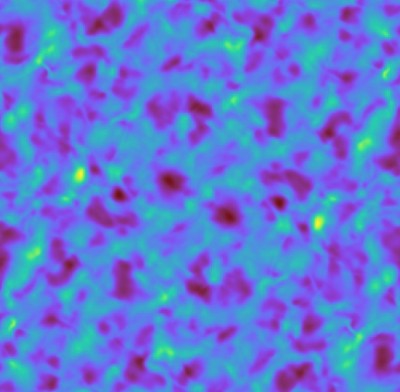
A collaborative effort among an international team of researchers has revealed that primordial magnetic fields could potentially resolve the longstanding issue known as the Hubble tension. This tension refers to the discrepancy between the observed and calculated rates of the universe’s expansion. The findings were published in a study that simulated the effects of magnetic forces in the early universe.
The researchers focused on the cosmic microwave background (CMB), which provides critical insights into the universe’s infancy. By examining how primordial magnetic fields might have influenced the conditions during this period, the team found that these fields could account for differences in the expansion rate measured by various methods. While the conventional understanding of the universe’s expansion relies heavily on observations from the CMB, other methods, such as measuring supernovae distances, have yielded different results.
According to the study, these primordial magnetic fields, generated shortly after the Big Bang, could have contributed to the acceleration of the universe’s expansion. The simulations indicated that the magnetic fields might have played a role in the distribution of matter and energy throughout the cosmos, leading to a more consistent understanding of cosmic dynamics.
Exploring the Implications of the Research
The implications of this research extend beyond resolving the Hubble tension. The understanding of magnetic forces in the early universe could provide answers to other cosmic mysteries, such as the formation of galaxies and large-scale structures. Understanding these forces gives scientists a new perspective on how the universe evolved from its initial state to the complex structure we observe today.
The research team utilized advanced simulation techniques to model the behavior of these magnetic fields, producing results that challenge established cosmological theories. The study emphasizes the need for a reevaluation of existing models that describe the universe’s expansion, suggesting that incorporating magnetic forces may lead to a more comprehensive framework for understanding cosmic evolution.
This groundbreaking research highlights the importance of interdisciplinary collaboration in addressing complex scientific questions. By combining expertise from various fields, the team was able to produce findings that may reshape our understanding of fundamental aspects of the universe. The potential for further exploration in this area could unlock new avenues for research, enhancing our grasp of cosmic phenomena.
As scientists continue to investigate the role of primordial magnetic fields, the findings from this study will likely prompt additional research efforts. Future studies may focus on the specific characteristics of these fields and their impacts on cosmic evolution. The international team’s work sets the stage for ongoing discussions and explorations in the field of cosmology.
The research was published in January 2024 and marks a significant step forward in addressing one of the most pressing questions in modern astrophysics. As the scientific community digests these findings, the dialogue surrounding the nature of the universe’s expansion will undoubtedly evolve, potentially leading to new discoveries and insights into the fundamental workings of the cosmos.

Robinhood Stock Surges 2.5% Today Amid Tech Market Recovery

Philadelphia’s Earth Month Kicks Off with Free Events in Parks

GSK’s Inhaler Decision Sparks Health Concerns for Children

Bradford’s Fish Fry Fridays Offer Community Spirit and Flavor

Speculation Rises on Shutdowns During Trump’s Potential Presidency

Samsung Galaxy Watch 9 to Feature Larger Battery, Report Reveals

Inventors Find New Purpose Through Unconventional Paths

UConn Huskies Aim for Back-to-Back Titles in 2026 NCAA Tournament

U.S. Mine Countermeasure Ships Dock in Malaysia for Logistics Stop

University of Hawaiʻi at Mānoa Joins $25.6M AI Initiative for Disaster Monitoring

$2.2 Million Boost for Cancer Research and Training in Hawaiʻi

ALMA Discovers Companion Orbiting Red Giant Star π 1 Gruis

Sacituzumab Govitecan Shows Promise for HR+/HER2− Breast Cancer

币安人生 Sees $15.92 Million in Trading Volume Amid Market Fluctuations

New Gel Offers Hope for Regrowing Tooth Enamel in Dentistry

CAVA Group Shares Surge 5.1% Amid Mixed Analyst Ratings

Christian Bale in Talks to Join Leonardo DiCaprio in Heat 2

Supreme Court to Review Birthright Citizenship for Children of Immigrants
-
Science8 months ago
University of Hawaiʻi at Mānoa Joins $25.6M AI Initiative for Disaster Monitoring
-
 Health7 months ago
$2.2 Million Boost for Cancer Research and Training in Hawaiʻi
-
 Science8 months ago
ALMA Discovers Companion Orbiting Red Giant Star π 1 Gruis
-
 Health7 months ago
Sacituzumab Govitecan Shows Promise for HR+/HER2− Breast Cancer
-
Politics4 months ago
币安人生 Sees $15.92 Million in Trading Volume Amid Market Fluctuations
-
 Health8 months ago
New Gel Offers Hope for Regrowing Tooth Enamel in Dentistry
-
 Business7 months ago
CAVA Group Shares Surge 5.1% Amid Mixed Analyst Ratings
-
 Entertainment8 months ago
Christian Bale in Talks to Join Leonardo DiCaprio in Heat 2
-
 Politics7 months ago
Supreme Court to Review Birthright Citizenship for Children of Immigrants
-

 Lifestyle7 months ago
Fernando Mendoza Secures Maxwell and O’Brien Awards Ahead of Heisman
-

 Lifestyle8 months ago
Art Deco and Traditional Designs Set to Transform Homes in 2026
-

 World7 months ago
Swiss Residents Reject 50% Inheritance Tax on Wealthy