
Science
Robot Learns 1,000 Tasks in One Day, Ushering New Era in AI

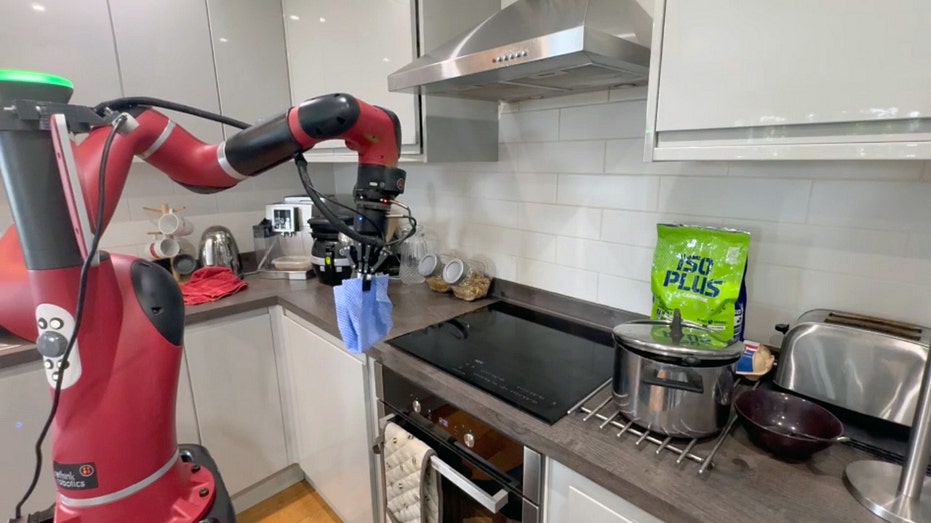
A groundbreaking study has revealed that a robot can learn 1,000 distinct physical tasks in just one day, using only a single demonstration for each task. This research, published in Science Robotics, marks a significant advancement in the field of robotics and artificial intelligence, addressing a long-standing challenge in robot learning efficiency.
Traditionally, teaching robots how to perform even simple tasks has been an arduous and time-consuming process. Engineers have had to rely on extensive datasets that require hundreds or even thousands of demonstrations to achieve even modest success. As a result, many factory robots are limited to repetitive motions, struggling to adapt when conditions change. In contrast, humans can often learn new skills after just a few demonstrations. This gap in learning capabilities has hindered the advancement of robotics for decades.
The innovative approach taken by the research team involved a new method of teaching robots called Multi-Task Trajectory Transfer. Instead of memorizing entire movements, the robot breaks tasks into simpler phases. One phase focuses on aligning with the object, while another handles the interaction itself. This technique leverages an artificial intelligence method known as imitation learning, allowing the robot to learn from human demonstrations effectively. By reusing knowledge from previous tasks, the robot can apply what it has learned to new situations, significantly improving its adaptability.
What sets this research apart is its real-world application. The robot was trained on actual physical tasks, including placing, folding, and manipulating everyday objects, rather than in a controlled laboratory environment. The ability to generalize from its experiences enables the robot to handle new object instances it has never encountered before. This adaptability is a notable evolution in robotics, shifting the focus from mere repetition to genuine learning and flexibility.
The implications of this breakthrough extend beyond academic curiosity. Faster learning capabilities can lead to the development of more cost-effective and versatile robots, enabling them to function in less controlled environments. This advancement paves the way for potential applications in various sectors, such as healthcare, logistics, and home automation. In the future, robots may be able to learn new tasks simply by observing humans, eliminating the need for extensive programming.
As robotics technology continues to evolve, the conversation around the role of machines in our daily lives is changing. No longer are we solely focused on what robots can repeat; instead, we are beginning to consider what they can adapt to next. The progress made in this study suggests that a future where robots assist in household chores or other tasks may not be as far off as previously thought.
The research signifies a pivotal moment in artificial intelligence, moving away from flashy but impractical demonstrations to systems that learn in ways more akin to human behavior. While this does not imply that humanoid robots will be commonplace in homes tomorrow, it certainly indicates a promising direction for the future of robotics.
In conclusion, the ability of robots to learn 1,000 tasks in just one day represents a significant leap in the field. As learning methodologies improve, the potential for robots to become adaptable, efficient, and integrated into everyday life becomes increasingly plausible. The journey towards a more automated future is underway, and this research is a crucial step in that direction.

Robinhood Stock Surges 2.5% Today Amid Tech Market Recovery

Philadelphia’s Earth Month Kicks Off with Free Events in Parks

GSK’s Inhaler Decision Sparks Health Concerns for Children

Bradford’s Fish Fry Fridays Offer Community Spirit and Flavor

Speculation Rises on Shutdowns During Trump’s Potential Presidency

Samsung Galaxy Watch 9 to Feature Larger Battery, Report Reveals

Inventors Find New Purpose Through Unconventional Paths

UConn Huskies Aim for Back-to-Back Titles in 2026 NCAA Tournament

U.S. Mine Countermeasure Ships Dock in Malaysia for Logistics Stop

University of Hawaiʻi at Mānoa Joins $25.6M AI Initiative for Disaster Monitoring

$2.2 Million Boost for Cancer Research and Training in Hawaiʻi

ALMA Discovers Companion Orbiting Red Giant Star π 1 Gruis

Sacituzumab Govitecan Shows Promise for HR+/HER2− Breast Cancer

币安人生 Sees $15.92 Million in Trading Volume Amid Market Fluctuations

New Gel Offers Hope for Regrowing Tooth Enamel in Dentistry

CAVA Group Shares Surge 5.1% Amid Mixed Analyst Ratings

Christian Bale in Talks to Join Leonardo DiCaprio in Heat 2

Supreme Court to Review Birthright Citizenship for Children of Immigrants
-
Science9 months ago
University of Hawaiʻi at Mānoa Joins $25.6M AI Initiative for Disaster Monitoring
-
 Health7 months ago
$2.2 Million Boost for Cancer Research and Training in Hawaiʻi
-
 Science9 months ago
ALMA Discovers Companion Orbiting Red Giant Star π 1 Gruis
-
 Health7 months ago
Sacituzumab Govitecan Shows Promise for HR+/HER2− Breast Cancer
-
Politics5 months ago
币安人生 Sees $15.92 Million in Trading Volume Amid Market Fluctuations
-
 Health9 months ago
New Gel Offers Hope for Regrowing Tooth Enamel in Dentistry
-
 Business8 months ago
CAVA Group Shares Surge 5.1% Amid Mixed Analyst Ratings
-
 Entertainment8 months ago
Christian Bale in Talks to Join Leonardo DiCaprio in Heat 2
-
 Politics8 months ago
Supreme Court to Review Birthright Citizenship for Children of Immigrants
-

 Lifestyle8 months ago
Art Deco and Traditional Designs Set to Transform Homes in 2026
-

 Lifestyle8 months ago
Fernando Mendoza Secures Maxwell and O’Brien Awards Ahead of Heisman
-

 World8 months ago
Swiss Residents Reject 50% Inheritance Tax on Wealthy