
Top Stories
Breakthrough Coating Technology Triples Electrode Lifespan NOW

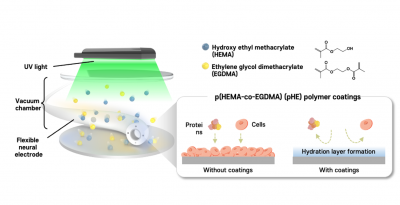
BREAKING: Researchers have just announced a groundbreaking coating technology that extends the lifespan of implanted electrodes from 1 month to over 3 months. This innovative development, led by Dr. Hyejeong Seong at the Korea Institute of Science and Technology (KIST), marks a significant leap forward in brain signal recording technology.
This urgent breakthrough was revealed in collaboration with Prof. Seongjun Park of Seoul National University, highlighting a major advancement in neuroscience. The new coating effectively prolongs the functionality of electrodes, paving the way for enhanced brain-computer interface applications and potential treatments for neurological disorders.
Why does this matter RIGHT NOW? Currently, implanted electrodes have a limited lifespan, often leading to premature failures that hinder critical research and treatment options. The ability to extend this duration can dramatically improve the quality of life for patients needing long-term monitoring and therapy.
The research team emphasizes that this technology could revolutionize how we approach brain signal recordings, allowing for more extensive and accurate data collection over time. This could lead to advancements in understanding brain functions and developing new therapies for conditions such as epilepsy, Parkinson’s disease, and other neurological disorders.
Developing: The findings are expected to have far-reaching implications for medical devices and brain research. As the team continues to refine this technology, further studies are anticipated in the coming months, making it a critical area to watch.
Officials from KIST, under President Sang-Rok Oh, and Seoul National University, led by President Hong-Lim Ryu, are optimistic about the potential applications of this advancement. The research was conducted at the Brain Convergence Research Division, emphasizing South Korea’s commitment to leading in innovative medical technologies.
Stay tuned for more updates on this urgent development that promises to reshape our understanding of brain science and improve patient care globally. The excitement surrounding this announcement is palpable, and experts urge the community to share this significant news widely.

Robinhood Stock Surges 2.5% Today Amid Tech Market Recovery

Philadelphia’s Earth Month Kicks Off with Free Events in Parks

GSK’s Inhaler Decision Sparks Health Concerns for Children

Bradford’s Fish Fry Fridays Offer Community Spirit and Flavor

Speculation Rises on Shutdowns During Trump’s Potential Presidency

Samsung Galaxy Watch 9 to Feature Larger Battery, Report Reveals

Inventors Find New Purpose Through Unconventional Paths

UConn Huskies Aim for Back-to-Back Titles in 2026 NCAA Tournament

U.S. Mine Countermeasure Ships Dock in Malaysia for Logistics Stop

University of Hawaiʻi at Mānoa Joins $25.6M AI Initiative for Disaster Monitoring

ALMA Discovers Companion Orbiting Red Giant Star π 1 Gruis

$2.2 Million Boost for Cancer Research and Training in Hawaiʻi

New Gel Offers Hope for Regrowing Tooth Enamel in Dentistry

Sacituzumab Govitecan Shows Promise for HR+/HER2− Breast Cancer

Park Jung Min’s Endearing Moment with Hwasa Steals Show at Awards

Sampson County Celebrates Susie Faison’s 100th Birthday Milestone

Christian Bale in Talks to Join Leonardo DiCaprio in Heat 2

CAVA Group Shares Surge 5.1% Amid Mixed Analyst Ratings
-
Science5 months ago
University of Hawaiʻi at Mānoa Joins $25.6M AI Initiative for Disaster Monitoring
-
 Science5 months ago
ALMA Discovers Companion Orbiting Red Giant Star π 1 Gruis
-
 Health4 months ago
$2.2 Million Boost for Cancer Research and Training in Hawaiʻi
-
 Health5 months ago
New Gel Offers Hope for Regrowing Tooth Enamel in Dentistry
-
 Health4 months ago
Sacituzumab Govitecan Shows Promise for HR+/HER2− Breast Cancer
-
 Lifestyle5 months ago
Park Jung Min’s Endearing Moment with Hwasa Steals Show at Awards
-
 Lifestyle6 months ago
Sampson County Celebrates Susie Faison’s 100th Birthday Milestone
-
 Entertainment5 months ago
Christian Bale in Talks to Join Leonardo DiCaprio in Heat 2
-
 Business4 months ago
CAVA Group Shares Surge 5.1% Amid Mixed Analyst Ratings
-

 Business4 months ago
Ally Financial Boosts Q1 2026 EPS Forecast to $1.01
-

 Lifestyle5 months ago
Art Deco and Traditional Designs Set to Transform Homes in 2026
-

 Science6 months ago
Interstellar Comet 3I/ATLAS Approaches Sun, No Threat to Earth