
Top Stories
Dale Andersen Captures Rare Eclipse While Preparing for Research in Antarctica

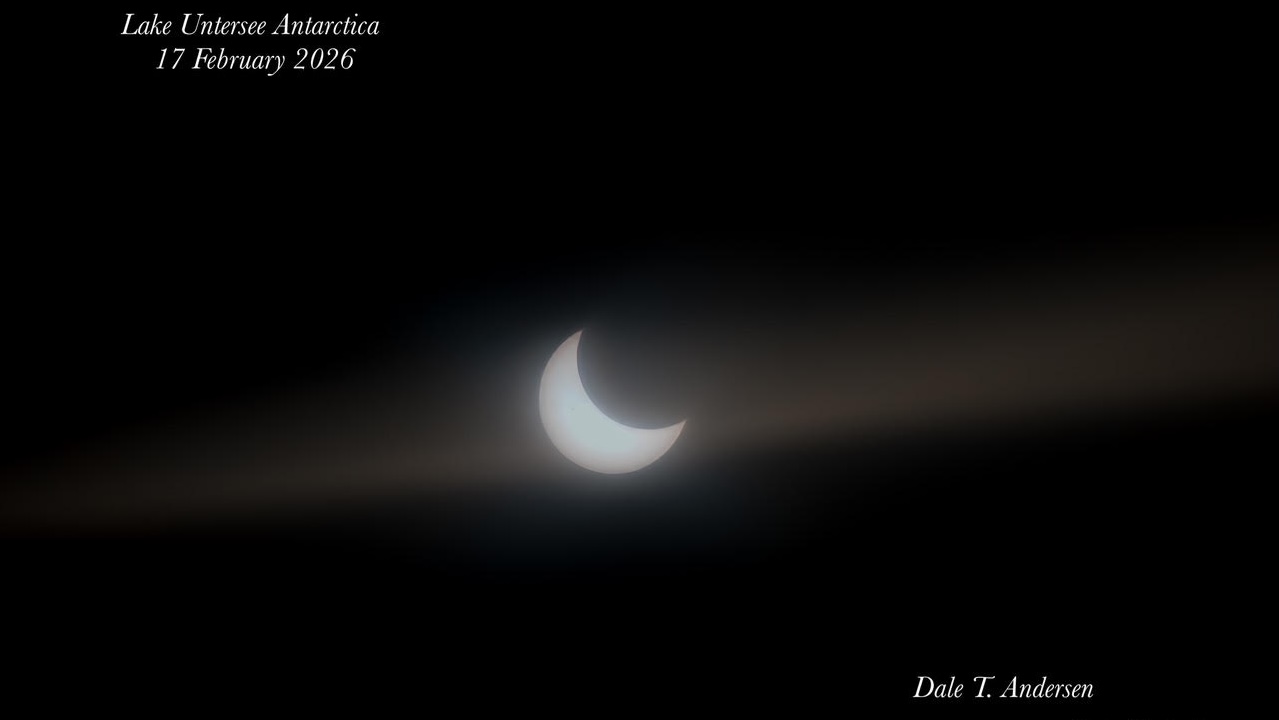
Astrobiologist Dale Andersen experienced a rare celestial event while conducting research at Lake Untersee in Antarctica. On February 18, 2026, a partial eclipse captivated Andersen and his team, providing a unique moment against the stark, icy backdrop of the Antarctic landscape. Such celestial occurrences may be common, but witnessing one in such a remote and challenging environment is a rarity.
As the team prepares for the next phase of their expedition, they are currently packing their equipment for the return journey. The overland traverse back to the Ultima Airstrip is scheduled to commence on February 19. This expedition marks another chapter in Andersen’s ongoing research efforts in Antarctica, where he has been studying the region’s astrobiological conditions.
For nearly three decades, Dale Andersen has been a significant figure in Antarctic research, sharing insights and updates since 1996. His collaboration with fellow researcher Keith has established a long-standing tradition of documenting their findings from one of the most extreme environments on Earth. They believe they initiated the first web server from Antarctica, a testament to their commitment to sharing knowledge with the world.
The research at Lake Untersee focuses on understanding extreme environments and their potential for supporting life, a key aspect of astrobiology. The lake’s unique conditions offer a natural laboratory for studying microbial life and its resilience in harsh climates, which could have implications for the search for life beyond Earth.
Andersen’s work continues to garner interest and support from the scientific community. As the team prepares to leave the site, they reflect on the significance of their findings and the beauty of the surrounding landscape, punctuated by the recent eclipse. The challenges of logistics and the demands of conducting research in such environments are ever-present, yet the rewards of discovery make it worthwhile.
As Dale Andersen and his team conclude their current field season, they look forward to the next opportunities for exploration and research in Antarctica. The insights gained from their studies not only contribute to our understanding of astrobiology but also highlight the importance of preserving these fragile ecosystems for future generations.

Robinhood Stock Surges 2.5% Today Amid Tech Market Recovery

Philadelphia’s Earth Month Kicks Off with Free Events in Parks

GSK’s Inhaler Decision Sparks Health Concerns for Children

Bradford’s Fish Fry Fridays Offer Community Spirit and Flavor

Speculation Rises on Shutdowns During Trump’s Potential Presidency

Samsung Galaxy Watch 9 to Feature Larger Battery, Report Reveals

Inventors Find New Purpose Through Unconventional Paths

UConn Huskies Aim for Back-to-Back Titles in 2026 NCAA Tournament

U.S. Mine Countermeasure Ships Dock in Malaysia for Logistics Stop

University of Hawaiʻi at Mānoa Joins $25.6M AI Initiative for Disaster Monitoring

$2.2 Million Boost for Cancer Research and Training in Hawaiʻi

ALMA Discovers Companion Orbiting Red Giant Star π 1 Gruis

Sacituzumab Govitecan Shows Promise for HR+/HER2− Breast Cancer

币安人生 Sees $15.92 Million in Trading Volume Amid Market Fluctuations

New Gel Offers Hope for Regrowing Tooth Enamel in Dentistry

CAVA Group Shares Surge 5.1% Amid Mixed Analyst Ratings

Christian Bale in Talks to Join Leonardo DiCaprio in Heat 2

Supreme Court to Review Birthright Citizenship for Children of Immigrants
-
Science8 months ago
University of Hawaiʻi at Mānoa Joins $25.6M AI Initiative for Disaster Monitoring
-
 Health7 months ago
$2.2 Million Boost for Cancer Research and Training in Hawaiʻi
-
 Science8 months ago
ALMA Discovers Companion Orbiting Red Giant Star π 1 Gruis
-
 Health7 months ago
Sacituzumab Govitecan Shows Promise for HR+/HER2− Breast Cancer
-
Politics5 months ago
币安人生 Sees $15.92 Million in Trading Volume Amid Market Fluctuations
-
 Health8 months ago
New Gel Offers Hope for Regrowing Tooth Enamel in Dentistry
-
 Business7 months ago
CAVA Group Shares Surge 5.1% Amid Mixed Analyst Ratings
-
 Entertainment8 months ago
Christian Bale in Talks to Join Leonardo DiCaprio in Heat 2
-
 Politics7 months ago
Supreme Court to Review Birthright Citizenship for Children of Immigrants
-

 Lifestyle8 months ago
Art Deco and Traditional Designs Set to Transform Homes in 2026
-

 Lifestyle7 months ago
Fernando Mendoza Secures Maxwell and O’Brien Awards Ahead of Heisman
-

 World8 months ago
Swiss Residents Reject 50% Inheritance Tax on Wealthy