
Top Stories
Korean Team Unveils Groundbreaking 4D Printing Tech Using Sulfur Waste

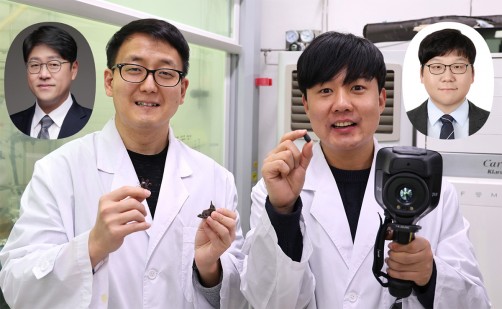
BREAKING NEWS: A revolutionary research team from South Korea has just unveiled the world’s first 4D printing technology using waste sulfur from petroleum refining processes. This groundbreaking development, led by Dr. Dong-Gyun Kim of the Korea Research Institute of Chemical Technology (KRICT), enables the creation of self-actuating, recyclable structures poised to transform soft robotics and environmental sustainability.
The technology, reported in the journal Advanced Materials, leverages large amounts of elemental sulfur produced—approximately 85 million tons globally in 2024—during petroleum refining. As the world seeks innovative ways to utilize industrial by-products, this sulfur-rich polymer opens up new avenues for high-value applications.
Sulfur plastics are gaining attention as environmentally friendly materials capable of converting waste into valuable resources. They possess unique properties that allow them to transmit infrared light, making them ideal for applications such as infrared camera lenses. Additionally, these materials can capture heavy metals, enhancing water purification systems.
Despite their advantages, using sulfur plastics in traditional 3D printing has proven challenging due to their dense cross-linked structures. The KRICT team has overcome this obstacle by engineering a loosely cross-linked polymer network, allowing for easy extrusion and complex 3D designs. This innovative approach enables the creation of 4D structures that can autonomously change shape in response to heat or light.
A significant breakthrough is the ability to join printed components without adhesives. By applying a near-infrared (NIR) laser for just eight seconds, internal bonds can be temporarily broken and reconnected, facilitating the assembly of intricate structures akin to LEGO blocks. This method not only simplifies the manufacturing process but also enhances the potential for complex designs.
Moreover, incorporating 20% magnetic particles has led to the development of tiny soft robots under 1 cm that operate autonomously without external power. These robots can perform intricate motions by responding to external magnetic fields, showcasing the versatility of this new technology.
Another critical aspect of this 4D printing technology is its closed-loop manufacturing capability. After use, the printed structures can be melted down and completely reused as printing feedstock, ensuring 100% recycling and establishing a sustainable manufacturing system.
Dr. Dong-Gyun Kim emphasized the significance of this innovation, stating, “This study represents the first example of upcycling industrial sulfur waste into advanced robotic materials. Smart materials that can move autonomously and be recycled are expected to become key drivers of future soft robotics and automation technologies.”
The implications of this technology are profound, as it not only addresses waste management but also contributes to advancements in robotics and automation. As the world grapples with environmental challenges, this breakthrough offers a promising path forward.
Stay tuned for more updates on this developing story, as KRICT continues to lead the charge in sustainable and innovative material science. For further details, visit the KRICT website at https://www.krict.re.kr/eng/.

Robinhood Stock Surges 2.5% Today Amid Tech Market Recovery

Philadelphia’s Earth Month Kicks Off with Free Events in Parks

GSK’s Inhaler Decision Sparks Health Concerns for Children

Bradford’s Fish Fry Fridays Offer Community Spirit and Flavor

Speculation Rises on Shutdowns During Trump’s Potential Presidency

Samsung Galaxy Watch 9 to Feature Larger Battery, Report Reveals

Inventors Find New Purpose Through Unconventional Paths

UConn Huskies Aim for Back-to-Back Titles in 2026 NCAA Tournament

U.S. Mine Countermeasure Ships Dock in Malaysia for Logistics Stop

University of Hawaiʻi at Mānoa Joins $25.6M AI Initiative for Disaster Monitoring

ALMA Discovers Companion Orbiting Red Giant Star π 1 Gruis

$2.2 Million Boost for Cancer Research and Training in Hawaiʻi

New Gel Offers Hope for Regrowing Tooth Enamel in Dentistry

Sacituzumab Govitecan Shows Promise for HR+/HER2− Breast Cancer

Park Jung Min’s Endearing Moment with Hwasa Steals Show at Awards

Sampson County Celebrates Susie Faison’s 100th Birthday Milestone

Christian Bale in Talks to Join Leonardo DiCaprio in Heat 2

CAVA Group Shares Surge 5.1% Amid Mixed Analyst Ratings
-
Science5 months ago
University of Hawaiʻi at Mānoa Joins $25.6M AI Initiative for Disaster Monitoring
-
 Science5 months ago
ALMA Discovers Companion Orbiting Red Giant Star π 1 Gruis
-
 Health4 months ago
$2.2 Million Boost for Cancer Research and Training in Hawaiʻi
-
 Health5 months ago
New Gel Offers Hope for Regrowing Tooth Enamel in Dentistry
-
 Health3 months ago
Sacituzumab Govitecan Shows Promise for HR+/HER2− Breast Cancer
-
 Lifestyle5 months ago
Park Jung Min’s Endearing Moment with Hwasa Steals Show at Awards
-
 Lifestyle5 months ago
Sampson County Celebrates Susie Faison’s 100th Birthday Milestone
-
 Entertainment5 months ago
Christian Bale in Talks to Join Leonardo DiCaprio in Heat 2
-
 Business4 months ago
CAVA Group Shares Surge 5.1% Amid Mixed Analyst Ratings
-

 Science5 months ago
Interstellar Comet 3I/ATLAS Approaches Sun, No Threat to Earth
-

 Business4 months ago
Ally Financial Boosts Q1 2026 EPS Forecast to $1.01
-

 Lifestyle5 months ago
Art Deco and Traditional Designs Set to Transform Homes in 2026