
Top Stories
Scientists Develop Blood Test to Predict Alzheimer’s Onset

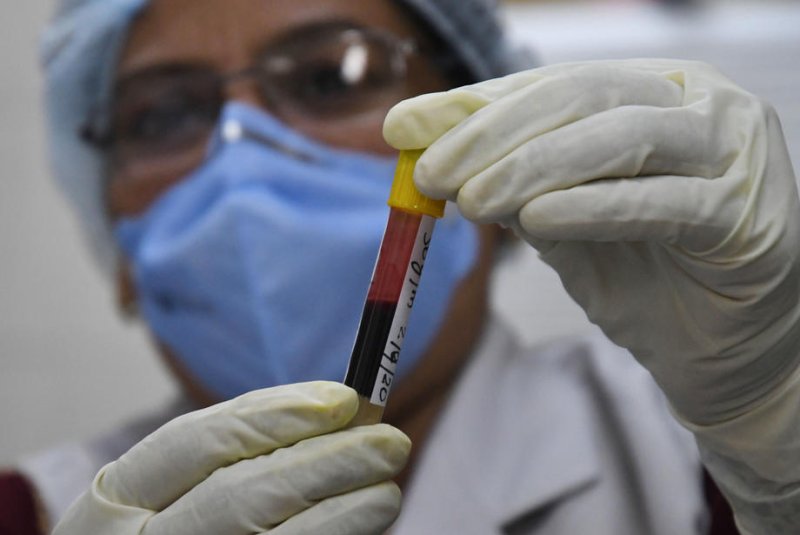
A team of researchers from the Washington University School of Medicine has developed a blood test model that can predict the onset of Alzheimer’s disease. Published on February 27, 2024, in the journal Nature Medicine, the study reveals that measuring blood plasma levels of a specific protein can indicate when cognitive decline is likely to begin. This method offers a potential breakthrough in Alzheimer’s diagnosis and treatment, which currently affects more than 7 million Americans at an estimated cost of nearly $400 billion in 2025.
The researchers focused on the protein known as p-tau217. Their findings indicate that the levels of this protein in the blood closely correlate with the accumulation of amyloid plaques in the brain, a key characteristic of Alzheimer’s. This accumulation can start as much as 20 years before symptoms manifest, providing a “biological clock” to predict when symptoms may arise, typically within a margin of three to four years.
Implications for Alzheimer’s Research and Treatment
Dr. Suzanne Schindler, the senior author of the study and an associate professor in the Department of Neurology at Washington University, emphasized that while current blood tests for p-tau217 can identify individuals who might develop Alzheimer’s, they lack the precision to predict when symptoms will appear. “Our study suggests it’s possible to predict when symptoms might develop using blood p-tau217,” she stated. However, she cautioned that the predictions are still too rough for individual guidance.
The new test could significantly impact clinical trials aimed at identifying preventive treatments for Alzheimer’s. Schindler noted that ongoing trials are already treating cognitively unimpaired individuals who test positive for blood p-tau217. “We must wait to see if these treatments delay or prevent symptom onset,” she added, expressing optimism based on existing biological understandings of the disease.
Beyond clinical trials, the test could enhance broader Alzheimer’s research by linking p-tau217 levels to specific brain changes. This would help clarify the complex relationship between these changes and cognitive impairment.
Future Prospects and Considerations
Rebecca Edelmayer, vice president of scientific engagement for the Alzheimer’s Association, highlighted the study’s potential to transform clinical trial designs and improve the identification of individuals at high risk for cognitive decline. “This finding is an important research step because a blood test is generally much less expensive and easier to administer than a brain scan or spinal-fluid test,” she explained.
Despite the promising nature of this research, Edelmayer cautioned that the blood test is not yet suitable for routine clinical use. The margin of error of three to four years makes it unsuitable for precise decision-making in everyday healthcare settings. Currently, blood tests are not recommended for cognitively unimpaired individuals outside of research contexts.
Dr. Schindler reflected on the significance of the new findings in the ongoing fight against Alzheimer’s. “As a memory specialist, I’ve diagnosed over 1,000 people with Alzheimer’s and witnessed firsthand its devastating effects on patients and families,” she remarked. “These results make me hopeful, and it’s rewarding to think this research could improve diagnosis and treatment of Alzheimer’s.”
The development of this blood test marks a significant advancement in understanding and addressing Alzheimer’s disease, a condition that remains one of the most challenging health issues facing society today.

Robinhood Stock Surges 2.5% Today Amid Tech Market Recovery

Philadelphia’s Earth Month Kicks Off with Free Events in Parks

GSK’s Inhaler Decision Sparks Health Concerns for Children

Bradford’s Fish Fry Fridays Offer Community Spirit and Flavor

Speculation Rises on Shutdowns During Trump’s Potential Presidency

Samsung Galaxy Watch 9 to Feature Larger Battery, Report Reveals

Inventors Find New Purpose Through Unconventional Paths

UConn Huskies Aim for Back-to-Back Titles in 2026 NCAA Tournament

U.S. Mine Countermeasure Ships Dock in Malaysia for Logistics Stop

University of Hawaiʻi at Mānoa Joins $25.6M AI Initiative for Disaster Monitoring

$2.2 Million Boost for Cancer Research and Training in Hawaiʻi

ALMA Discovers Companion Orbiting Red Giant Star π 1 Gruis

Sacituzumab Govitecan Shows Promise for HR+/HER2− Breast Cancer

币安人生 Sees $15.92 Million in Trading Volume Amid Market Fluctuations

New Gel Offers Hope for Regrowing Tooth Enamel in Dentistry

CAVA Group Shares Surge 5.1% Amid Mixed Analyst Ratings

Christian Bale in Talks to Join Leonardo DiCaprio in Heat 2

Supreme Court to Review Birthright Citizenship for Children of Immigrants
-
Science8 months ago
University of Hawaiʻi at Mānoa Joins $25.6M AI Initiative for Disaster Monitoring
-
 Health7 months ago
$2.2 Million Boost for Cancer Research and Training in Hawaiʻi
-
 Science8 months ago
ALMA Discovers Companion Orbiting Red Giant Star π 1 Gruis
-
 Health7 months ago
Sacituzumab Govitecan Shows Promise for HR+/HER2− Breast Cancer
-
Politics5 months ago
币安人生 Sees $15.92 Million in Trading Volume Amid Market Fluctuations
-
 Health8 months ago
New Gel Offers Hope for Regrowing Tooth Enamel in Dentistry
-
 Business7 months ago
CAVA Group Shares Surge 5.1% Amid Mixed Analyst Ratings
-
 Entertainment8 months ago
Christian Bale in Talks to Join Leonardo DiCaprio in Heat 2
-
 Politics7 months ago
Supreme Court to Review Birthright Citizenship for Children of Immigrants
-

 Lifestyle8 months ago
Art Deco and Traditional Designs Set to Transform Homes in 2026
-

 Lifestyle7 months ago
Fernando Mendoza Secures Maxwell and O’Brien Awards Ahead of Heisman
-

 World8 months ago
Swiss Residents Reject 50% Inheritance Tax on Wealthy