
World
Boeing 787-9 Surpasses Airbus A330-900 in Long-Haul Range

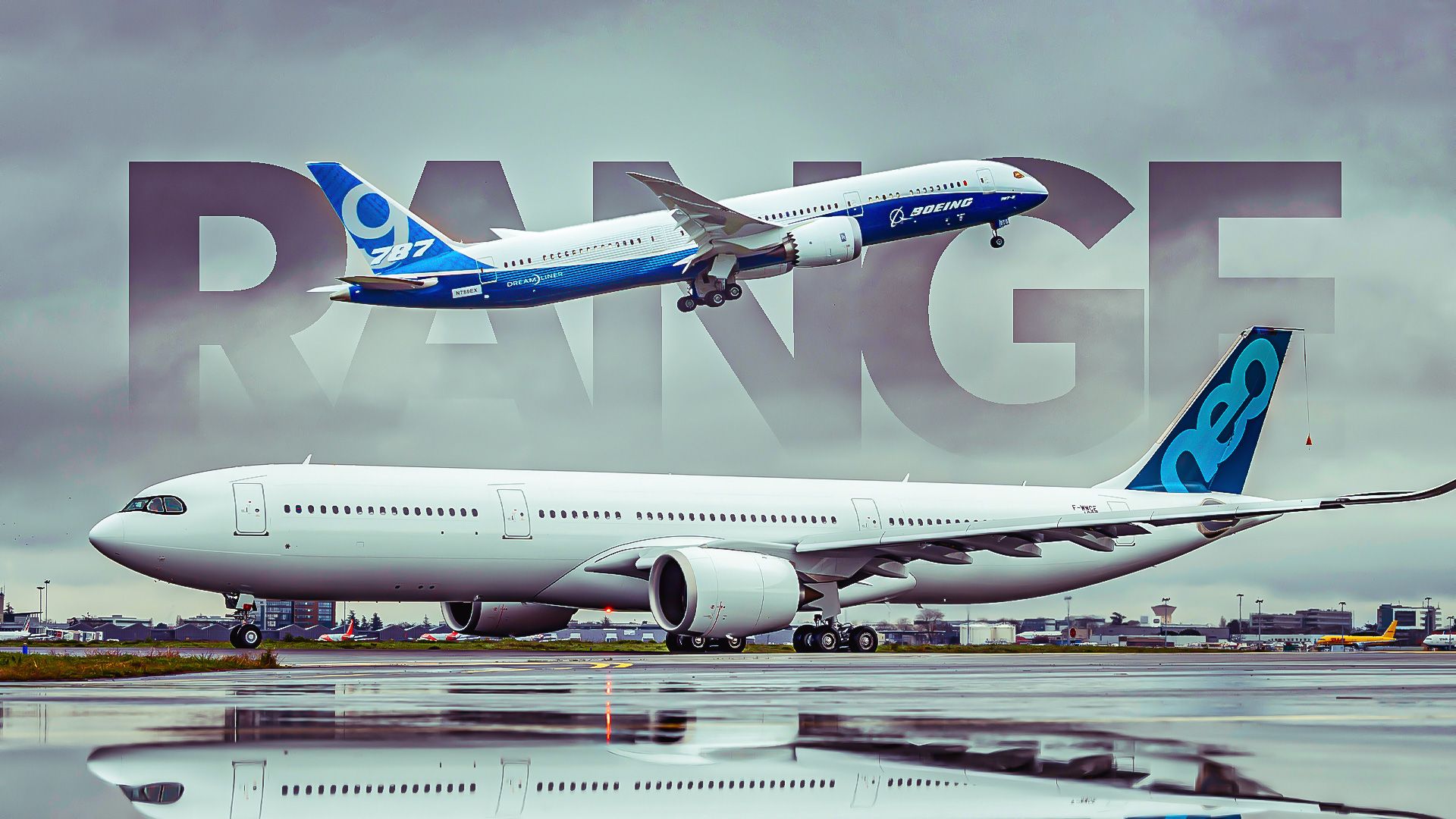
The Boeing 787-9 and Airbus A330-900 have emerged as two leading choices for airlines seeking next-generation widebody aircraft. Each model offers a unique approach to long-haul travel, with the 787-9 boasting a maximum range of 8,705 miles (14,010 km), compared to the A330-900’s impressive 8,438 miles (13,611 km). This difference of 267 miles plays a significant role in how airlines structure their global flight networks.
The Boeing 787-9 has redefined ultra-long-range travel since its introduction. Its advanced composite design enables it to operate some of the world’s longest non-stop routes, including Qantas’ flagship service connecting Perth Airport (PER) to London Heathrow Airport (LHR), which commenced in March 2018. This flight marked the first regular non-stop passenger service between Australia and the UK, and Qantas tailored its onboard experience to enhance comfort for long-haul passengers. Features include adjusted meal timings and improved cabin humidity, aimed at reducing jet lag. This success has propelled Qantas’ ambitions to expand its ultra-long-haul operations through its Operation Sunrise initiative.
In contrast, the Airbus A330-900, while slightly shorter in range, has established itself as a reliable option for long-haul travel. The longest route currently operated by an A330-900 is the non-stop service by Delta Air Lines from Seattle-Tacoma International Airport (SEA) to Taipei Taoyuan International Airport (TPE), covering 6,074 miles. The aircraft has been designed to provide modern features and fuel efficiency without incurring the costs associated with larger aircraft.
Examining the Boeing 787-9
The Boeing 787-9 has gained recognition for its blend of fuel efficiency and long-range capabilities. Its maiden flight took place in September 2013, showcasing a structure comprised of approximately 50% composite materials. This innovative design aims to achieve a 20% reduction in fuel consumption compared to older aircraft of similar size.
Since its introduction into commercial service, All Nippon Airways has served as the launch customer. The aircraft was first deployed on international flights by Air New Zealand in August 2014. The 787-9 typically accommodates between 250-300 passengers, making it a versatile choice for airlines seeking to balance capacity and range.
According to data from ch-aviation, United Airlines currently leads as the world’s largest operator of the Boeing 787-9, with 45 units in its fleet. Other significant operators include All Nippon Airways with 44, and Etihad Airways, which operates 34.
Understanding the Airbus A330-900
The Airbus A330-900 has quickly gained favor among airlines seeking a smaller, efficient widebody aircraft. Part of the A330neo program, it was launched in 2014 and features advancements inspired by the Airbus A350. These enhancements include new Rolls-Royce Trent 7000 engines and a high-aspect-ratio wing design, which collectively reduce fuel burn per seat compared to previous A330 models.
The aircraft’s first flight took place in October 2017, with TAP Air Portugal as the launch customer deploying it on routes between Lisbon Airport (LIS) and São Paulo Guarulhos International Airport (GRU). The A330-900 typically seats between 260-300 passengers, offering airlines a cost-effective option for serving long-haul markets without overextending capacity.
Currently, Delta Air Lines operates the largest fleet of A330-900s, with 39 in service. Following Delta is TAP Air Portugal, which has 19 in its fleet. Notably, VietJet Air has a pending order for 40 A330-900s, indicating ongoing demand for the aircraft.
Both the Boeing 787-9 and Airbus A330-900 have made significant impacts on the long-haul aviation market. While the Boeing model offers slightly greater range, the A330-900 provides airlines with a flexible and efficient alternative. Together, these aircraft continue to shape the future of international air travel, adapting to the evolving needs of airlines and their passengers.

Robinhood Stock Surges 2.5% Today Amid Tech Market Recovery

Philadelphia’s Earth Month Kicks Off with Free Events in Parks

GSK’s Inhaler Decision Sparks Health Concerns for Children

Bradford’s Fish Fry Fridays Offer Community Spirit and Flavor

Speculation Rises on Shutdowns During Trump’s Potential Presidency

Samsung Galaxy Watch 9 to Feature Larger Battery, Report Reveals

Inventors Find New Purpose Through Unconventional Paths

UConn Huskies Aim for Back-to-Back Titles in 2026 NCAA Tournament

U.S. Mine Countermeasure Ships Dock in Malaysia for Logistics Stop

University of Hawaiʻi at Mānoa Joins $25.6M AI Initiative for Disaster Monitoring

$2.2 Million Boost for Cancer Research and Training in Hawaiʻi

ALMA Discovers Companion Orbiting Red Giant Star π 1 Gruis

Sacituzumab Govitecan Shows Promise for HR+/HER2− Breast Cancer

币安人生 Sees $15.92 Million in Trading Volume Amid Market Fluctuations

New Gel Offers Hope for Regrowing Tooth Enamel in Dentistry

CAVA Group Shares Surge 5.1% Amid Mixed Analyst Ratings

Christian Bale in Talks to Join Leonardo DiCaprio in Heat 2

Supreme Court to Review Birthright Citizenship for Children of Immigrants
-
Science9 months ago
University of Hawaiʻi at Mānoa Joins $25.6M AI Initiative for Disaster Monitoring
-
 Health8 months ago
$2.2 Million Boost for Cancer Research and Training in Hawaiʻi
-
 Science9 months ago
ALMA Discovers Companion Orbiting Red Giant Star π 1 Gruis
-
 Health7 months ago
Sacituzumab Govitecan Shows Promise for HR+/HER2− Breast Cancer
-
Politics5 months ago
币安人生 Sees $15.92 Million in Trading Volume Amid Market Fluctuations
-
 Health9 months ago
New Gel Offers Hope for Regrowing Tooth Enamel in Dentistry
-
 Business8 months ago
CAVA Group Shares Surge 5.1% Amid Mixed Analyst Ratings
-
 Entertainment9 months ago
Christian Bale in Talks to Join Leonardo DiCaprio in Heat 2
-
 Politics8 months ago
Supreme Court to Review Birthright Citizenship for Children of Immigrants
-

 Lifestyle9 months ago
Art Deco and Traditional Designs Set to Transform Homes in 2026
-

 Lifestyle8 months ago
Fernando Mendoza Secures Maxwell and O’Brien Awards Ahead of Heisman
-

 World8 months ago
Swiss Residents Reject 50% Inheritance Tax on Wealthy