
World
Maduro’s Legal Maneuvers: Head-of-State Immunity Under Scrutiny

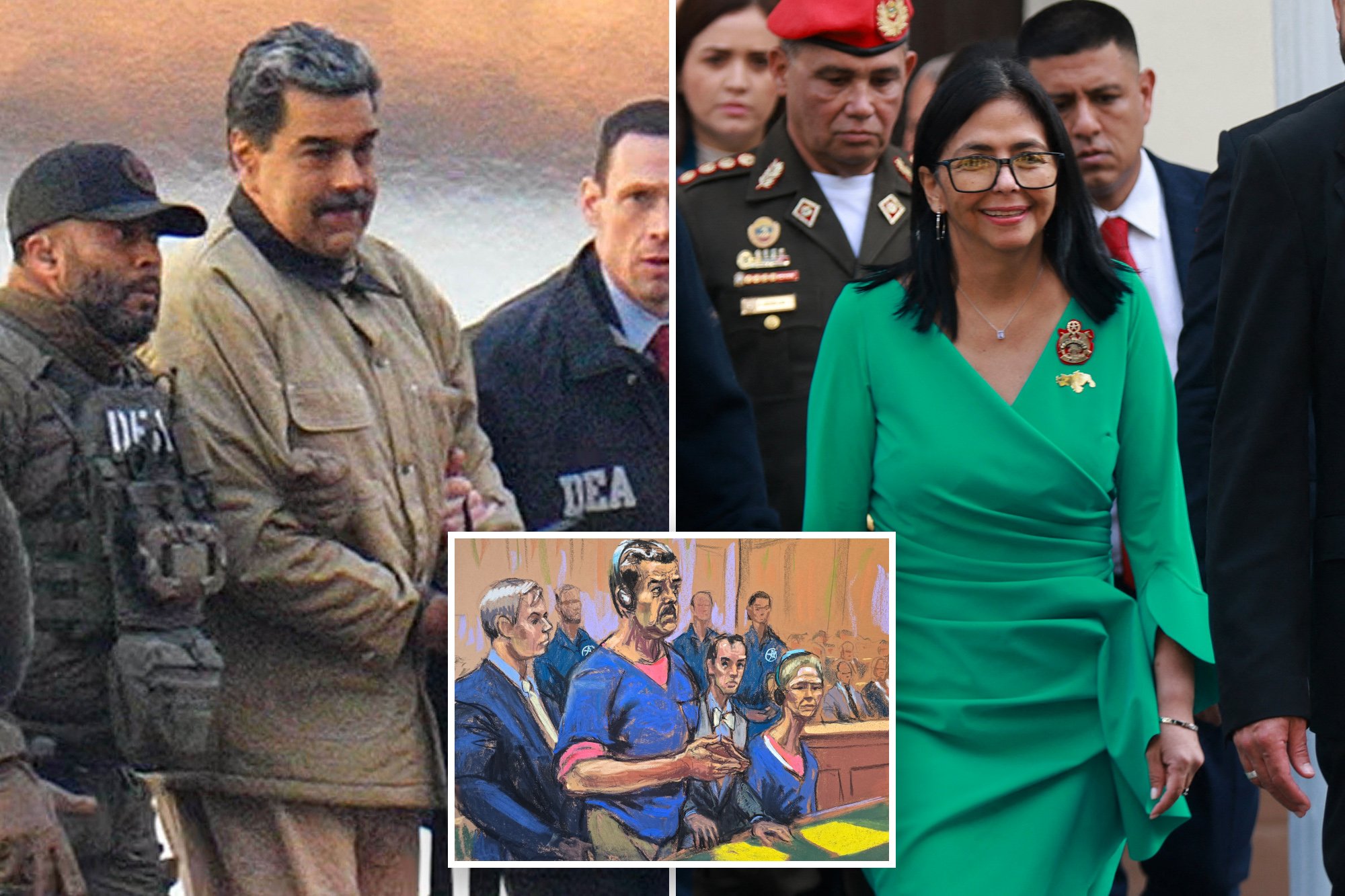
Venezuelan leader Nicolas Maduro is expected to assert head-of-state immunity in a bid to evade prosecution on serious criminal charges. This strategy comes as the United States continues to deny his legitimacy as Venezuela’s president. According to a source within the Justice Department, Maduro’s declaration that he remains “president” during his initial court appearance signals a calculated approach to establish a defense for potential legal proceedings.
Legal experts suggest that Maduro might argue he is entitled to head-of-state immunity by asserting his status as the legitimate leader or by claiming that the recognition of his vice president, Delcy Rodriguez, preserves his immunity. Under international law, sitting heads of state typically cannot be prosecuted by foreign courts. Maduro faces serious charges, including conspiracy to commit narcoterrorism and the importation of cocaine, alongside unlawful possession of military-grade weapons.
Should he pursue the immunity argument, U.S. officials would counter that Maduro cannot claim such protection since the U.S. has never recognized him as the rightful president of Venezuela. This position has been consistent since March 2019, following allegations of electoral fraud. Historical precedents, such as that of former Panamanian leader Manuel Noriega, who attempted a similar defense after his capture in 1989, could inform the outcome of this case. Federal prosecutor Richard Gregorie, who successfully challenged Noriega’s immunity claim, expressed skepticism that Maduro’s argument would hold water, stating, “The U.S. has never recognized Maduro as head of state… he has always been a target of investigation.”
The indictment against Maduro has been meticulously crafted to address potential immunity claims. Legal analysts note that the document refers to Maduro as the “de facto leader of Venezuela,” deliberately refraining from designating him as president. This distinction underscores the U.S. stance on his legitimacy and could play a crucial role in court.
Nevertheless, Maduro’s legal team may argue that U.S. interactions with Rodriguez imply a tacit recognition of his regime. This situation raises a complex legal question: has the U.S. inadvertently acknowledged Maduro’s government by engaging with Rodriguez? Legal experts caution that immunity arguments often hinge on technicalities rather than moral stances, and any ambiguity could provide Maduro an opportunity to delay or complicate legal proceedings, which are likely to be lengthy due to classified evidence.
Concerns within the Justice Department are growing. Officials fear that unless the U.S. explicitly disavows Rodriguez, Maduro could mount a compelling case for immunity. According to the Justice Department source, it would be prudent to recognize a legitimate opposition figure to eliminate any ambiguity surrounding Maduro’s status.
Rodriguez has long been the face of the Venezuelan regime in international diplomacy, even as Maduro faced widespread condemnation. The U.S. administration has carefully avoided referring to her as “acting president,” opting instead for terms like “new leader” to maintain a clear distinction from Maduro’s legitimacy.
Gregorie reiterated that interactions with Rodriguez should not lend support to Maduro’s immunity defense. He pointed out that the legal implications of charging a leader do not extend to their vice president unless both acted in concert. Marczak, of the Atlantic Council, echoed this sentiment, asserting that Rodriguez was never on the ballot with Maduro, further complicating any claims of shared legitimacy.
As the legal situation unfolds, the interplay between U.S. diplomatic actions and Maduro’s defense strategy will be pivotal. The outcome remains uncertain, but the stakes are high in this complex intersection of law and international relations.

Robinhood Stock Surges 2.5% Today Amid Tech Market Recovery

Philadelphia’s Earth Month Kicks Off with Free Events in Parks

GSK’s Inhaler Decision Sparks Health Concerns for Children

Bradford’s Fish Fry Fridays Offer Community Spirit and Flavor

Speculation Rises on Shutdowns During Trump’s Potential Presidency

Samsung Galaxy Watch 9 to Feature Larger Battery, Report Reveals

Inventors Find New Purpose Through Unconventional Paths

UConn Huskies Aim for Back-to-Back Titles in 2026 NCAA Tournament

U.S. Mine Countermeasure Ships Dock in Malaysia for Logistics Stop

University of Hawaiʻi at Mānoa Joins $25.6M AI Initiative for Disaster Monitoring

$2.2 Million Boost for Cancer Research and Training in Hawaiʻi

ALMA Discovers Companion Orbiting Red Giant Star π 1 Gruis

Sacituzumab Govitecan Shows Promise for HR+/HER2− Breast Cancer

币安人生 Sees $15.92 Million in Trading Volume Amid Market Fluctuations

New Gel Offers Hope for Regrowing Tooth Enamel in Dentistry

CAVA Group Shares Surge 5.1% Amid Mixed Analyst Ratings

Christian Bale in Talks to Join Leonardo DiCaprio in Heat 2

Supreme Court to Review Birthright Citizenship for Children of Immigrants
-
Science9 months ago
University of Hawaiʻi at Mānoa Joins $25.6M AI Initiative for Disaster Monitoring
-
 Health7 months ago
$2.2 Million Boost for Cancer Research and Training in Hawaiʻi
-
 Science9 months ago
ALMA Discovers Companion Orbiting Red Giant Star π 1 Gruis
-
 Health7 months ago
Sacituzumab Govitecan Shows Promise for HR+/HER2− Breast Cancer
-
Politics5 months ago
币安人生 Sees $15.92 Million in Trading Volume Amid Market Fluctuations
-
 Health9 months ago
New Gel Offers Hope for Regrowing Tooth Enamel in Dentistry
-
 Business8 months ago
CAVA Group Shares Surge 5.1% Amid Mixed Analyst Ratings
-
 Entertainment8 months ago
Christian Bale in Talks to Join Leonardo DiCaprio in Heat 2
-
 Politics8 months ago
Supreme Court to Review Birthright Citizenship for Children of Immigrants
-

 Lifestyle8 months ago
Art Deco and Traditional Designs Set to Transform Homes in 2026
-

 Lifestyle8 months ago
Fernando Mendoza Secures Maxwell and O’Brien Awards Ahead of Heisman
-

 World8 months ago
Swiss Residents Reject 50% Inheritance Tax on Wealthy