
World
NATO Faces Trust Issues Amid Trans-Atlantic Tensions with Russia

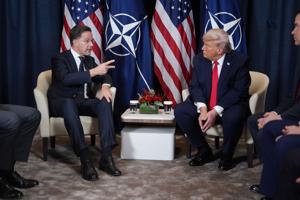
NATO’s effectiveness in deterring Russian aggression has diminished significantly due to rising tensions within the alliance. Trust among member states is eroding as European allies and Canada commit billions to support Ukraine and enhance their defense capabilities. This internal discord, particularly surrounding former U.S. President Donald Trump‘s controversial remarks regarding NATO, has raised concerns about the alliance’s unity and strategic direction.
Shifts in Defense Commitments
In recent months, NATO countries have ramped up their military spending in response to the conflict in Ukraine. According to data from the NATO Secretary General, member nations are expected to collectively increase their defense budgets by over $100 billion by 2024. This investment aims to strengthen military readiness and support the Ukrainian government amid ongoing hostilities with Russia.
Yet, the effectiveness of these measures is undermined by trans-Atlantic disputes. Tensions escalated during Trump’s presidency, when he openly criticized European allies for not meeting the alliance’s defense spending target of 2% of GDP. His rhetoric has left many European leaders questioning the reliability of the United States as a partner in collective security.
The internal strife has prompted some NATO members to reassess their defense strategies. For instance, Germany announced plans to significantly boost its military expenditures, aiming for an increase to 2% by 2025. This shift reflects a broader recognition among European nations of the need to bolster their defense capabilities in light of perceived threats from Russia.
U.S. Leadership and European Concerns
The uncertainty surrounding U.S. leadership has contributed to a climate of apprehension within NATO. Following Trump’s presidency, European allies have expressed a desire for a more stable and predictable U.S. foreign policy. France and Germany, in particular, have called for a stronger European defense framework that could operate independently of U.S. influence.
This evolving landscape raises questions about NATO’s future role. The alliance has historically relied on the United States for military leadership and resources. However, as European nations seek to assert their own defense priorities, the cohesion of the alliance could be tested.
Despite these challenges, NATO officials remain committed to maintaining a united front against Russian aggression. The alliance recently held a summit in Brussels to reaffirm its support for Ukraine and discuss strategies for enhancing collective defense. Member states reiterated their commitment to Article 5, which stipulates that an attack on one member is considered an attack on all.
The ongoing conflict in Ukraine serves as a stark reminder of the geopolitical tensions at play. NATO’s ability to deter potential threats hinges not only on military spending but also on the trust and cooperation among its members. As the situation develops, the alliance’s response will be closely scrutinized by both allies and adversaries.
In summary, while NATO member states are investing heavily in defense and support for Ukraine, internal divisions pose a significant challenge to the alliance’s long-term effectiveness. The future of NATO will depend on its ability to navigate these complexities and maintain a united stance in the face of external threats.

Robinhood Stock Surges 2.5% Today Amid Tech Market Recovery

Philadelphia’s Earth Month Kicks Off with Free Events in Parks

GSK’s Inhaler Decision Sparks Health Concerns for Children

Bradford’s Fish Fry Fridays Offer Community Spirit and Flavor

Speculation Rises on Shutdowns During Trump’s Potential Presidency

Samsung Galaxy Watch 9 to Feature Larger Battery, Report Reveals

Inventors Find New Purpose Through Unconventional Paths

UConn Huskies Aim for Back-to-Back Titles in 2026 NCAA Tournament

U.S. Mine Countermeasure Ships Dock in Malaysia for Logistics Stop

University of Hawaiʻi at Mānoa Joins $25.6M AI Initiative for Disaster Monitoring

$2.2 Million Boost for Cancer Research and Training in Hawaiʻi

ALMA Discovers Companion Orbiting Red Giant Star π 1 Gruis

Sacituzumab Govitecan Shows Promise for HR+/HER2− Breast Cancer

币安人生 Sees $15.92 Million in Trading Volume Amid Market Fluctuations

New Gel Offers Hope for Regrowing Tooth Enamel in Dentistry

CAVA Group Shares Surge 5.1% Amid Mixed Analyst Ratings

Christian Bale in Talks to Join Leonardo DiCaprio in Heat 2

Supreme Court to Review Birthright Citizenship for Children of Immigrants
-
Science9 months ago
University of Hawaiʻi at Mānoa Joins $25.6M AI Initiative for Disaster Monitoring
-
 Health7 months ago
$2.2 Million Boost for Cancer Research and Training in Hawaiʻi
-
 Science8 months ago
ALMA Discovers Companion Orbiting Red Giant Star π 1 Gruis
-
 Health7 months ago
Sacituzumab Govitecan Shows Promise for HR+/HER2− Breast Cancer
-
Politics5 months ago
币安人生 Sees $15.92 Million in Trading Volume Amid Market Fluctuations
-
 Health9 months ago
New Gel Offers Hope for Regrowing Tooth Enamel in Dentistry
-
 Business7 months ago
CAVA Group Shares Surge 5.1% Amid Mixed Analyst Ratings
-
 Entertainment8 months ago
Christian Bale in Talks to Join Leonardo DiCaprio in Heat 2
-
 Politics7 months ago
Supreme Court to Review Birthright Citizenship for Children of Immigrants
-

 Lifestyle8 months ago
Art Deco and Traditional Designs Set to Transform Homes in 2026
-

 Lifestyle7 months ago
Fernando Mendoza Secures Maxwell and O’Brien Awards Ahead of Heisman
-

 World8 months ago
Swiss Residents Reject 50% Inheritance Tax on Wealthy