
World
Pentagon to Study Mental Health of Military Drone Pilots

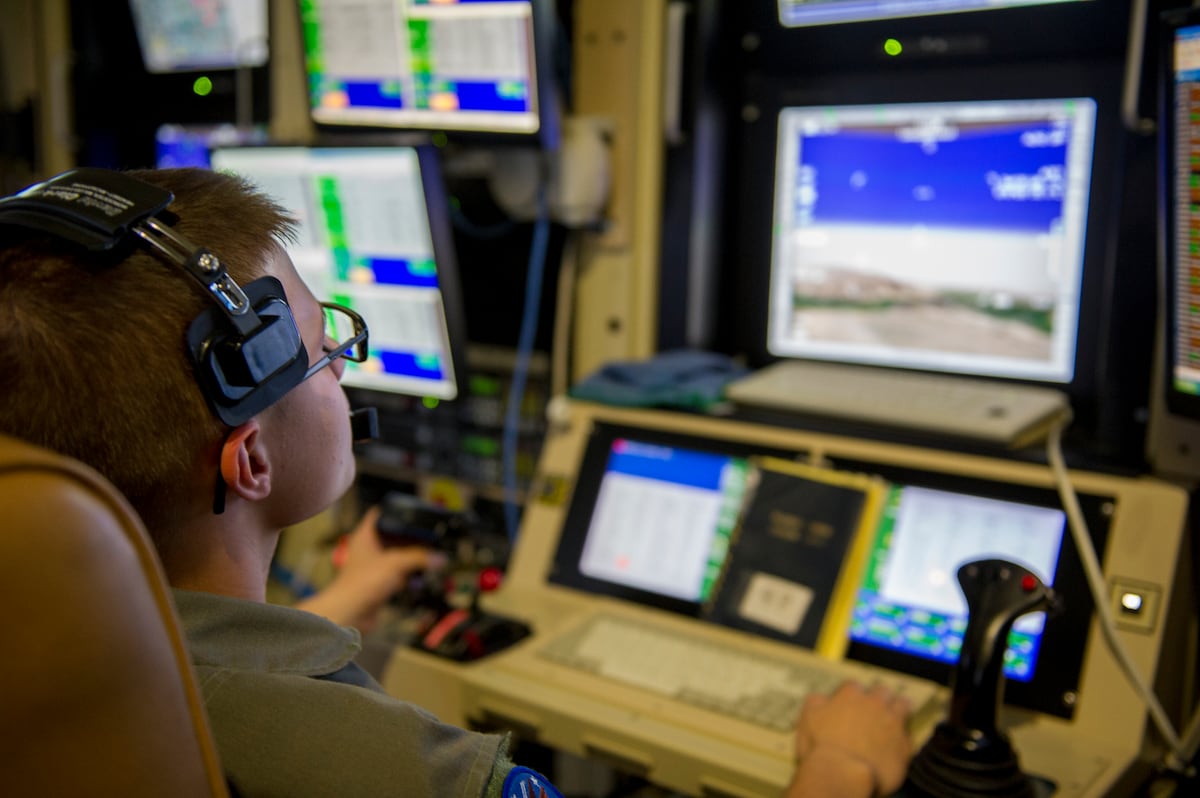
The United States Department of Defense (DOD) has been directed to conduct a comprehensive study on the mental health impacts experienced by military drone pilots. This mandate is part of the recently approved National Defense Authorization Act for Fiscal Year 2026, which spans over 3,000 pages. The study aims to address the psychological effects associated with operating unmanned aircraft systems in combat situations.
The profession of military drone piloting has faced skepticism and criticism, particularly regarding its emotional toll on operators. A notable moment occurred in 2013 when the Pentagon introduced the “Distinguished Warfare Medal” to recognize drone operators. This initiative was quickly met with derision from troops, leading to its cancellation and subsequent replacement with an “R” device in 2016, signifying remote warfare.
Research indicates that drone operators may experience even more significant mental health challenges than pilots of crewed aircraft. A literature review published in the Journal of Mental Health & Clinical Psychology in 2023 found that crews of remotely piloted aircraft generally exhibit higher levels of psychiatric symptoms. According to Seth Norrholm, an associate professor of Psychiatry at Wayne State University, the nature of remote warfare can create an unusual emotional connection between pilots and their targets.
Norrholm explained that drone operators often monitor targets for extended periods, sometimes tracking individuals for weeks, months, or even years. This prolonged observation allows operators to witness the daily lives of their targets, complicating the emotional landscape when they receive orders to carry out strikes. “There’s a unique intimacy that can develop between the targets and the RPA crews,” Norrholm stated, emphasizing the complexity of this relationship.
The challenges do not end with the operational demands of drone piloting. The study will also investigate the psychological effects of transitioning from conducting lethal operations from a U.S.-based command center back to the comforts of civilian life. Norrholm noted that military services have attempted to establish clearer boundaries between combat and home life to mitigate the psychological impact, referred to as “psychological whiplash.”
The upcoming DOD study will assess the prevalence of mental health conditions such as post-traumatic stress disorder, depression, anxiety, and moral injury among drone pilots and personnel involved in targeting assessments. Additionally, the study will compare these rates against those of aircrew engaged in conventional flight operations and personnel in non-combat roles.
Another focal point of the study will be the evaluation of unique stressors faced by RPA pilots, which include irregular shift work, sleep disruptions, emotional disengagement, and exposure to distressing visual content. The assessment will also cover the adequacy and accessibility of mental health support services available to these pilots, alongside recommendations for enhancements in screening, treatment, and prevention strategies.
This initiative is not the first instance of congressional concern regarding the mental wellbeing of military drone operators. In 2023, lawmakers urged the Air Force to collaborate with U.S. Special Operations Command to implement a program focused on the holistic wellbeing of RPA pilots. Furthermore, a 2014 study conducted by the Air Force revealed a notable prevalence of post-traumatic stress disorder among drone pilots, highlighting the need for continued attention to their mental health.
For Norrholm, the significance of this new mandate lies in its potential to influence resource allocation and policy development within the military. He remarked, “The military tends to work slowly in terms of affecting change. But if there’s data out there suggesting that you can improve operator readiness by taking some of these steps, they’re receptive to it.”
As technological advancements in autonomous platforms reshape the role of human operators in combat, Norrholm stressed that the presence of humans in warfare necessitates ongoing consideration of psychological impacts. “It’s not going to be a reliance on technology alone. It’s not going to be an AI-driven decision to carry out these missions, or at least it shouldn’t be,” he explained.
The upcoming report is due to the House and Senate Armed Services Committees by December 2024. With the insights generated from this study, there is hope for better support mechanisms for military drone pilots, ensuring that the human element in modern warfare is adequately addressed.

Robinhood Stock Surges 2.5% Today Amid Tech Market Recovery

Philadelphia’s Earth Month Kicks Off with Free Events in Parks

GSK’s Inhaler Decision Sparks Health Concerns for Children

Bradford’s Fish Fry Fridays Offer Community Spirit and Flavor

Speculation Rises on Shutdowns During Trump’s Potential Presidency

Samsung Galaxy Watch 9 to Feature Larger Battery, Report Reveals

Inventors Find New Purpose Through Unconventional Paths

UConn Huskies Aim for Back-to-Back Titles in 2026 NCAA Tournament

U.S. Mine Countermeasure Ships Dock in Malaysia for Logistics Stop

University of Hawaiʻi at Mānoa Joins $25.6M AI Initiative for Disaster Monitoring

$2.2 Million Boost for Cancer Research and Training in Hawaiʻi

ALMA Discovers Companion Orbiting Red Giant Star π 1 Gruis

Sacituzumab Govitecan Shows Promise for HR+/HER2− Breast Cancer

币安人生 Sees $15.92 Million in Trading Volume Amid Market Fluctuations

New Gel Offers Hope for Regrowing Tooth Enamel in Dentistry

CAVA Group Shares Surge 5.1% Amid Mixed Analyst Ratings

Christian Bale in Talks to Join Leonardo DiCaprio in Heat 2

Supreme Court to Review Birthright Citizenship for Children of Immigrants
-
Science9 months ago
University of Hawaiʻi at Mānoa Joins $25.6M AI Initiative for Disaster Monitoring
-
 Health7 months ago
$2.2 Million Boost for Cancer Research and Training in Hawaiʻi
-
 Science8 months ago
ALMA Discovers Companion Orbiting Red Giant Star π 1 Gruis
-
 Health7 months ago
Sacituzumab Govitecan Shows Promise for HR+/HER2− Breast Cancer
-
Politics5 months ago
币安人生 Sees $15.92 Million in Trading Volume Amid Market Fluctuations
-
 Health9 months ago
New Gel Offers Hope for Regrowing Tooth Enamel in Dentistry
-
 Business7 months ago
CAVA Group Shares Surge 5.1% Amid Mixed Analyst Ratings
-
 Entertainment8 months ago
Christian Bale in Talks to Join Leonardo DiCaprio in Heat 2
-
 Politics7 months ago
Supreme Court to Review Birthright Citizenship for Children of Immigrants
-

 Lifestyle8 months ago
Art Deco and Traditional Designs Set to Transform Homes in 2026
-

 Lifestyle7 months ago
Fernando Mendoza Secures Maxwell and O’Brien Awards Ahead of Heisman
-

 World8 months ago
Swiss Residents Reject 50% Inheritance Tax on Wealthy