
World
Panama Canal Ports Decision Looms as Supreme Court Deliberates

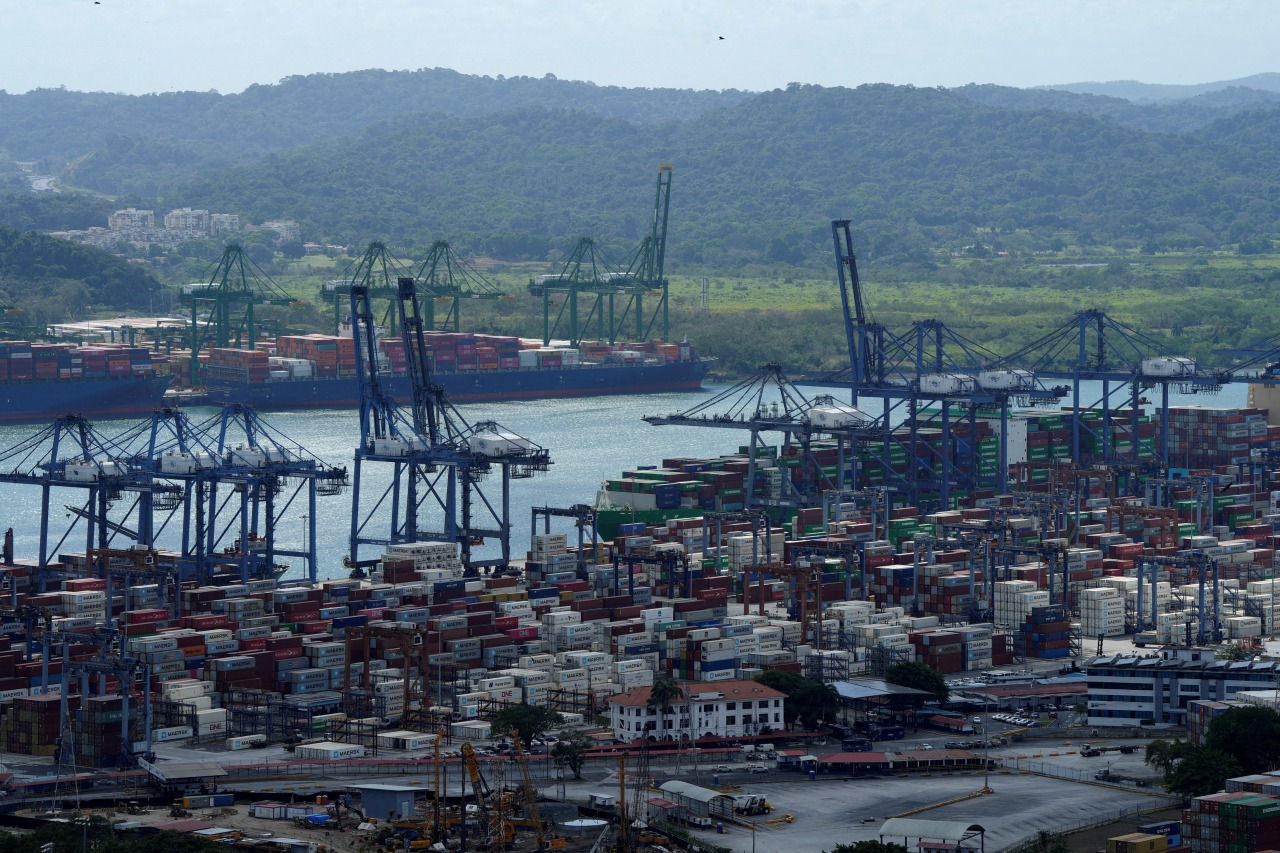
The Panamanian Supreme Court is nearing a crucial decision regarding a legal case that could potentially revoke a Chinese company’s license to manage the Panama Canal ports. This outcome may also represent a significant political victory for President Donald Trump, whose administration has expressed concerns about foreign control over critical infrastructure.
The lawsuit centers on claims that the Chinese company, identified as Hutchison Whampoa, violated terms of its concession agreement. If the court rules in favor of the plaintiffs, the implications could be profound. A ruling against Hutchison Whampoa would not only affect operations at the Canal but could also reshape the dynamics of international trade in the region.
According to reports from the Panamanian news outlet La Prensa, the court’s final deliberations are expected to conclude by the end of December 2023. The justices have heard extensive arguments from both sides, weighing the economic benefits of allowing the Chinese firm to maintain its operations against national security concerns raised by the government.
The Panama Canal is a vital conduit for global shipping, facilitating trade between the Atlantic and Pacific Oceans. The ports associated with the Canal handle an estimated $1.2 billion in cargo annually, making the management decisions surrounding them critically important not just for Panama, but for international commerce as a whole.
Political analysts suggest that a ruling in favor of the plaintiffs could bolster Trump’s stance on reducing foreign influence in key sectors. This case has drawn attention not only in Panama but also in the United States, where the administration has made it clear that it closely monitors foreign investments in strategic industries.
Supporters of the Chinese company argue that it has significantly contributed to the development and modernization of the ports since it began operations in the early 2000s. They contend that the company’s expertise has enhanced the efficiency of the Canal, ultimately benefiting global trade.
Opponents, including some members of the Panamanian government, argue that allowing a foreign entity to control such essential infrastructure poses a risk to national sovereignty and security. They assert that the Canal should be managed by Panamanians to ensure that the country retains control over its most significant economic asset.
As the Supreme Court prepares to make its ruling, the debate continues to unfold in the public sphere. Citizens and stakeholders alike are watching closely, aware that the court’s decision will have lasting implications for Panama’s economy and its relationship with global powers.
In the coming weeks, as the court’s decision becomes imminent, the focus will likely shift to the potential political fallout and the reactions from both domestic and international communities. The outcome could serve as a precedent for future foreign investments in Panama, influencing how other countries approach their dealings with foreign enterprises in sensitive sectors.

Robinhood Stock Surges 2.5% Today Amid Tech Market Recovery

Philadelphia’s Earth Month Kicks Off with Free Events in Parks

GSK’s Inhaler Decision Sparks Health Concerns for Children

Bradford’s Fish Fry Fridays Offer Community Spirit and Flavor

Speculation Rises on Shutdowns During Trump’s Potential Presidency

Samsung Galaxy Watch 9 to Feature Larger Battery, Report Reveals

Inventors Find New Purpose Through Unconventional Paths

UConn Huskies Aim for Back-to-Back Titles in 2026 NCAA Tournament

U.S. Mine Countermeasure Ships Dock in Malaysia for Logistics Stop

University of Hawaiʻi at Mānoa Joins $25.6M AI Initiative for Disaster Monitoring

$2.2 Million Boost for Cancer Research and Training in Hawaiʻi

ALMA Discovers Companion Orbiting Red Giant Star π 1 Gruis

Sacituzumab Govitecan Shows Promise for HR+/HER2− Breast Cancer

币安人生 Sees $15.92 Million in Trading Volume Amid Market Fluctuations

New Gel Offers Hope for Regrowing Tooth Enamel in Dentistry

CAVA Group Shares Surge 5.1% Amid Mixed Analyst Ratings

Christian Bale in Talks to Join Leonardo DiCaprio in Heat 2

Supreme Court to Review Birthright Citizenship for Children of Immigrants
-
Science9 months ago
University of Hawaiʻi at Mānoa Joins $25.6M AI Initiative for Disaster Monitoring
-
 Health7 months ago
$2.2 Million Boost for Cancer Research and Training in Hawaiʻi
-
 Science8 months ago
ALMA Discovers Companion Orbiting Red Giant Star π 1 Gruis
-
 Health7 months ago
Sacituzumab Govitecan Shows Promise for HR+/HER2− Breast Cancer
-
Politics5 months ago
币安人生 Sees $15.92 Million in Trading Volume Amid Market Fluctuations
-
 Health9 months ago
New Gel Offers Hope for Regrowing Tooth Enamel in Dentistry
-
 Business7 months ago
CAVA Group Shares Surge 5.1% Amid Mixed Analyst Ratings
-
 Entertainment8 months ago
Christian Bale in Talks to Join Leonardo DiCaprio in Heat 2
-
 Politics7 months ago
Supreme Court to Review Birthright Citizenship for Children of Immigrants
-

 Lifestyle8 months ago
Art Deco and Traditional Designs Set to Transform Homes in 2026
-

 Lifestyle7 months ago
Fernando Mendoza Secures Maxwell and O’Brien Awards Ahead of Heisman
-

 World8 months ago
Swiss Residents Reject 50% Inheritance Tax on Wealthy