
Science
Astronomers Discover Fastest-Rotating Asteroid MM45 at 1.88 Minutes

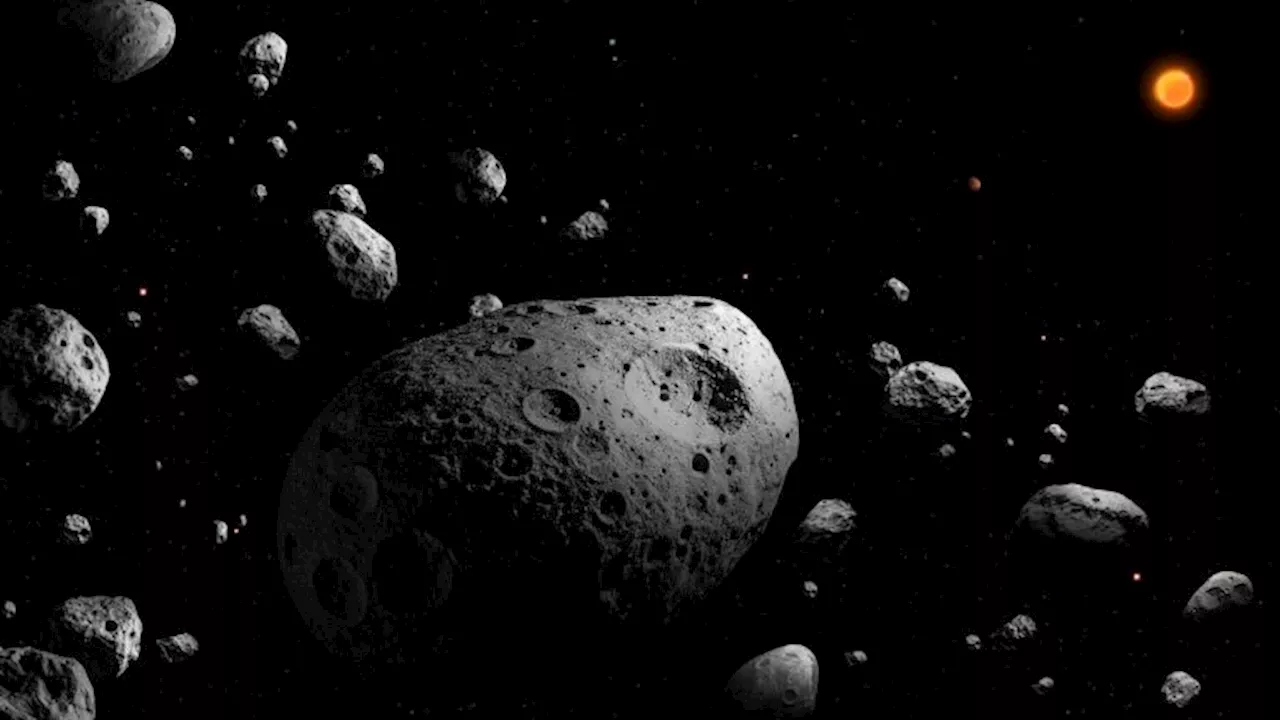
Astronomers at the **Vera C. Rubin Observatory** have identified asteroid **MM45**, the fastest rotating asteroid of its size, completing a full rotation in just **1.88 minutes**. This discovery is part of a broader effort that has seen the observatory detect nearly **2,000 asteroids** over the past year, with 19 classified as super-fast or ultra-fast rotators.
Among these, MM45 stands out as the fastest known asteroid larger than **500 meters**, and its rapid spin raises intriguing questions about its composition. According to the observatory, fast rotation suggests that the asteroid must possess significant internal strength to avoid disintegration. Most asteroids are typically described as “rubble piles,” composed of smaller rocks held together by gravity.
Sarah Greenstreet, a researcher with the **National Optical-Infrared Astronomy Research Laboratory (NOIRLab)**, stated, “Clearly, this asteroid must be made of material that has very high strength in order to keep it in one piece as it spins so rapidly.” She explained that MM45 would need a cohesive strength similar to that of solid rock, which challenges previous assumptions about the structure of asteroids.
Another noteworthy asteroid discovered during this survey rotates every **1.9 minutes**, close behind MM45. The speed of these discoveries is remarkable, achieved in just **10 hours** of observations rather than the months typically required for such extensive surveys.
Significance of the Discovery
The discoveries made by the Vera C. Rubin Observatory are part of the **Legacy Survey of Space and Time (LSST)**, which aims to create the largest astronomical movie of the Southern Hemisphere night sky over a **10-year period**. The observatory, funded by the **National Science Foundation** and the **U.S. Department of Energy**, is named after the late astronomer **Vera Rubin**, who provided pivotal evidence for dark matter in the universe.
Aaron Roodman, Deputy Head of LSST and a professor of particle physics and astrophysics at **SLAC**, commented on the capabilities of the observatory. “We have known for years that Rubin would act as a discovery machine for the Universe, and we are already seeing the unique power of combining the LSST Camera with Rubin’s incredible speed,” he noted. The observatory can capture an image every **40 seconds**, allowing astronomers to identify thousands of new asteroids in a short time frame.
Researchers anticipate that the LSST will reveal even more about asteroids and other celestial objects, significantly enhancing our understanding of the **Solar System** and its formation. As the observatory gears up for full operations in **2026**, the excitement within the astronomical community continues to build over what further secrets the universe may hold.
The rapid rotation of MM45 and its classification as the fastest-known asteroid larger than 500 meters marks a significant milestone in asteroid studies, contributing valuable insights into the composition and behavior of these fascinating celestial bodies.

Robinhood Stock Surges 2.5% Today Amid Tech Market Recovery

Philadelphia’s Earth Month Kicks Off with Free Events in Parks

GSK’s Inhaler Decision Sparks Health Concerns for Children

Bradford’s Fish Fry Fridays Offer Community Spirit and Flavor

Speculation Rises on Shutdowns During Trump’s Potential Presidency

Samsung Galaxy Watch 9 to Feature Larger Battery, Report Reveals

Inventors Find New Purpose Through Unconventional Paths

UConn Huskies Aim for Back-to-Back Titles in 2026 NCAA Tournament

U.S. Mine Countermeasure Ships Dock in Malaysia for Logistics Stop

University of Hawaiʻi at Mānoa Joins $25.6M AI Initiative for Disaster Monitoring

$2.2 Million Boost for Cancer Research and Training in Hawaiʻi

ALMA Discovers Companion Orbiting Red Giant Star π 1 Gruis

Sacituzumab Govitecan Shows Promise for HR+/HER2− Breast Cancer

币安人生 Sees $15.92 Million in Trading Volume Amid Market Fluctuations

New Gel Offers Hope for Regrowing Tooth Enamel in Dentistry

CAVA Group Shares Surge 5.1% Amid Mixed Analyst Ratings

Christian Bale in Talks to Join Leonardo DiCaprio in Heat 2

Supreme Court to Review Birthright Citizenship for Children of Immigrants
-
Science9 months ago
University of Hawaiʻi at Mānoa Joins $25.6M AI Initiative for Disaster Monitoring
-
 Health7 months ago
$2.2 Million Boost for Cancer Research and Training in Hawaiʻi
-
 Science9 months ago
ALMA Discovers Companion Orbiting Red Giant Star π 1 Gruis
-
 Health7 months ago
Sacituzumab Govitecan Shows Promise for HR+/HER2− Breast Cancer
-
Politics5 months ago
币安人生 Sees $15.92 Million in Trading Volume Amid Market Fluctuations
-
 Health9 months ago
New Gel Offers Hope for Regrowing Tooth Enamel in Dentistry
-
 Business8 months ago
CAVA Group Shares Surge 5.1% Amid Mixed Analyst Ratings
-
 Entertainment8 months ago
Christian Bale in Talks to Join Leonardo DiCaprio in Heat 2
-
 Politics8 months ago
Supreme Court to Review Birthright Citizenship for Children of Immigrants
-

 Lifestyle8 months ago
Art Deco and Traditional Designs Set to Transform Homes in 2026
-

 Lifestyle8 months ago
Fernando Mendoza Secures Maxwell and O’Brien Awards Ahead of Heisman
-

 World8 months ago
Swiss Residents Reject 50% Inheritance Tax on Wealthy