
World
Explosions Rock Gulf Nations After Iran Strikes US Military Bases

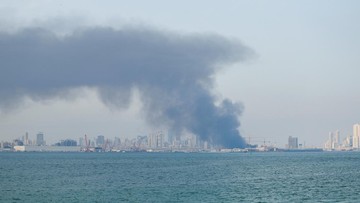
Recent explosions have been reported across several Gulf nations, including Kuwait, Bahrain, and the United Arab Emirates, following Iran’s retaliatory attacks on US military facilities in the Middle East. This escalation in hostilities has heightened tensions in an already volatile region.
The series of blasts began on March 15, 2024, as residents in major cities, including Kuwait City and Manama, reported hearing loud detonations. These incidents coincided with Iran’s missile strikes targeting US bases, which the Iranian government described as a necessary response to perceived American aggression in the region. The Iranian military has stated that their operations aim to protect national sovereignty and deter further foreign intervention.
Iran’s Military Response to US Presence
The Iranian government has increasingly voiced its opposition to the US military presence in the Middle East. Following the attacks, Iranian officials reiterated their commitment to defending their territory. According to a statement from the Iranian Foreign Minister, Hossein Amir-Abdollahian, the strikes were a direct consequence of the US’s ongoing support for regional adversaries.
The US Department of Defense confirmed that several facilities were struck on March 15, leading to significant damage but no reported casualties among American troops. The Pentagon has emphasized its readiness to respond to any further aggression, underlining the seriousness of the current situation.
Residents in the Gulf states have expressed concern over the safety of their communities amid the rising tensions. Many have reported feeling the shockwaves from the explosions, prompting increased security measures in urban areas. Local authorities are closely monitoring the situation, issuing advisories to ensure public safety.
International Reactions and Consequences
The international community has responded with alarm to the escalation. United Nations Secretary-General António Guterres called for restraint from both Iran and the United States, stressing the need for diplomatic dialogue to prevent further violence. Guterres urged all parties involved to prioritize peace and stability in the region.
Economic repercussions may also follow this latest round of conflict. Analysts predict that oil prices could rise due to increased tensions in the Gulf, a critical region for global oil supplies. Investors are closely watching developments, as disruptions to oil production could affect prices worldwide.
The situation remains fluid, with ongoing developments likely to impact not just the Gulf states but also international relations and global markets. As the world watches, the focus will shift to how both Iran and the United States navigate this precarious moment in their long-standing conflict.

Robinhood Stock Surges 2.5% Today Amid Tech Market Recovery

Philadelphia’s Earth Month Kicks Off with Free Events in Parks

GSK’s Inhaler Decision Sparks Health Concerns for Children

Bradford’s Fish Fry Fridays Offer Community Spirit and Flavor

Speculation Rises on Shutdowns During Trump’s Potential Presidency

Samsung Galaxy Watch 9 to Feature Larger Battery, Report Reveals

Inventors Find New Purpose Through Unconventional Paths

UConn Huskies Aim for Back-to-Back Titles in 2026 NCAA Tournament

U.S. Mine Countermeasure Ships Dock in Malaysia for Logistics Stop

University of Hawaiʻi at Mānoa Joins $25.6M AI Initiative for Disaster Monitoring

$2.2 Million Boost for Cancer Research and Training in Hawaiʻi

ALMA Discovers Companion Orbiting Red Giant Star π 1 Gruis

Sacituzumab Govitecan Shows Promise for HR+/HER2− Breast Cancer

币安人生 Sees $15.92 Million in Trading Volume Amid Market Fluctuations

New Gel Offers Hope for Regrowing Tooth Enamel in Dentistry

CAVA Group Shares Surge 5.1% Amid Mixed Analyst Ratings

Christian Bale in Talks to Join Leonardo DiCaprio in Heat 2

Supreme Court to Review Birthright Citizenship for Children of Immigrants
-
Science8 months ago
University of Hawaiʻi at Mānoa Joins $25.6M AI Initiative for Disaster Monitoring
-
 Health7 months ago
$2.2 Million Boost for Cancer Research and Training in Hawaiʻi
-
 Science8 months ago
ALMA Discovers Companion Orbiting Red Giant Star π 1 Gruis
-
 Health7 months ago
Sacituzumab Govitecan Shows Promise for HR+/HER2− Breast Cancer
-
Politics4 months ago
币安人生 Sees $15.92 Million in Trading Volume Amid Market Fluctuations
-
 Health8 months ago
New Gel Offers Hope for Regrowing Tooth Enamel in Dentistry
-
 Business7 months ago
CAVA Group Shares Surge 5.1% Amid Mixed Analyst Ratings
-
 Entertainment8 months ago
Christian Bale in Talks to Join Leonardo DiCaprio in Heat 2
-
 Politics7 months ago
Supreme Court to Review Birthright Citizenship for Children of Immigrants
-

 Lifestyle7 months ago
Fernando Mendoza Secures Maxwell and O’Brien Awards Ahead of Heisman
-

 Lifestyle8 months ago
Art Deco and Traditional Designs Set to Transform Homes in 2026
-

 World7 months ago
Swiss Residents Reject 50% Inheritance Tax on Wealthy