
World
Pentagon Press Restrictions Spark Unprecedented Media Unity

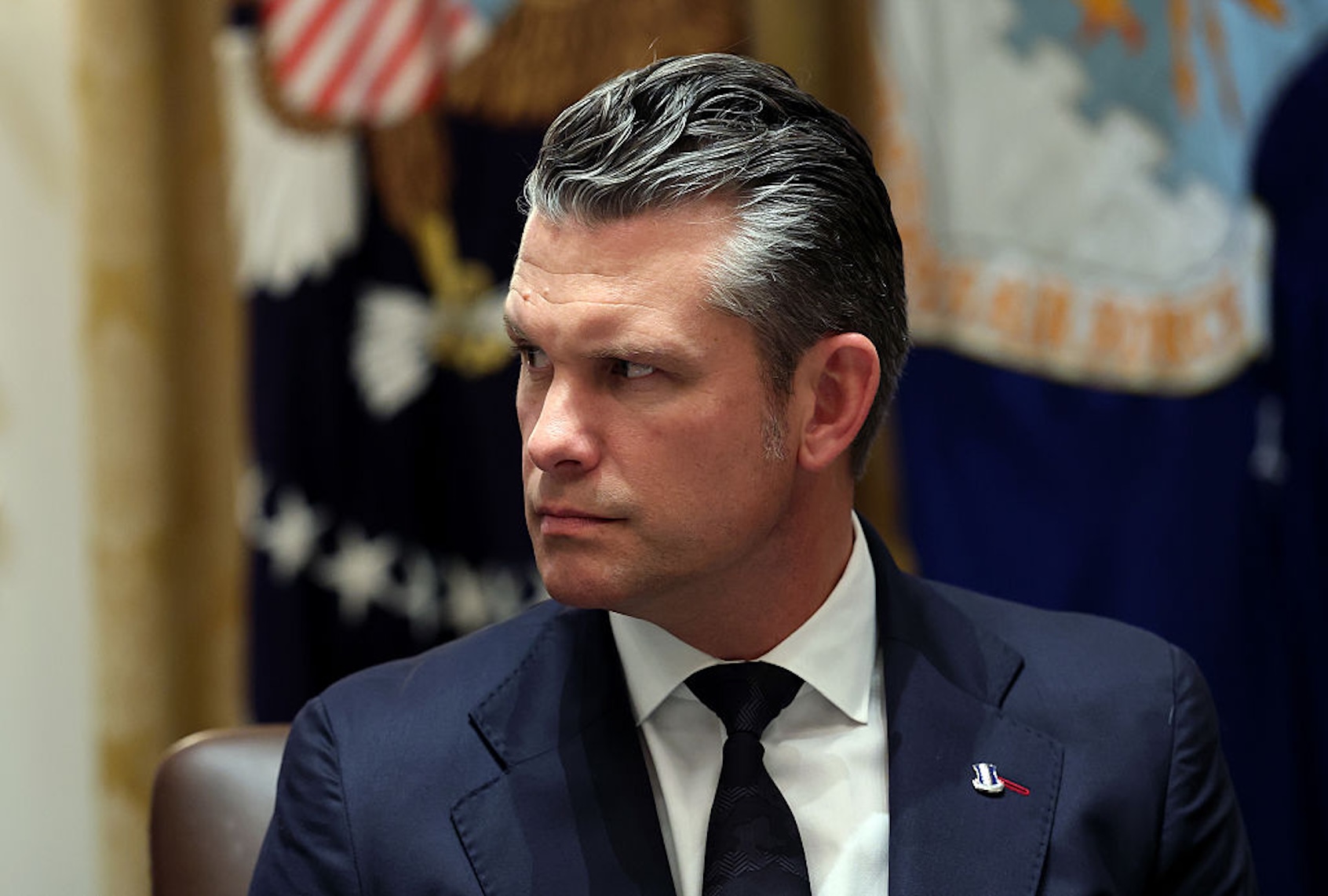
The recent decision by Secretary of Defense Pete Hegseth to enforce strict media controls has led to an unexpected backlash from journalists across the United States. More than 100 Pentagon press members have been required to surrender their press passes after refusing to sign Hegseth’s controversial policy, which limits reporting to information pre-approved by Pentagon officials. This move has prompted a rare display of solidarity among various media organizations, challenging the new restrictions and asserting the importance of press freedom.
As of today, the refusal to comply with the policy has united nearly all major news outlets, including traditionally conservative platforms such as Fox News, Newsmax, and the Washington Examiner. Fox News host Bret Baier emphasized this solidarity, stating, “We’re all standing in solidarity,” after the deadline for signing passed. The Associated Press characterized the collective defiance as “a significant step” in the fight for journalistic integrity.
The policy, which Hegseth introduced following a prior unsuccessful attempt to regulate media access in September, has raised concerns regarding First Amendment rights. The prior guidelines warned that journalists could lose their credentials for “soliciting” even unclassified information from federal employees. The revised policy released this month has been described by experts as an escalation of intimidation tactics against both journalists and government employees.
Unprecedented Press Response
Since Hegseth’s appointment in February, his administration has systematically restricted press access, limiting reporter movements within the Pentagon and removing long-established media outlets from their designated workspaces. A joint statement from major news organizations, including MSNBC, ABC News, CNN, and NBC News, condemned the policy as a threat to fundamental journalistic protections. They affirmed their commitment to covering the U.S. military independently, stating, “We will continue to cover the U.S. military as each of our organizations has done for many decades.”
The Washington Post and New York Times have also publicly rejected the new guidelines. Matt Murray, executive editor of the Post, noted that the proposed restrictions undermine First Amendment protections, asserting, “The public has a right to know how the government and military are operating.”
In a poignant act of protest, NPR reporter Tom Bowman, who has covered the Pentagon for 28 years, voluntarily relinquished his credentials rather than comply with the new policy. He highlighted the diminished flow of information from the Pentagon, contrasting the current lack of briefings with the more open practices of previous administrations.
Implications for Journalistic Integrity
Critics argue that Hegseth’s approach marks a significant departure from nearly eight decades of military-media relations and poses a direct threat to the principles of a free press. Retired General and former Vice Chief of Staff for the U.S. Army Jack Keane commented, “What they’re really doing, they want to spoon-feed information to the journalists, and that will be their story. That’s not journalism.”
Despite the contentious climate, Hegseth has defended his policy by stating that “Pentagon access is a privilege, not a right.” He has outlined new credentialing requirements on social media, asserting that the press must adhere to strict conditions while accessing information. Veteran correspondent Barbara Starr has pointed out that journalists have faced limitations all year, with few opportunities for thorough reporting.
Hegseth has positioned himself as a vocal opponent of what he deems “woke decay” within the military, actively discouraging discussions on climate change and promoting budget cuts to climate-related spending. His approach has led to increased scrutiny of Pentagon policies and practices, creating a situation where journalists are more reliant on off-the-record sources and whistleblowers.
As the ramifications of Hegseth’s policy unfold, the press appears to be amplifying its coverage, rather than being marginalized. The unity displayed by major news organizations signals a critical pushback against attempts to control the narrative surrounding military operations. This confrontation not only highlights the essential role of the media in public discourse but also underscores the ongoing challenges faced by journalists in an era of increasing governmental oversight.
In summary, while Hegseth’s intentions may have aimed to limit media scrutiny, the resulting backlash has fostered a renewed commitment to press freedom, demonstrating the resilience of journalistic integrity in challenging circumstances.

Robinhood Stock Surges 2.5% Today Amid Tech Market Recovery

Philadelphia’s Earth Month Kicks Off with Free Events in Parks

GSK’s Inhaler Decision Sparks Health Concerns for Children

Bradford’s Fish Fry Fridays Offer Community Spirit and Flavor

Speculation Rises on Shutdowns During Trump’s Potential Presidency

Samsung Galaxy Watch 9 to Feature Larger Battery, Report Reveals

Inventors Find New Purpose Through Unconventional Paths

UConn Huskies Aim for Back-to-Back Titles in 2026 NCAA Tournament

U.S. Mine Countermeasure Ships Dock in Malaysia for Logistics Stop

University of Hawaiʻi at Mānoa Joins $25.6M AI Initiative for Disaster Monitoring

ALMA Discovers Companion Orbiting Red Giant Star π 1 Gruis

$2.2 Million Boost for Cancer Research and Training in Hawaiʻi

New Gel Offers Hope for Regrowing Tooth Enamel in Dentistry

Sacituzumab Govitecan Shows Promise for HR+/HER2− Breast Cancer

Park Jung Min’s Endearing Moment with Hwasa Steals Show at Awards

Sampson County Celebrates Susie Faison’s 100th Birthday Milestone

Christian Bale in Talks to Join Leonardo DiCaprio in Heat 2

CAVA Group Shares Surge 5.1% Amid Mixed Analyst Ratings
-
Science5 months ago
University of Hawaiʻi at Mānoa Joins $25.6M AI Initiative for Disaster Monitoring
-
 Science5 months ago
ALMA Discovers Companion Orbiting Red Giant Star π 1 Gruis
-
 Health4 months ago
$2.2 Million Boost for Cancer Research and Training in Hawaiʻi
-
 Health5 months ago
New Gel Offers Hope for Regrowing Tooth Enamel in Dentistry
-
 Health3 months ago
Sacituzumab Govitecan Shows Promise for HR+/HER2− Breast Cancer
-
 Lifestyle5 months ago
Park Jung Min’s Endearing Moment with Hwasa Steals Show at Awards
-
 Lifestyle5 months ago
Sampson County Celebrates Susie Faison’s 100th Birthday Milestone
-
 Entertainment5 months ago
Christian Bale in Talks to Join Leonardo DiCaprio in Heat 2
-
 Business4 months ago
CAVA Group Shares Surge 5.1% Amid Mixed Analyst Ratings
-

 Business4 months ago
Ally Financial Boosts Q1 2026 EPS Forecast to $1.01
-

 Science5 months ago
Interstellar Comet 3I/ATLAS Approaches Sun, No Threat to Earth
-

 Lifestyle5 months ago
Art Deco and Traditional Designs Set to Transform Homes in 2026